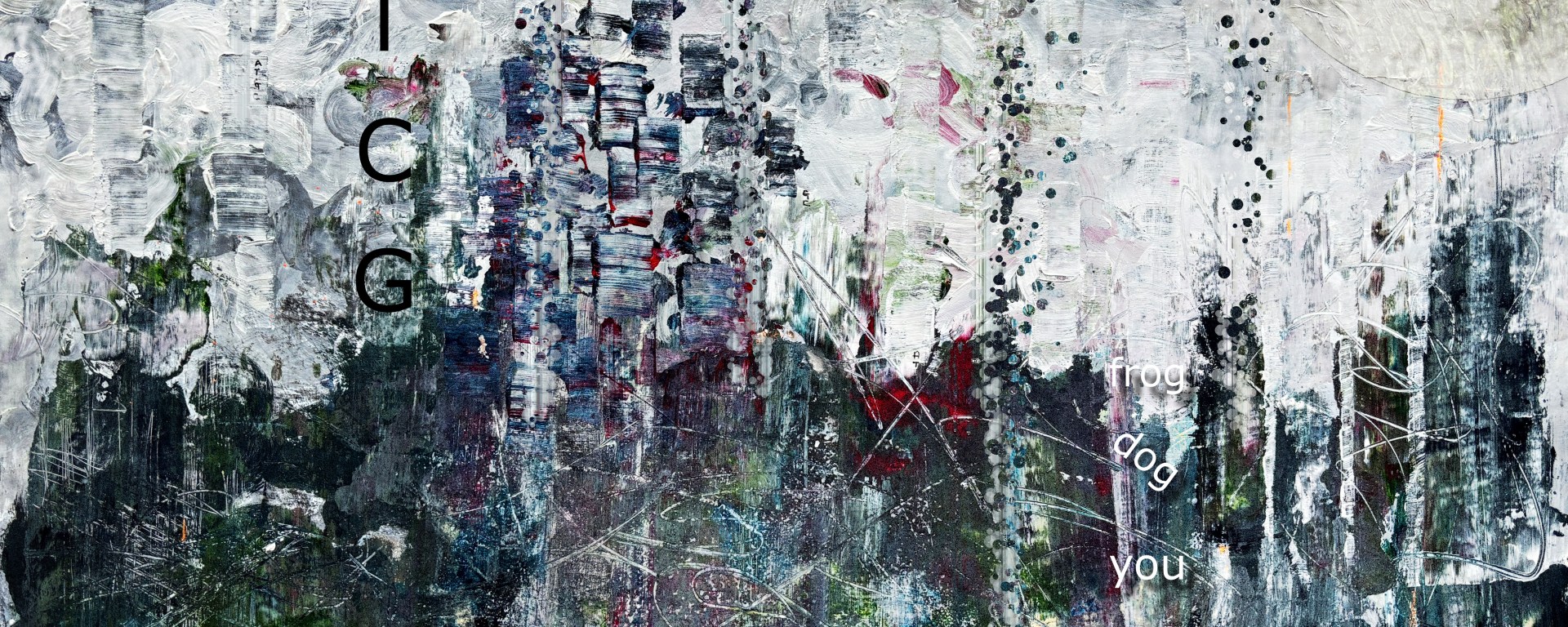
In that old tradition of starting as you mean to go backwards, this is the stage of NEO/ELE approach that comes before the physical destruction but after the first naked eye sighting and imagines the extraction of DNA via gravitational removal of waste biological material.


So here is a chaotic scene of roiling skies, tornadoes or water spouts, and drifting, unanchored graffiti which might lend itself to 3D in an AR layer. There may be smoke here too; hints of our industrialisation which both brought us into the modern era of technology but which would destroy us if the hypothetical NEO didn’t ELE us first. It’s evening here so the light is LED and not natural, which is why everything is slightly drained of colour. I’m intrigued to see some of the tornadoes have the look of snakes in a bottle, while others give the impression of being badly designed buildings that are now getting their come-uppance. The yellow/green pastel is satisfyingly lurid.
And again the familiarity of this style is intriguing me. I don’t know whose it reminds me of or where to look for it, and the prospect of endless rabbit holes doesn’t appeal.
2nd November. Daylight if a little dreich.
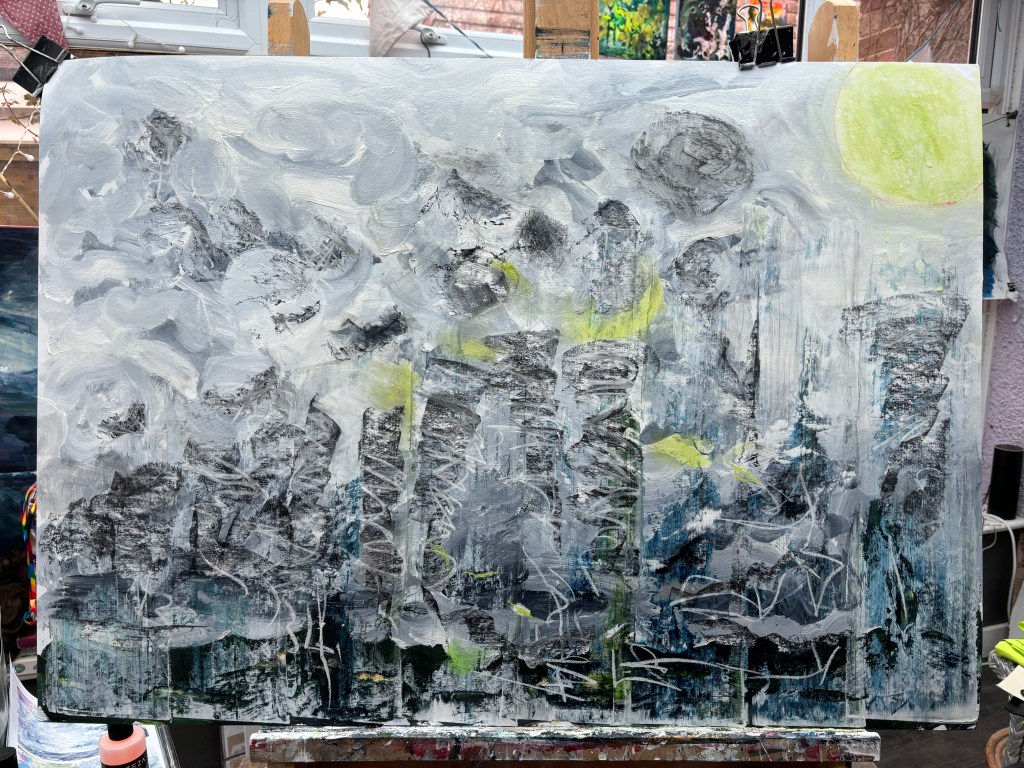
I’m less happy with the lurid green now so I’ll be toning it down.
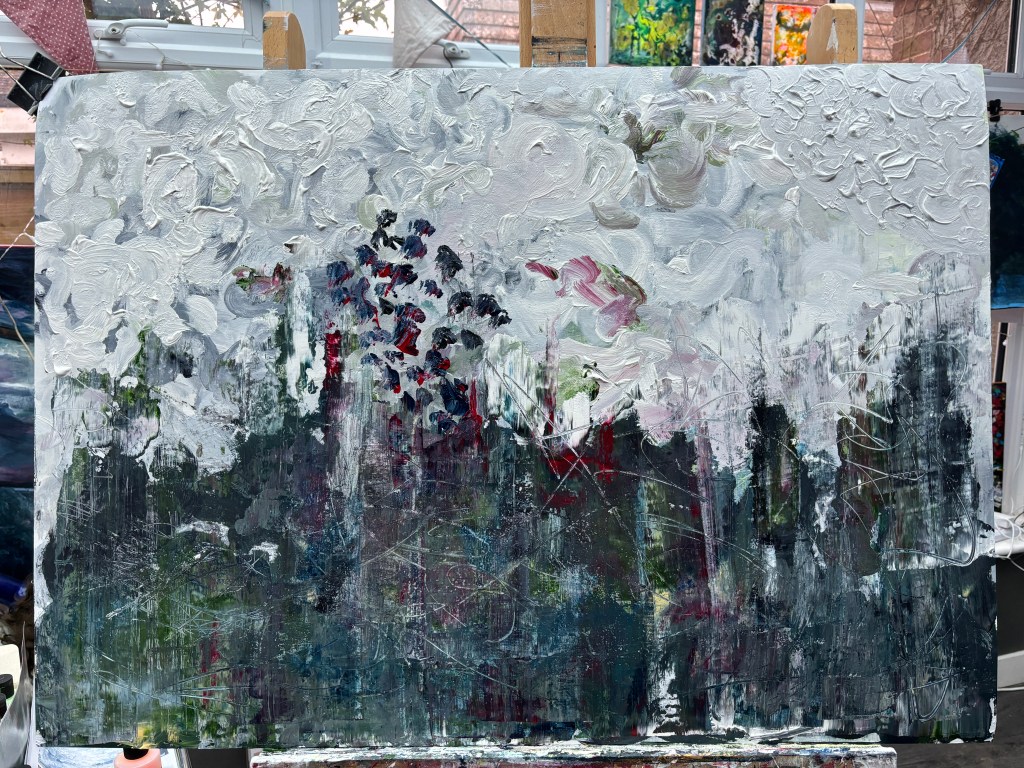
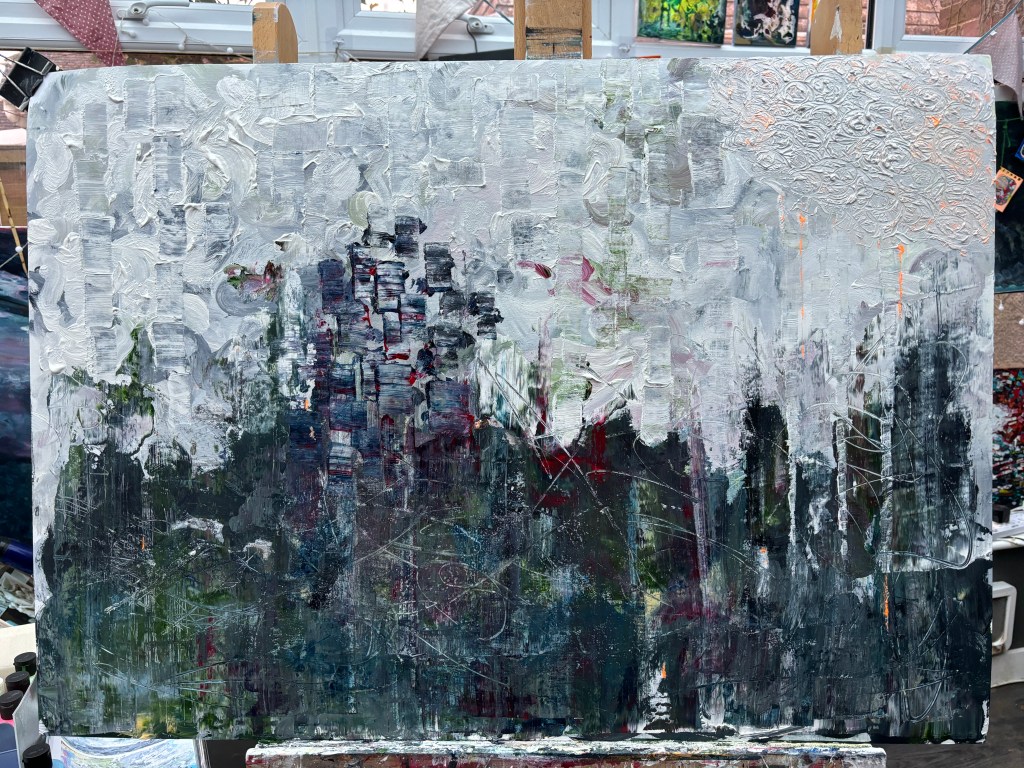
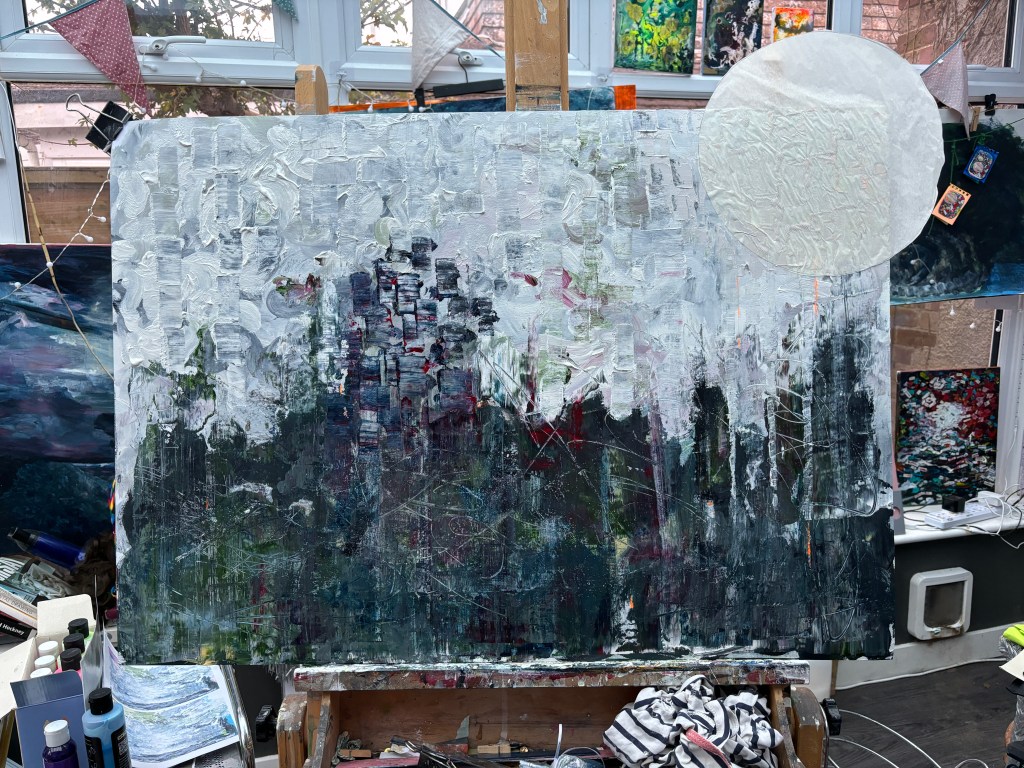
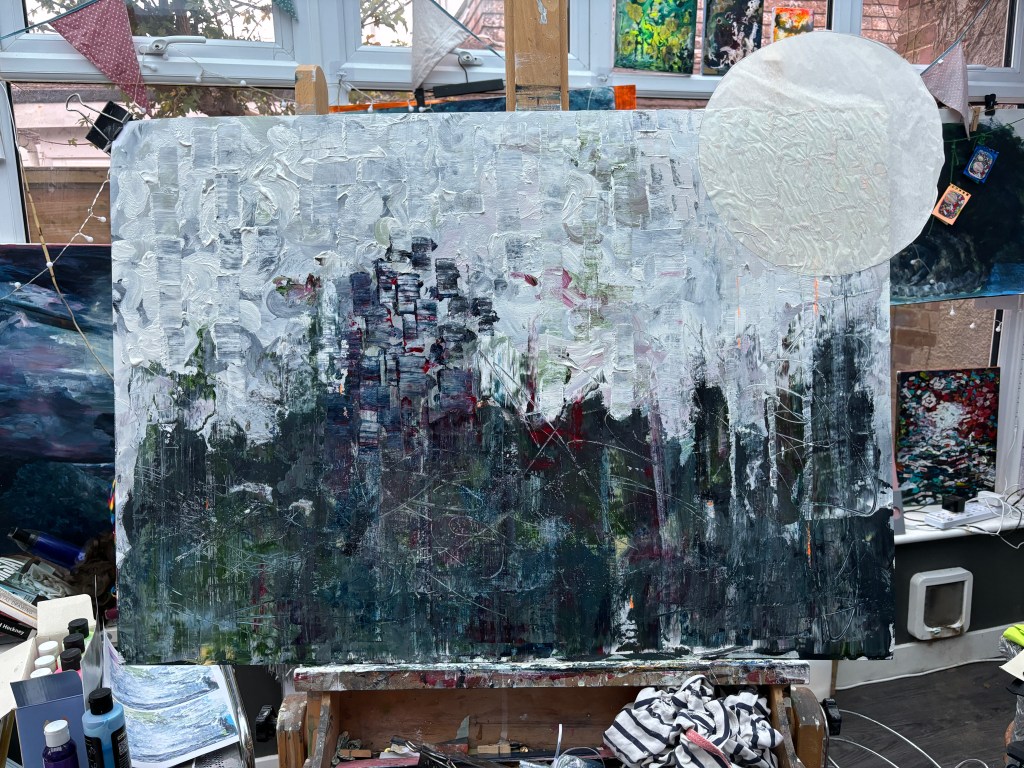
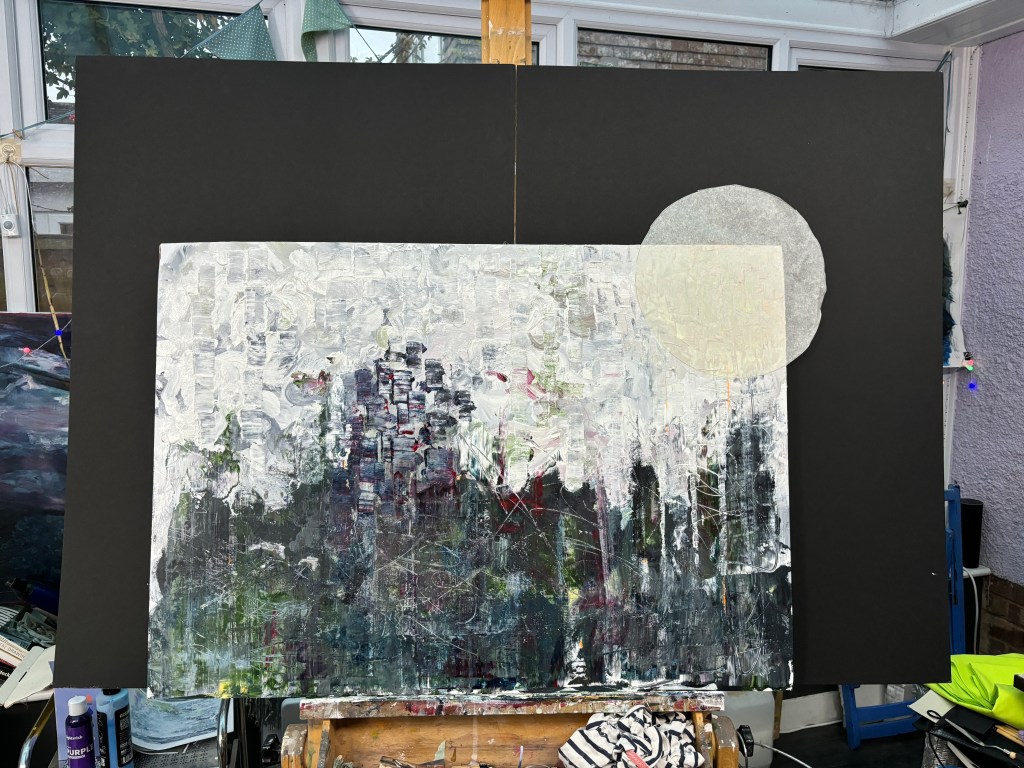
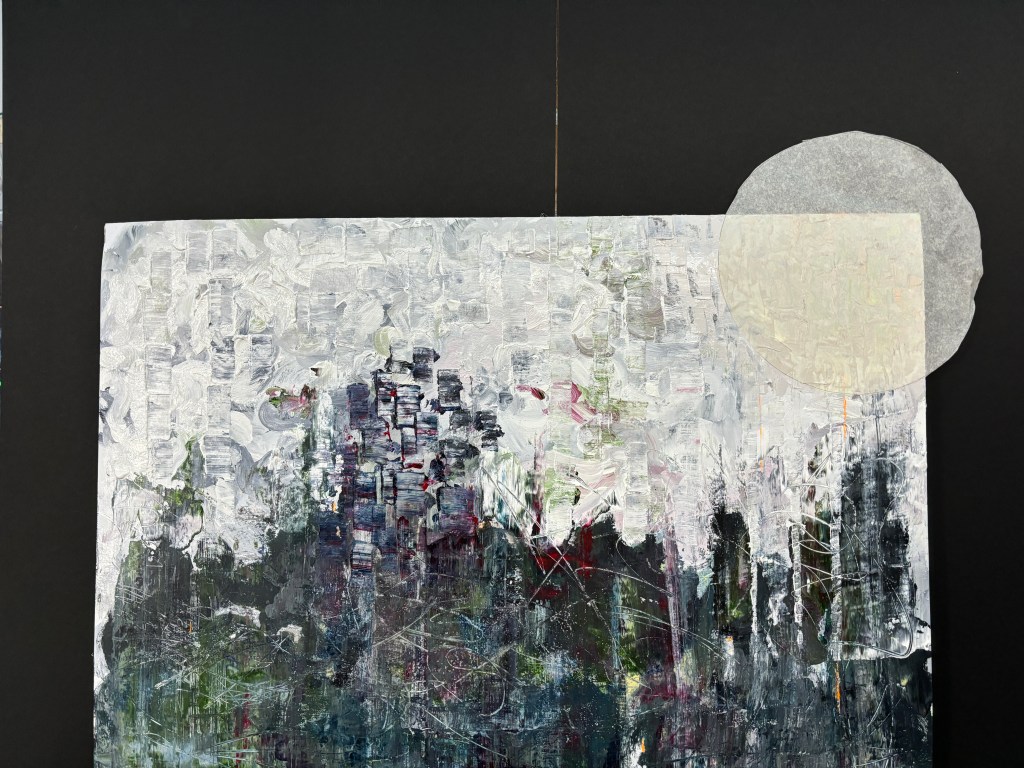
A little twee as it stands so the photo is a ‘just in case’ before I take off the edges of the NEO to leave it wholly inside the painting. The tissue is nicely buckled where it sits on the wet paint and I suspect I can work with that. I have to keep reminding myself that this is an object that may be space debris, an asteroid, or a small moon nudged out of its own orbit and thrown at our planet. It isn’t the sun, it doesn’t need to be on fire, it doesn’t even need to be round. And it should probably be some kind of lumpy grey rather than pale yellow.
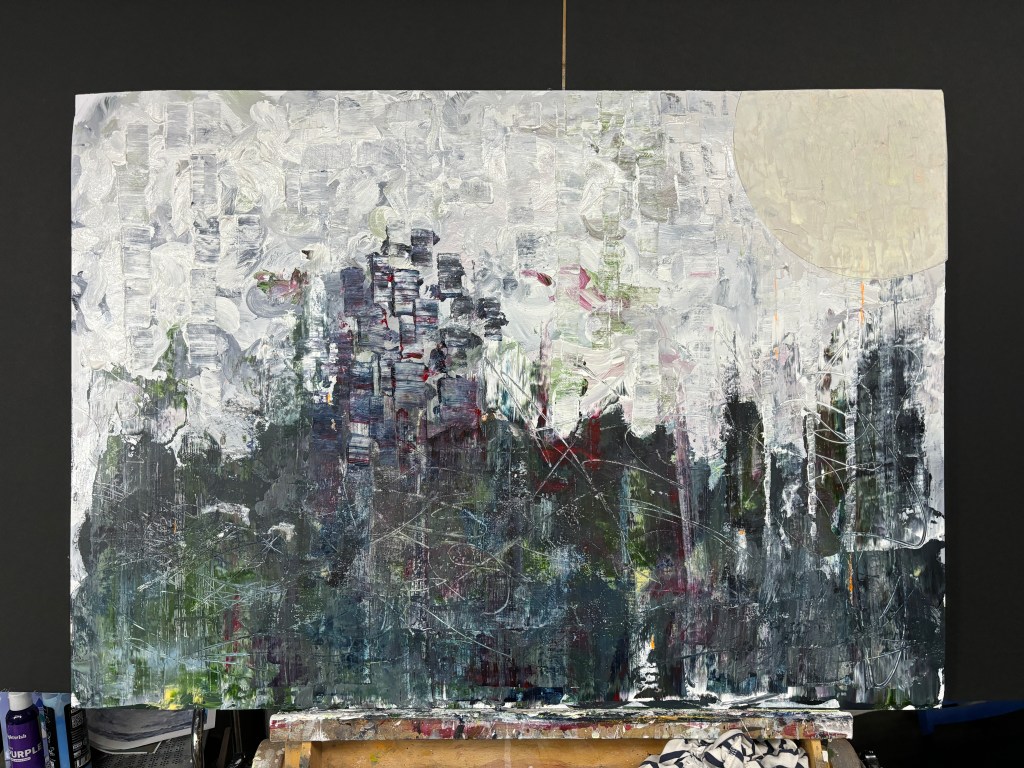
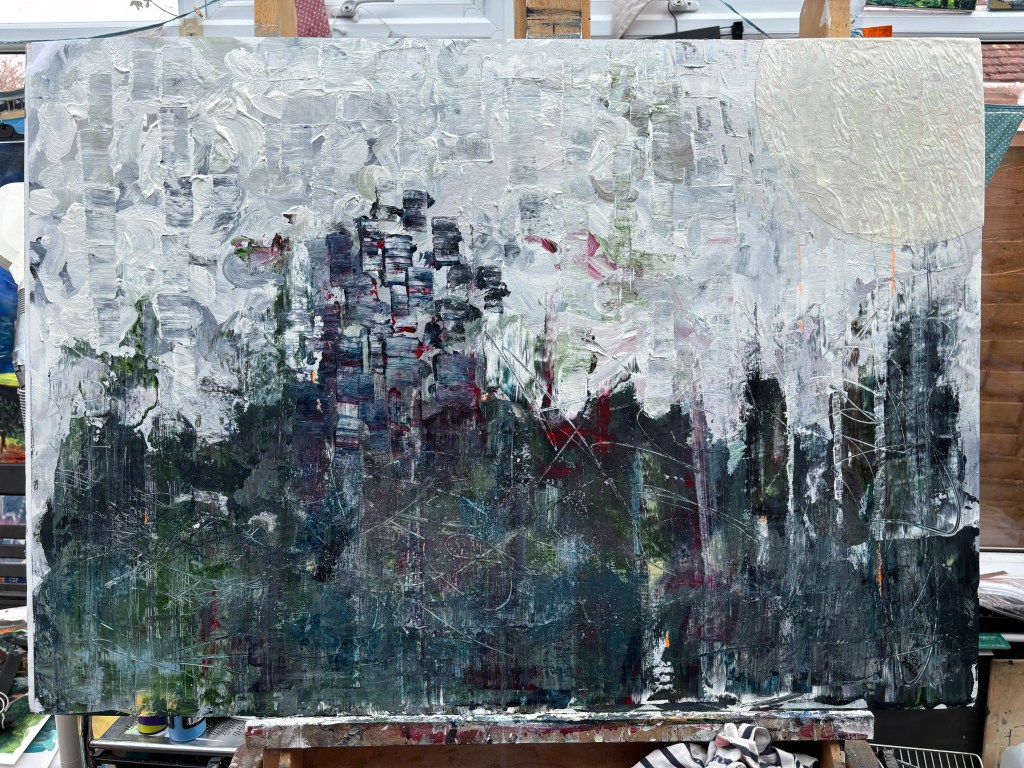

The small block of glitched material look to me now like DNA separating out on a filter; each small box a chunk of information not so far removed from a bar code, that contains everything we are. The NEO is pulling DNA from our planet up into space.
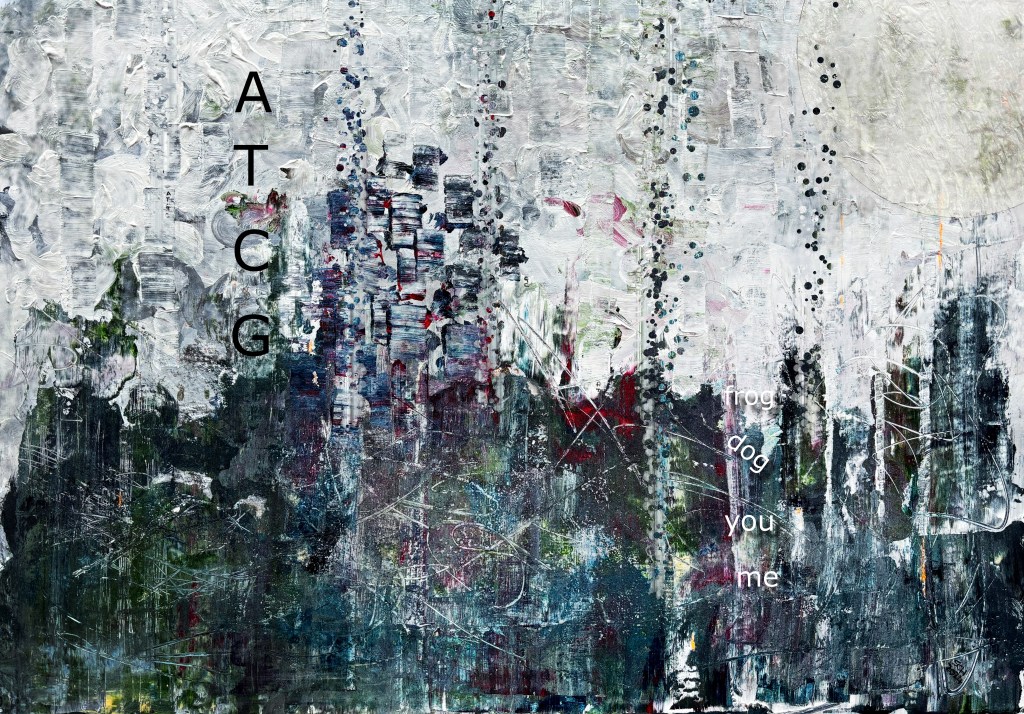
The text is applied in PhotoDirector, as is some of the animation. The capitals on the left are the initials of the four main nucleotides; adenine, cytosine, guanine, and thymine, that make up DNA. The text on the right is a very small list of organisms containing that DNA. In the animation, all of this is being stretched upwards and pulled apart. This image, as well as the original, can be activated by the Artivive app.
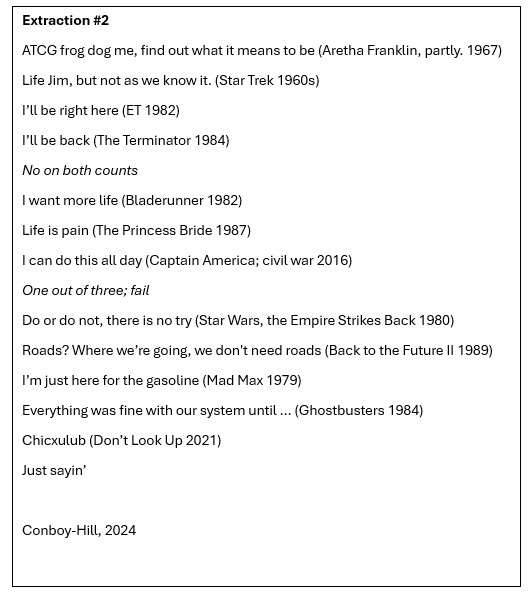
In-app recording.
SCH 2024
 Conboyhill Arts - art from stART to finish
We liked the start better than the finish. Sorry!
The Fab Four of Cley
🙂 🙂 🙂 🙂
LikeLiked by 1 person
Cosmologically, none of this ends well really!
But you meant the video probably and you’re right. It’s an in-app recording (in Artivive) which is limited to 10 seconds so it was only aimed at showing the 3D element for course work purposes. If you use Artivive to activate the primary image (the one above the video, a print, or the actual painting) it can run as long as you like. Or don’t like!
Thanks for looking and commenting, it’s much appreciated.
https://www.artivive.com/ <– about the app
LikeLiked by 1 person