
NEO ELE
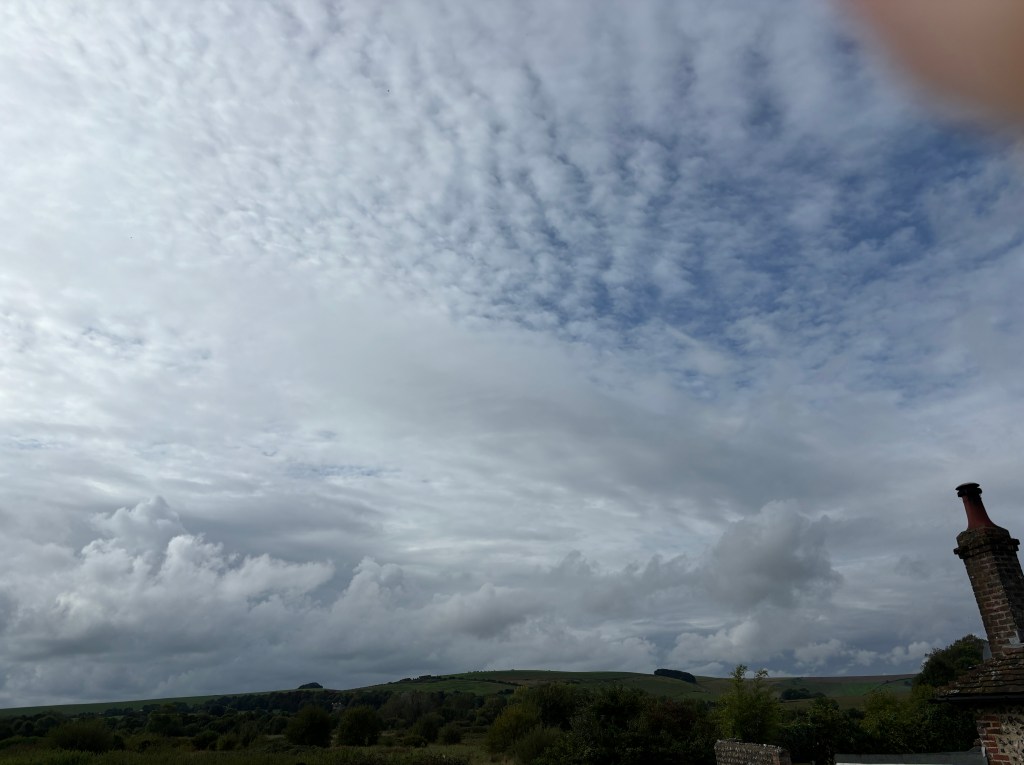
NEO – Near Earth Object. ELE – Extinction Level Event. I know; cheery. There are some 30,000 near-earth objects (Royal Museums, Greenwich https://www.rmg.co.uk/stories/topics/near-earth-objects-neos-near-misses#). The last one to hit us was also an ELE and wiped out the dinosaurs. The photo below shows a remarkable sky with a low landscape horizon and evidence of civilisation. There is also an unidentifiable blur at the top right corner which is actually my finger but which served immediately as proxy for an NEO because obviously.
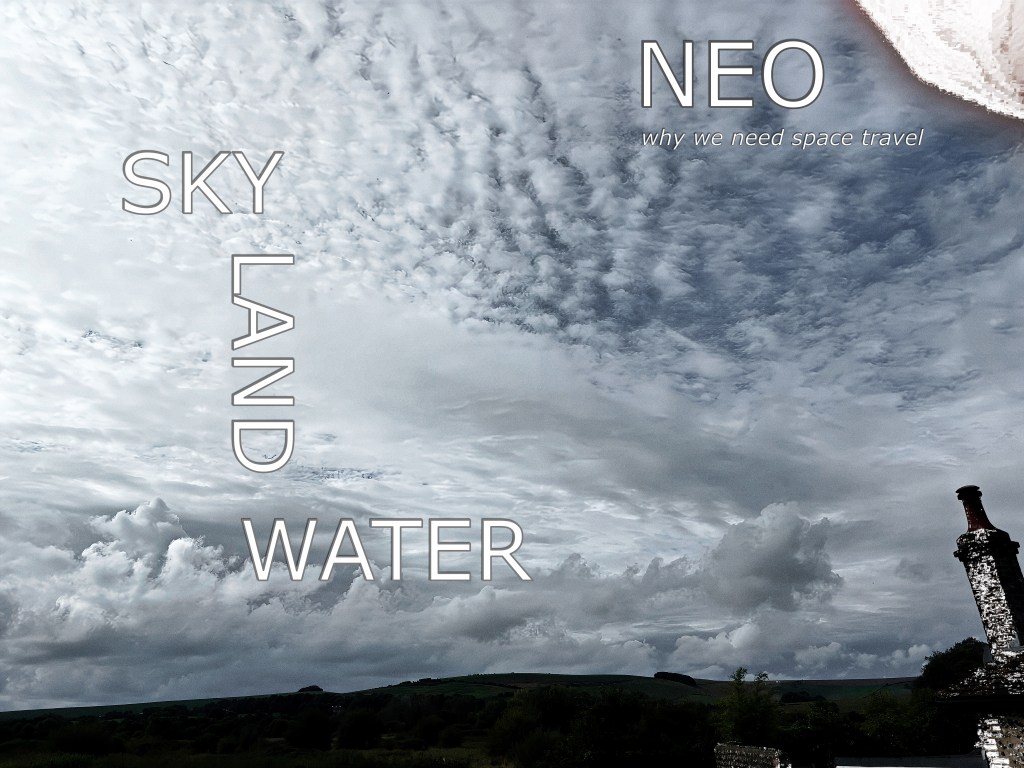
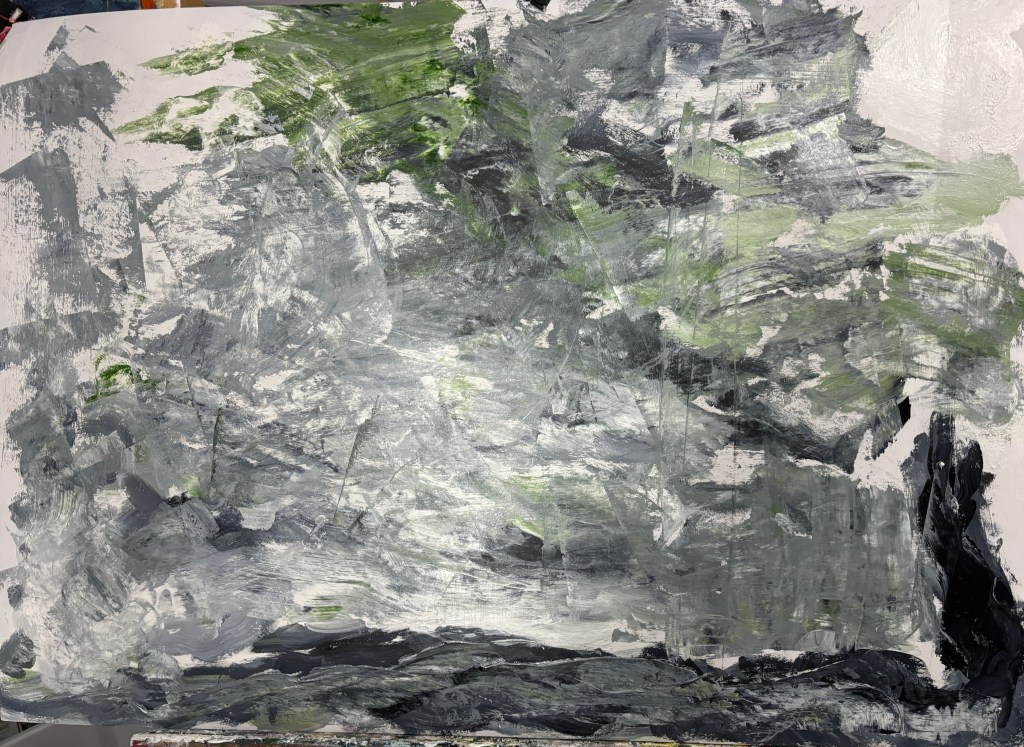
This gave rise to the text on the next image, and the animation beneath it. My next task was to translate the concept into a physical painting and it didn’t go quite how I’d imagined, given my recently emerging style.

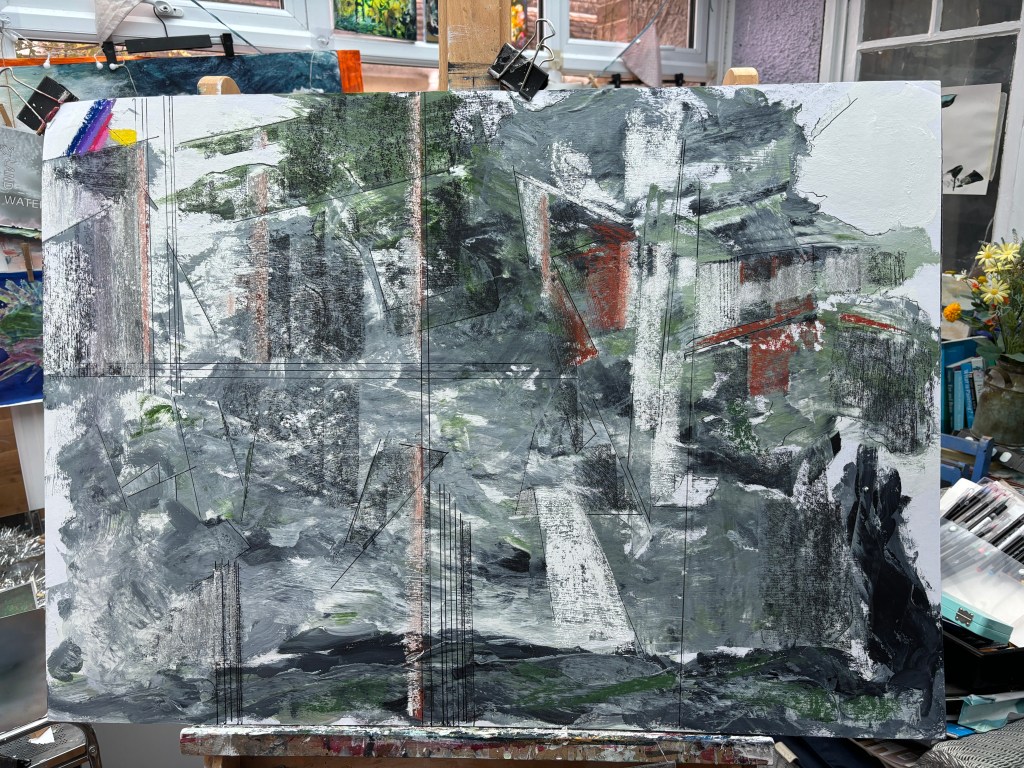
My next step will be to fix the pastel then cover the lot with a coat of varnish so the surface becomes slippery. This may or may not be followed by a layer of white acrylic which I can slide across or vertically in bands.
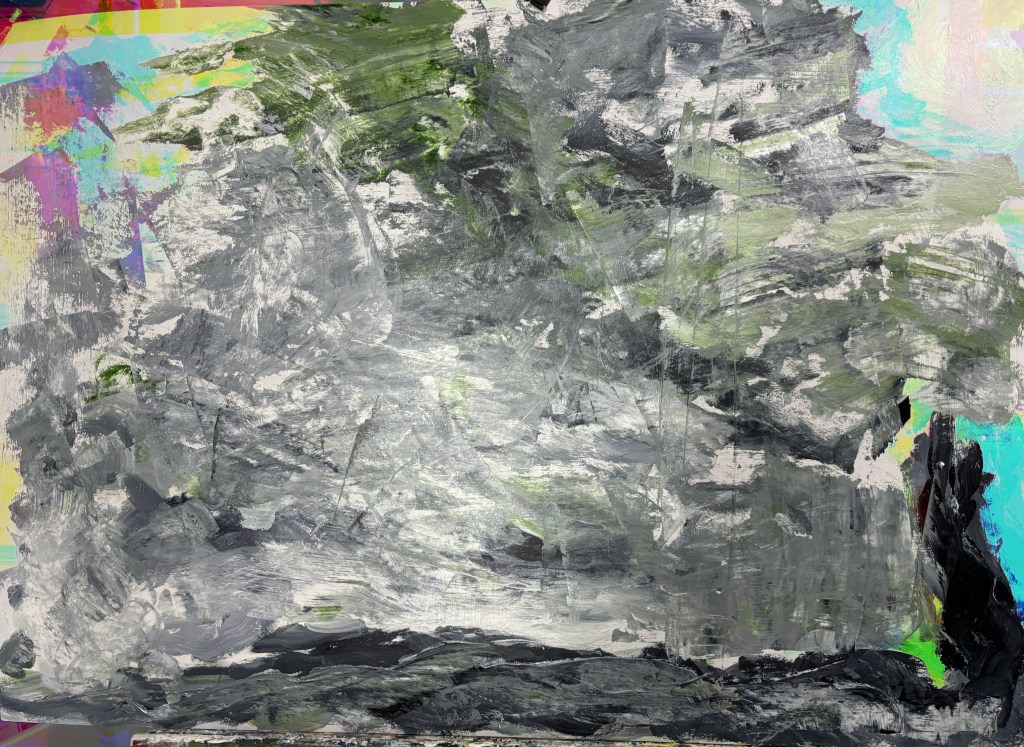
The gloss was a revelation because it brought out a vibrancy in the colours that I’d forgotten about and that made me pause for just long enough to bring out the orb top right and the ‘shower curtain’ lower centre with acrylic paint and an outline.
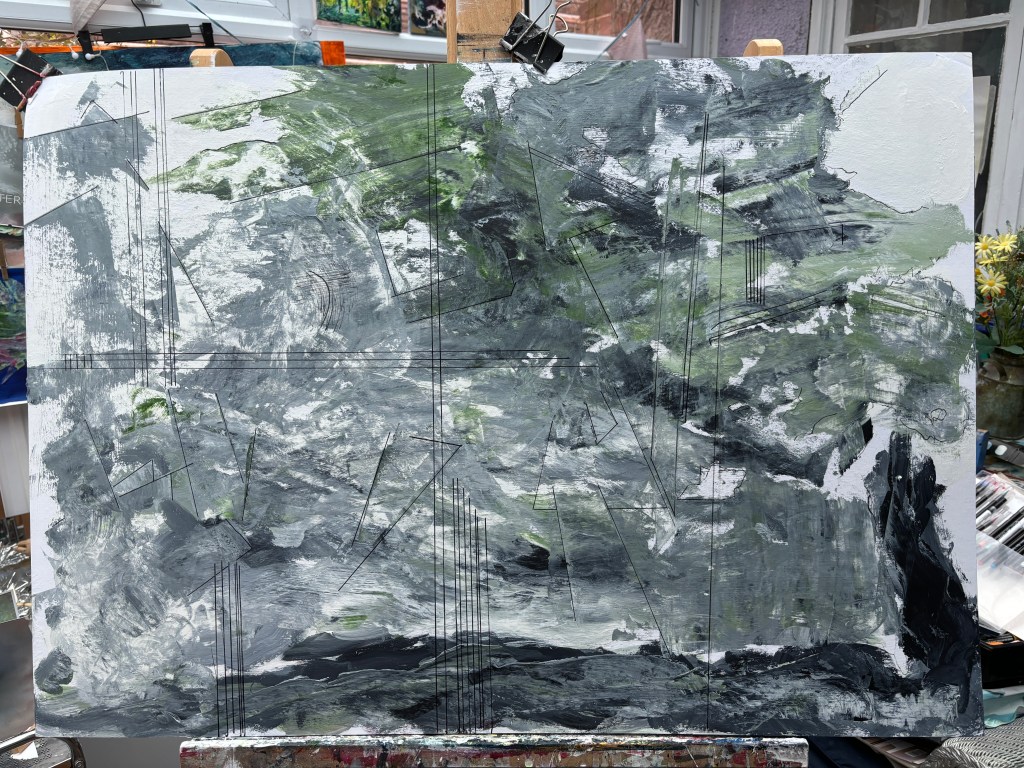
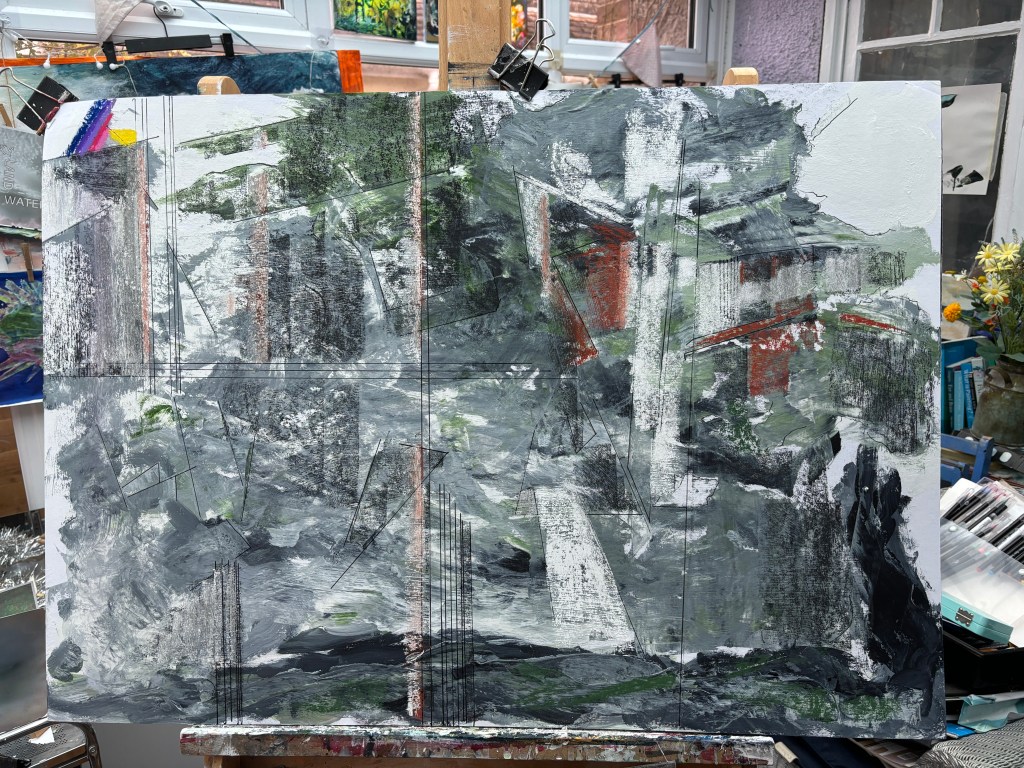
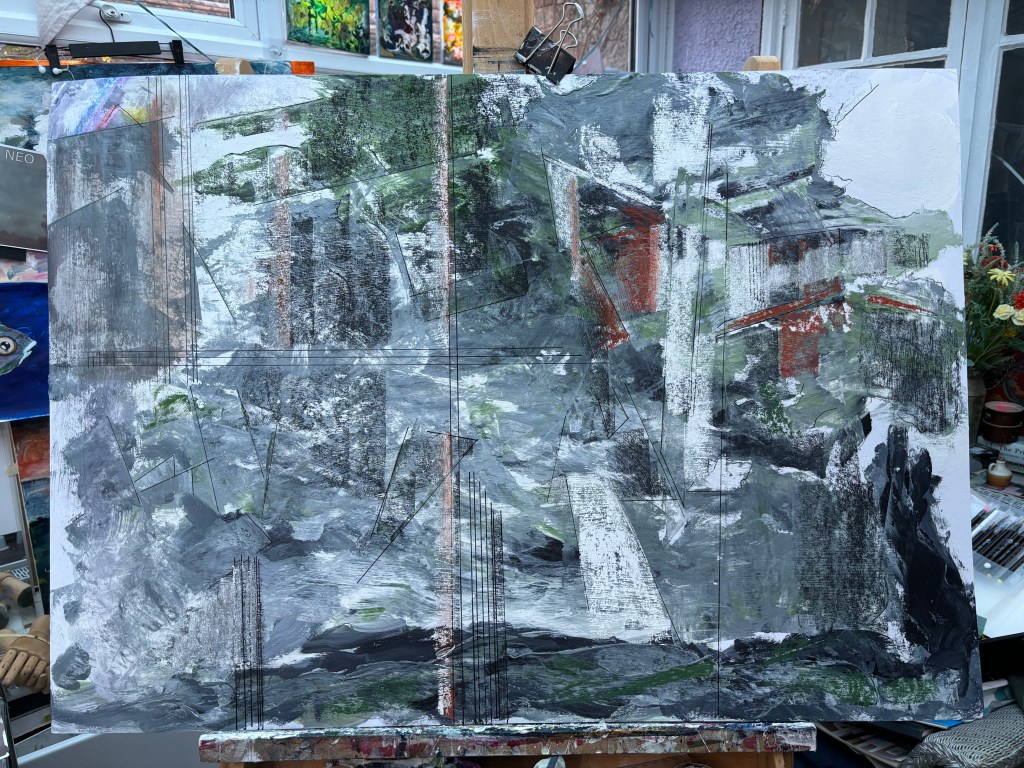
The three below are essentially the same but under different lighting conditions and with clearer demarcation of elements such as the putative NEO top right. The difference in impression, mainly between the centre image and the ones above and beneath it, is astonishing. The dark central one has, for me, the feel of an ancient Graeco-Roman city in the process of slow decay, while the others seem to be rough seas full of debris crashing onto rocks. Either would seem to be consistent with the slow death of a planet.
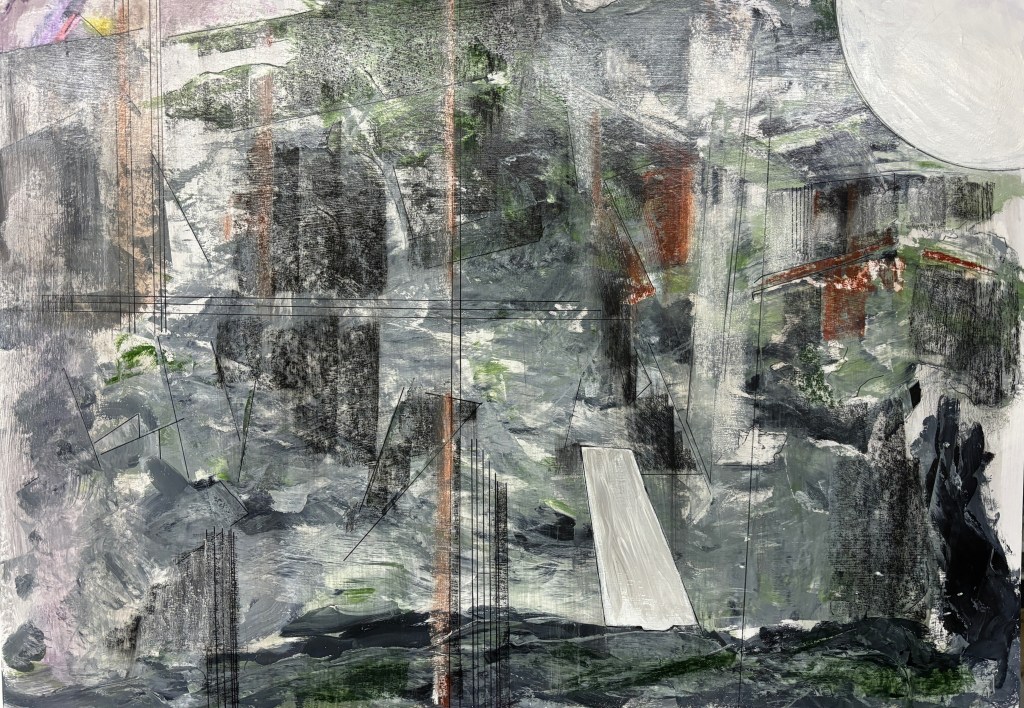
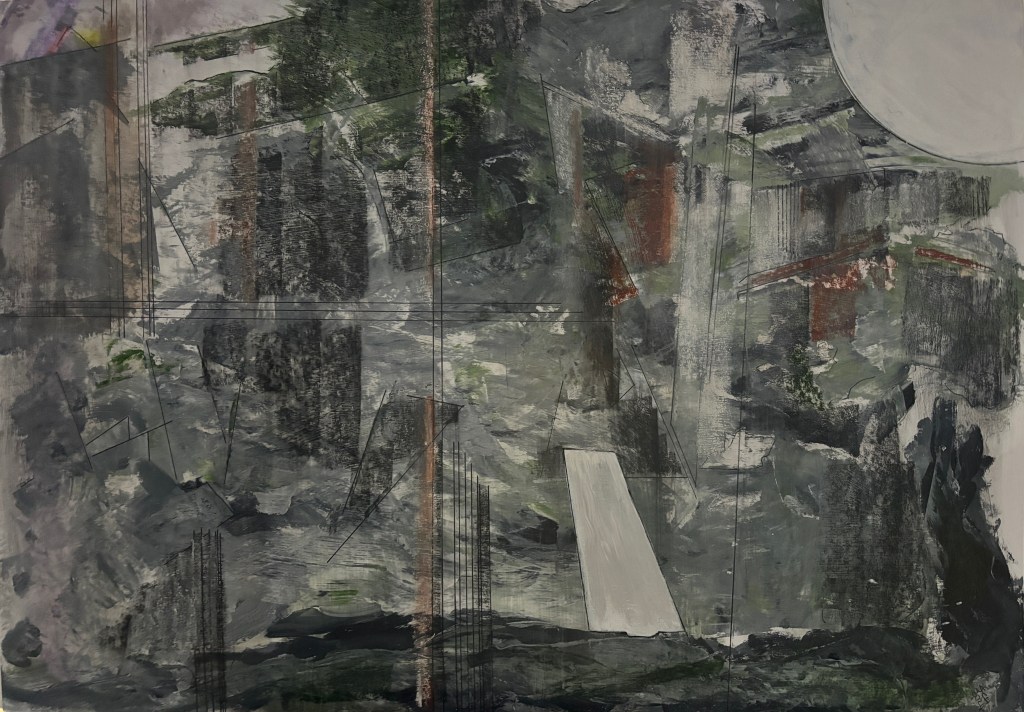
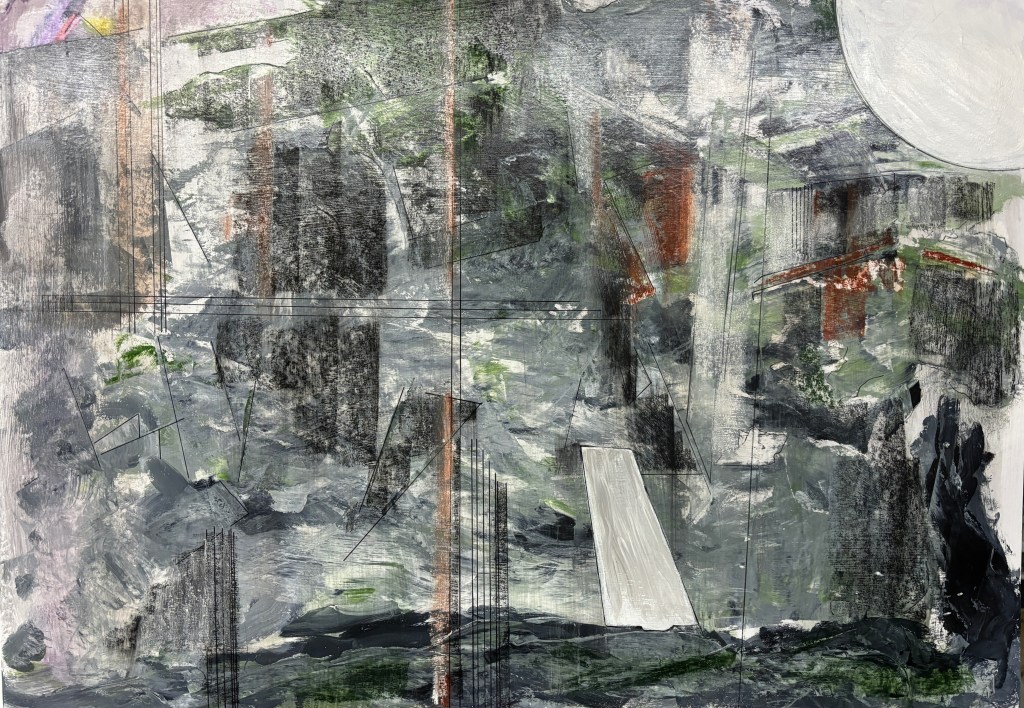
Tomorrow I’ll take a daylight photo and see whereabouts in the catastrophic encounter we are then.
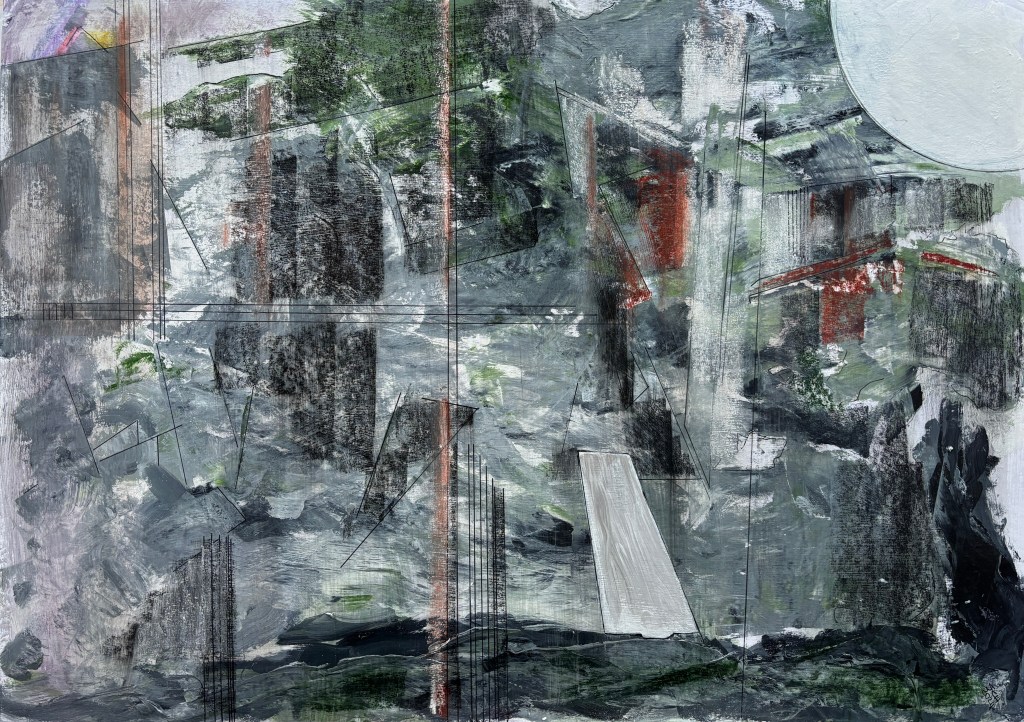
So whose style is this reminding me of? The lines, the geometrical edges, the slight surrealism, and even the colours seem familiar. I’ve done a reverse image search to see if that turned anything up but it didn’t, including any piece of work my brain might have copied and somehow replicated without either my knowledge or my permission. Bit of a relief, that!
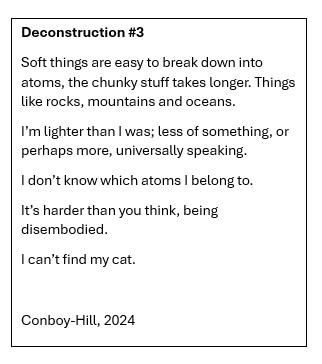
Moving on now to what’s going to be an earlier stage in the NEO/ELE process. I have three paintings in mind, this being the last frame, as it were, in the series. The next one may be either an intermediate stage or the earliest one depending on how things pan out.
Primary image now Artivive enabled so flash your app at it.
SCH 2024
*Update 4th February 2025. There is an asteroid coming our way with a 1.3% chance of hitting the Earth on December 22nd, 2032. Hardly your best Secret Santa event. https://www.bbc.co.uk/news/articles/cqx9dgpx98go.
But the good news is that we could nudge it into a 0.00% chance of hitting us: “In the unlikely event YR4 were headed our way, one option would be to divert it by hitting it with a robotic spacecraft, as was successfully tested out with Nasa’s Dart mission in 2022. That changed the course of an asteroid that was not on a collision course with the Earth. Nasa’s Dart mission showed that we have the means to divert an asteroid, but only if we spot it early enough,” says Dr Massey”.
And this, people, is why we need space travel.
 Conboyhill Arts - art from stART to finish
2 thoughts on “Nomad: deconstruction (*and why we need space travel)”