Networks
I posted a request for gallery space on the Second Life notice board which resulted in a two month residency at Xaraz gallery.
This demanded that I develop from zero my 3D building skills in order to prepare work, and then to position (hang) it in a 3D space. The owner of the gallery was helpful at all times, advising on curaiton and display, and nudging me to gok further with my building skills.
The exhibition gave rise to an artist’s talk at the gallery and a further presentation at a larger venue a little later. These events brought me up against the vagaries of virtual media players and the problems associated with ‘reading the room’ when avatars only express the behaviours they are programmed with. Both events led to discussions about art and galleries and building, at which many of these people were expert.
Prompted, or possibly challenged, by my tutor to consider building, or at least designing, an exhibition space myself, an idea I’d been contemplating since the previous experiences, I began the process of learning how to do this.
I used YouTube as my resource with advice from in-world practitioners to learn about:
a) prims (primitive shapes),
b) land impact (the amount of ‘weight’ a prim carries and how much weight a given plot of virtual land allows),
c) stretching, rotating, reshaping, lifting, making invisible, rendering physical or phantom, hollowing out prims,
d) inserting scripts to, for instance, count the number of visitors to a given location,
e) making and applying textures to a selected face of a prim,
f) linking prims so that they can be moved as one whole,
g) terraforming – primarily to avoid doing this accidentally,
h) finding lost items,
i) writing notecards for visitors,
j) and the implications of land ownership.
I began building in a sandbox, which is a place that allows people to rezz (resolve) items such as prims from their inventory and build. It’s often possible to get advice there although, given most SL residents are in the US, and often California, they’re rarely available to a Brit! Chat and the IM system works well though, and of course it’s in writing so much easier to access at a later date.
This gave me confidence to think about buying some land and a reasonable idea of the size of plot I would need.
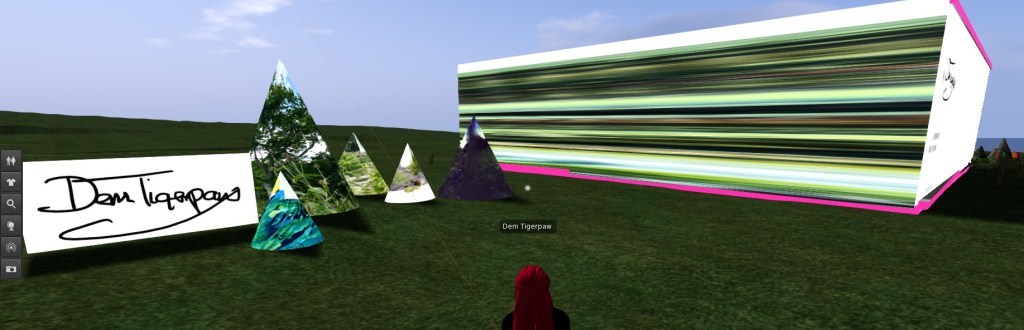
Subsequently, I bought one 1048sqM plot, then an adjacent plot of the same size to allow for expansion. Then, applying the skills I had begun to develop in the sandbox, I built/lost/rebuilt/redesigned/ the Strayfish Gallery and began stocking it.
It is not Bauhaus. The curved roof pieces were too difficult at that point, although I may try again later. Instead, I made a clean, white, modern building with a section to accommodate the media players showing how to work with the Artivive app to make AR layers.
I have kept the decor simple but dramatic, left gaps instead of adding doors as there is no weather or theft to worry about, and added foliage as photographs of my own environment wrapped around cones. I am not replicating reality, I am abstracting and simplifying RL images in recognition of where and what this place is.
Some of these are ‘outside’ on the second piece of land as a demonstration of connectedness to the gallery.
Body of work – continuation
Artist statement
I wrote this for my exhibition at Xaraz gallery. The owner approved it and said she liked the brevity and the light humour.
I mostly work on acrylics on card, paper, canvas or anything else interesting that comes to hand. This has been hugely expanded into film, photography, and augmented reality (AR) since beginning a distance learning degree in painting with the Open College of the Arts (Open University) in 2018. I’m heading for the final third of the final third with just one unit to go before graduation. Wish me luck!
Dem Tigerpaw, past psychologist, present writer and trainee picture witch
Physical, photographic, and digital work
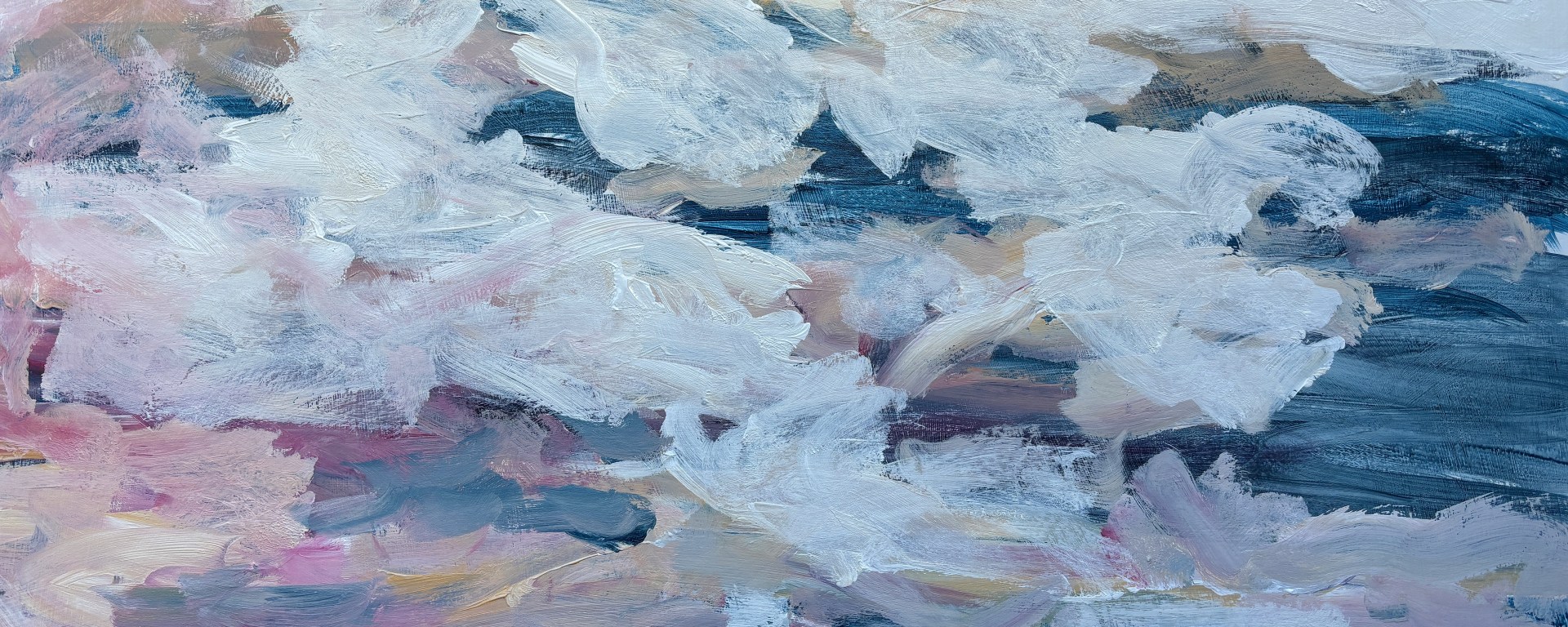
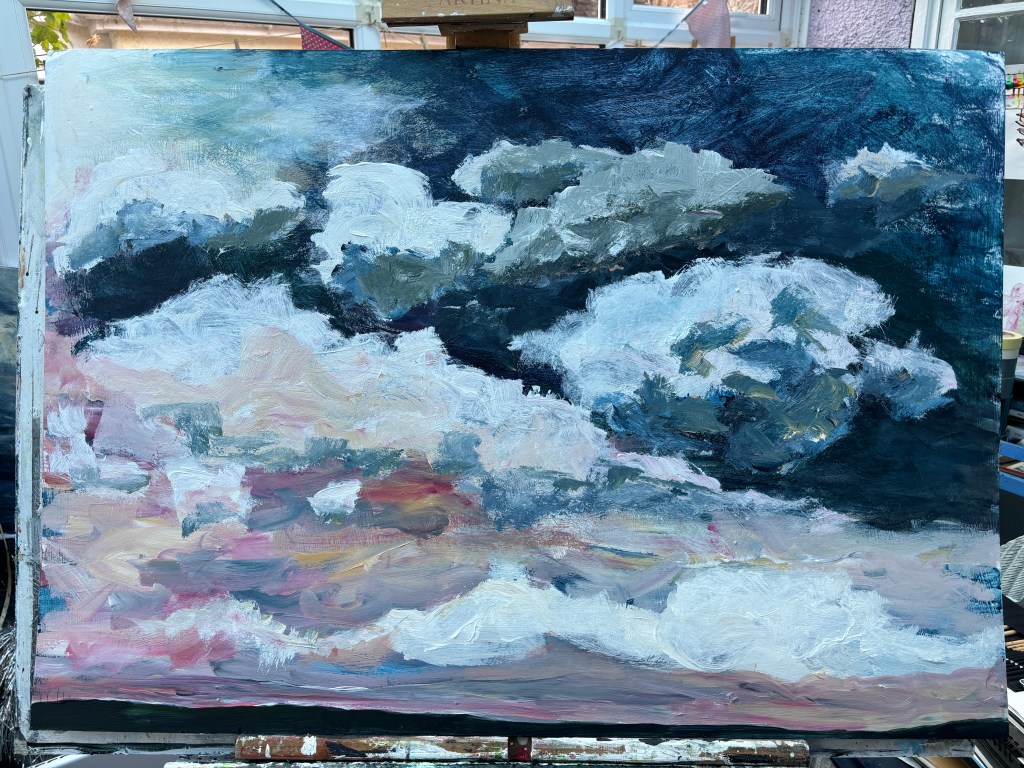
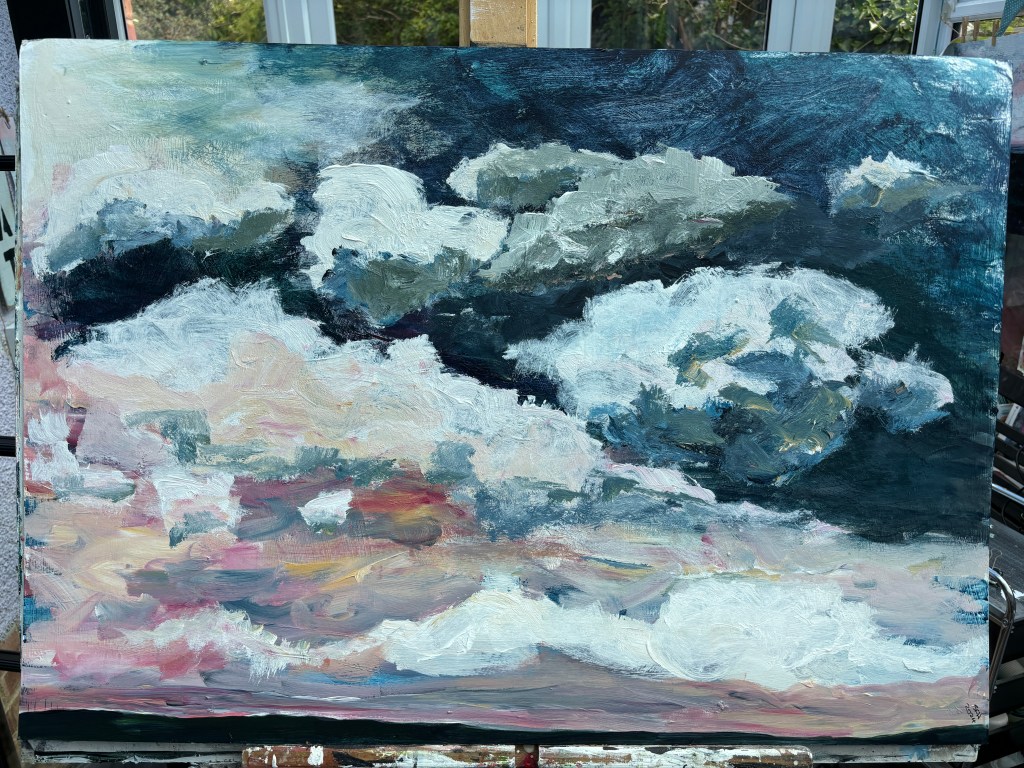
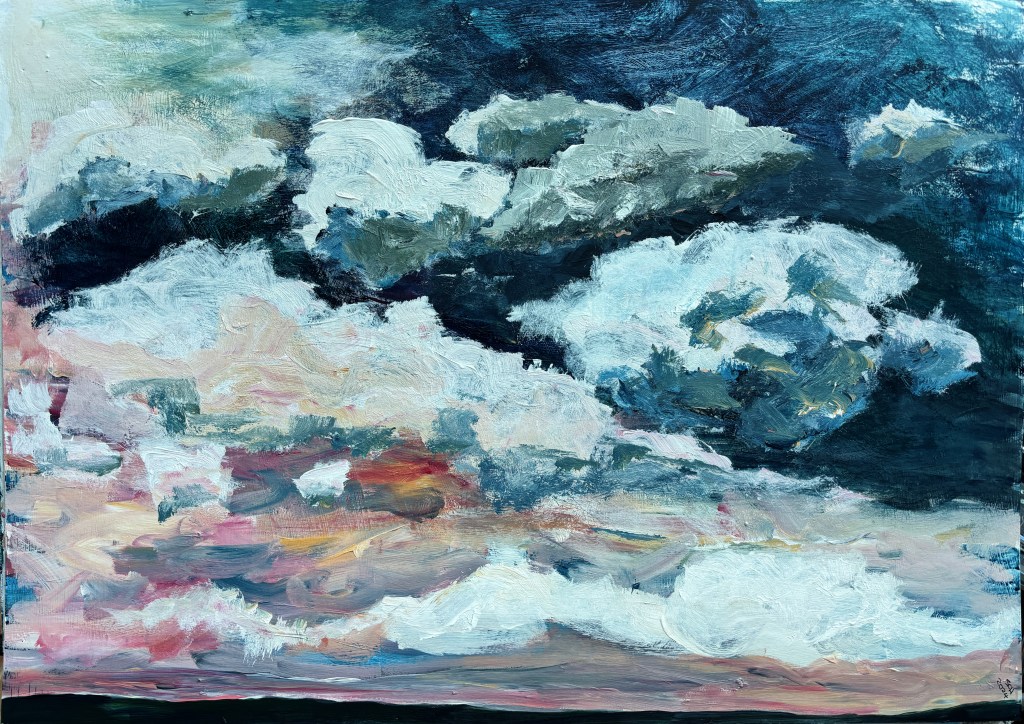
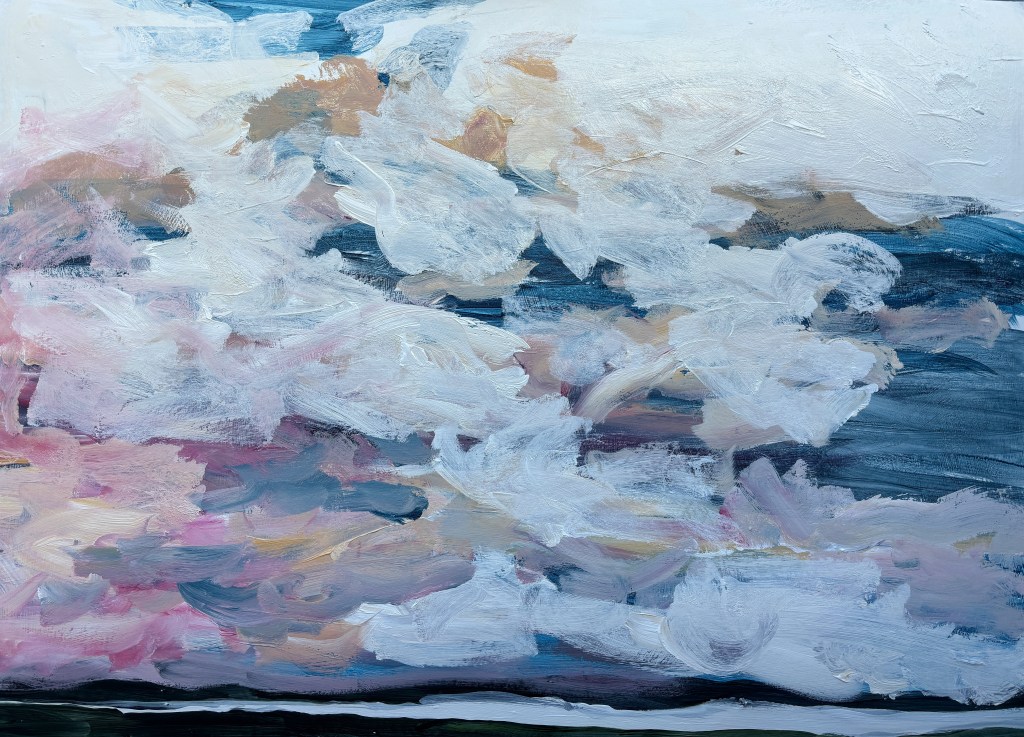
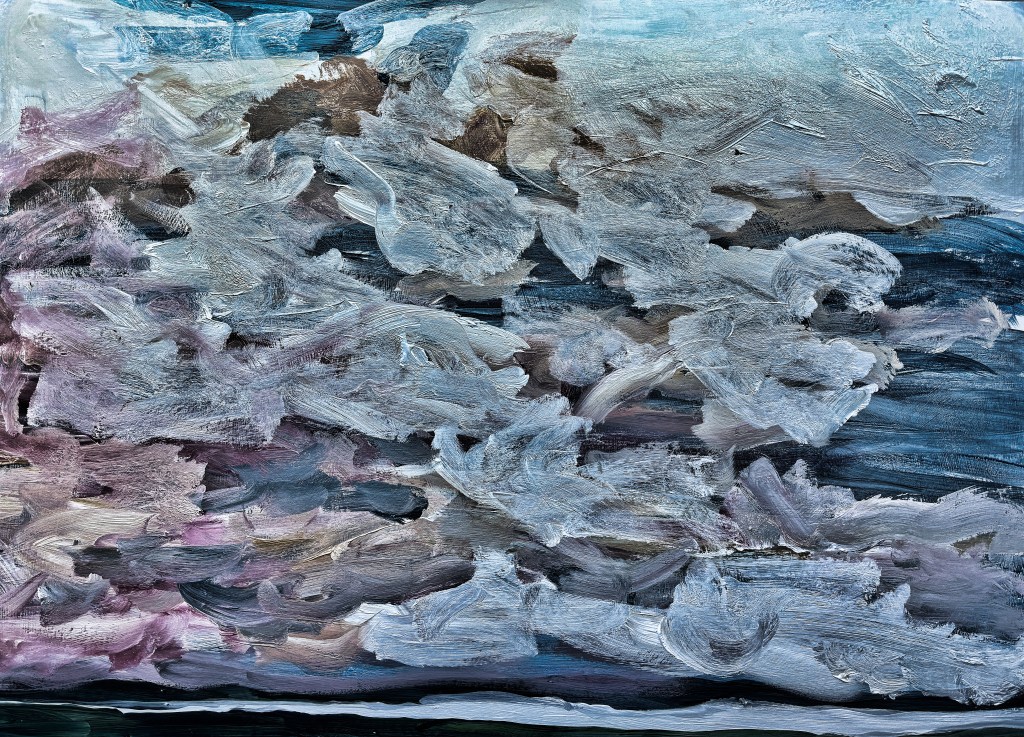
Based as always on one of my photographs of the local landscape, the camera tilted to confine the land horizon to the lowest level. Executed as always by drawing out the feel of the landscape, the weight or the buoyancy of the clouds, rather than the detail of it.
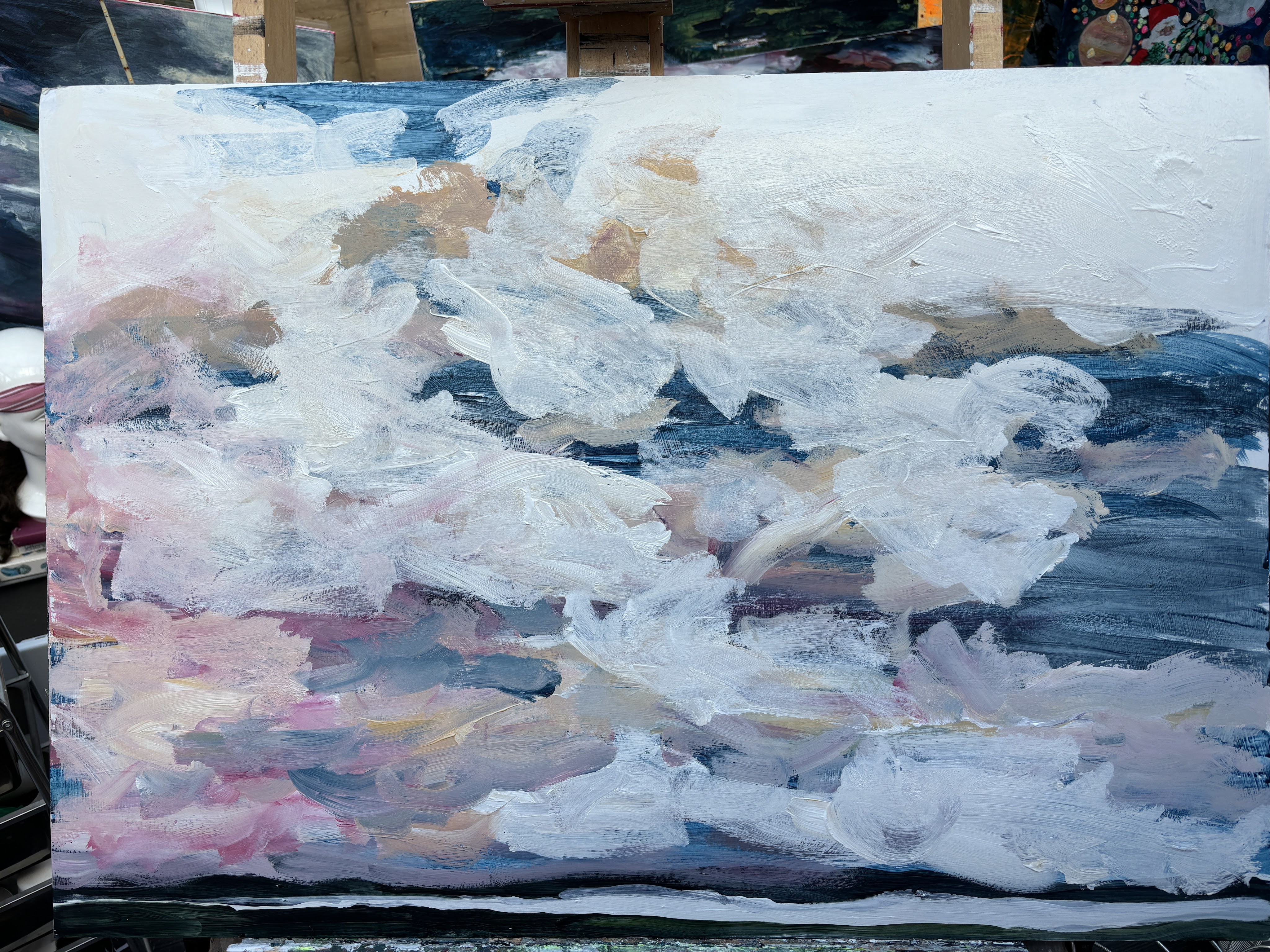
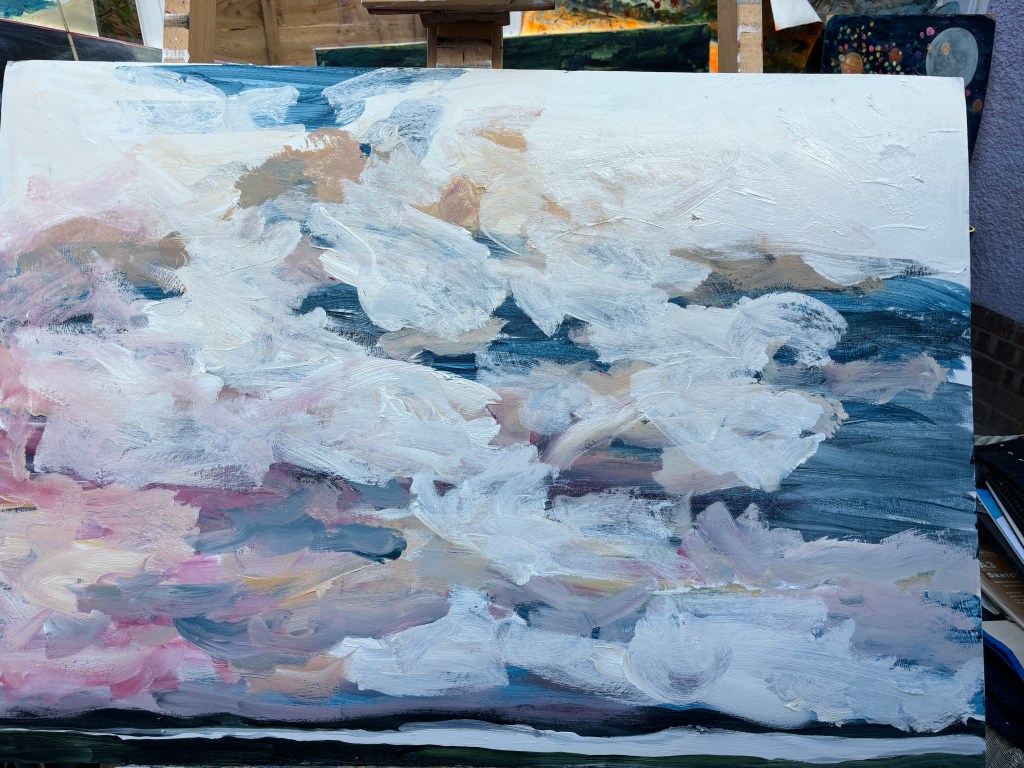
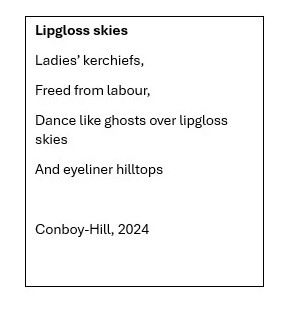
This first iteration – and it all happened very quickly – reminds me of tissues or the handkerchiefs of Victorian ladies escaping into the wind. I like it and I’m wondering if I should have hit stop at this point. Luckily, in the digital age, I can crop the photo and use it as is.
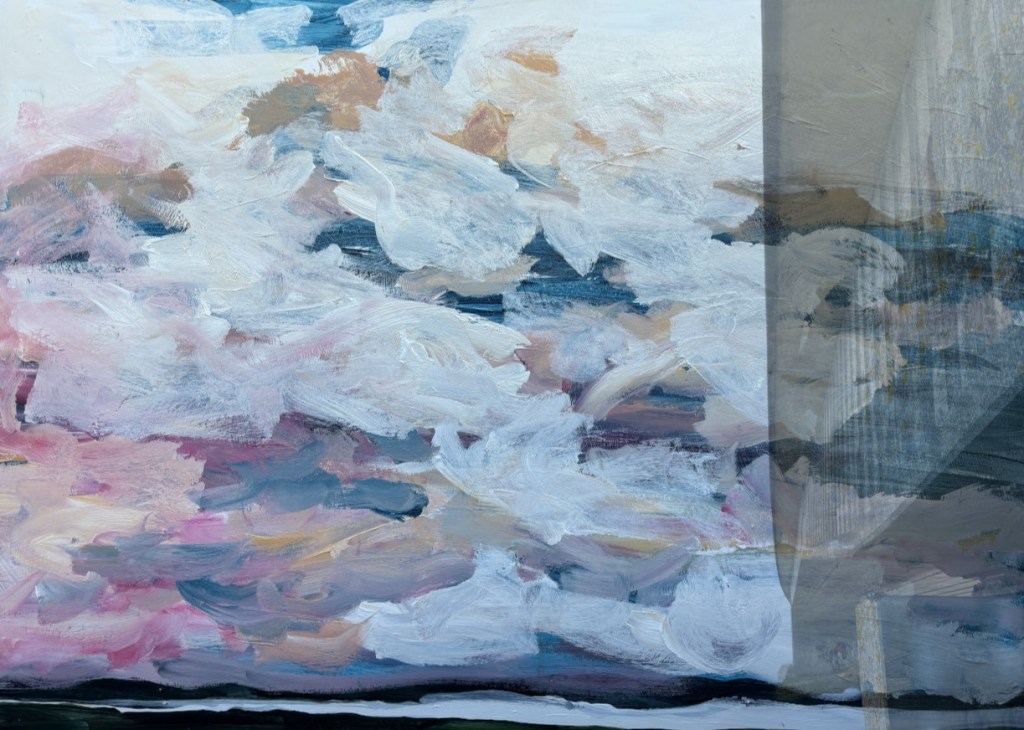
Unfortunately, I sliced off some of the righthand side but I’ve found another photo in which I sliced off the other side so I’m wondering if I can blend them.
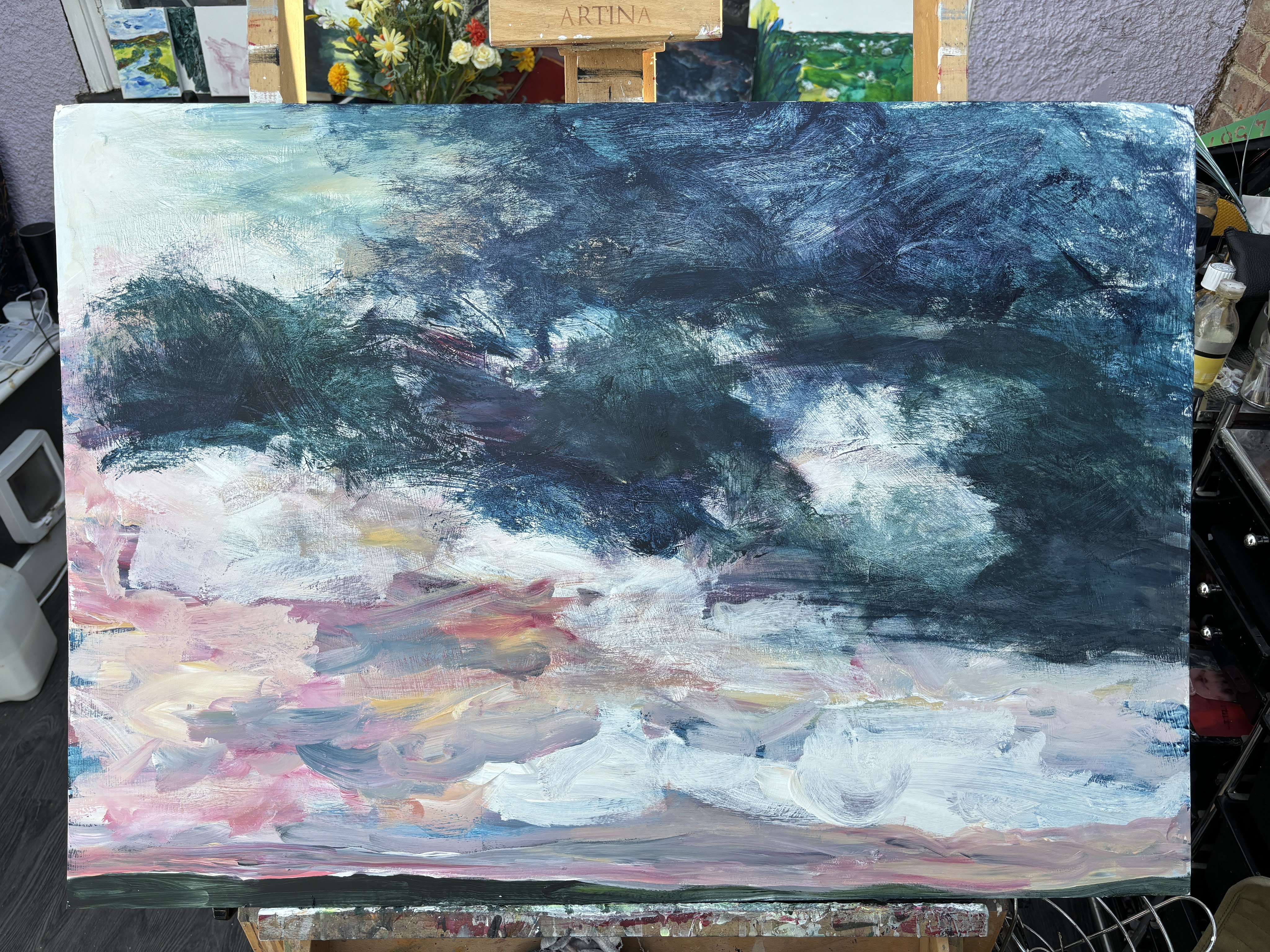
Done, I believe. What’s it called though?
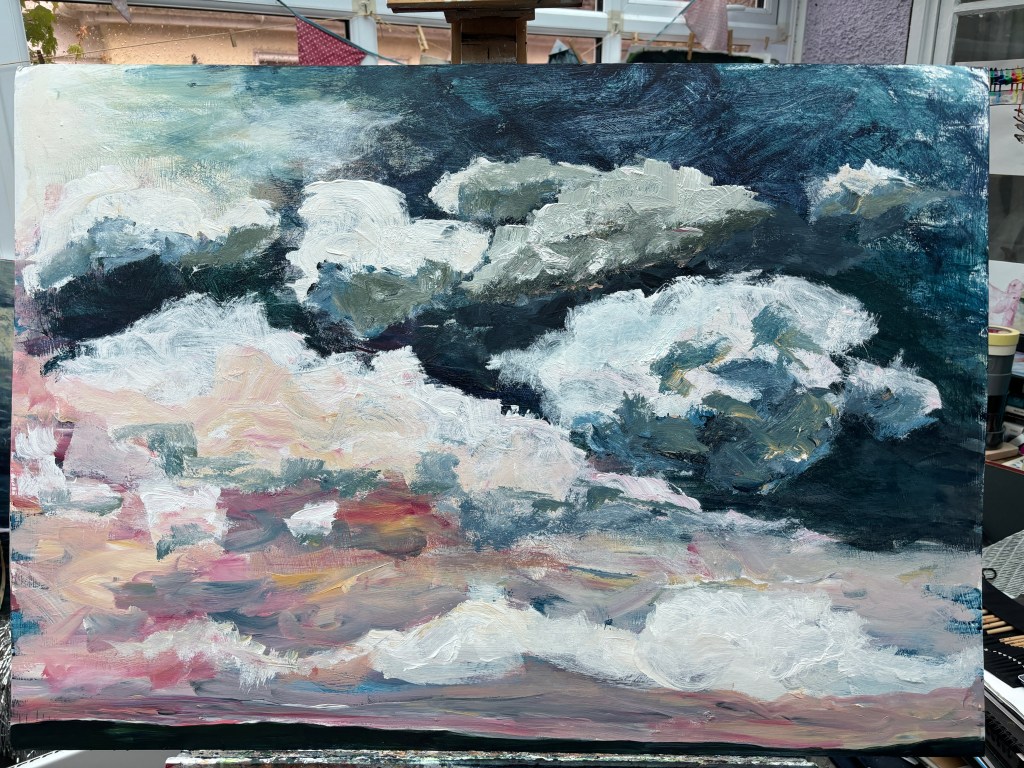
Another photo tomorrow in better light, then a crop.
29th May.
SCH 2024
 Conboyhill Arts - art from stART to finish