
Drawing on literature’s long-held practice of looking closely at the structure and nuance of text, art repurposes this to mean close looking, seeing (echoes of John Berger here), and analysis of “what the work is, means, and does in the present time of viewing” (Mika bal ‘Spider’: the architecture of art writing (2001) PXII). Both practices require the reader/viewer to pay very close attention to the material.
There is clear value here in that, for literature, the currents of the writing might be exposed, the ebbs and flows of it across and down the page, and the tensions set up by punctuation, white space, and choice of words. I can see that there might be similarities of analytic grammar for viewers of art such that layers of technical nuance, of passage and instrumental technique might be revealed. Does art sing? Maybe, if you listen to it with your eyes.
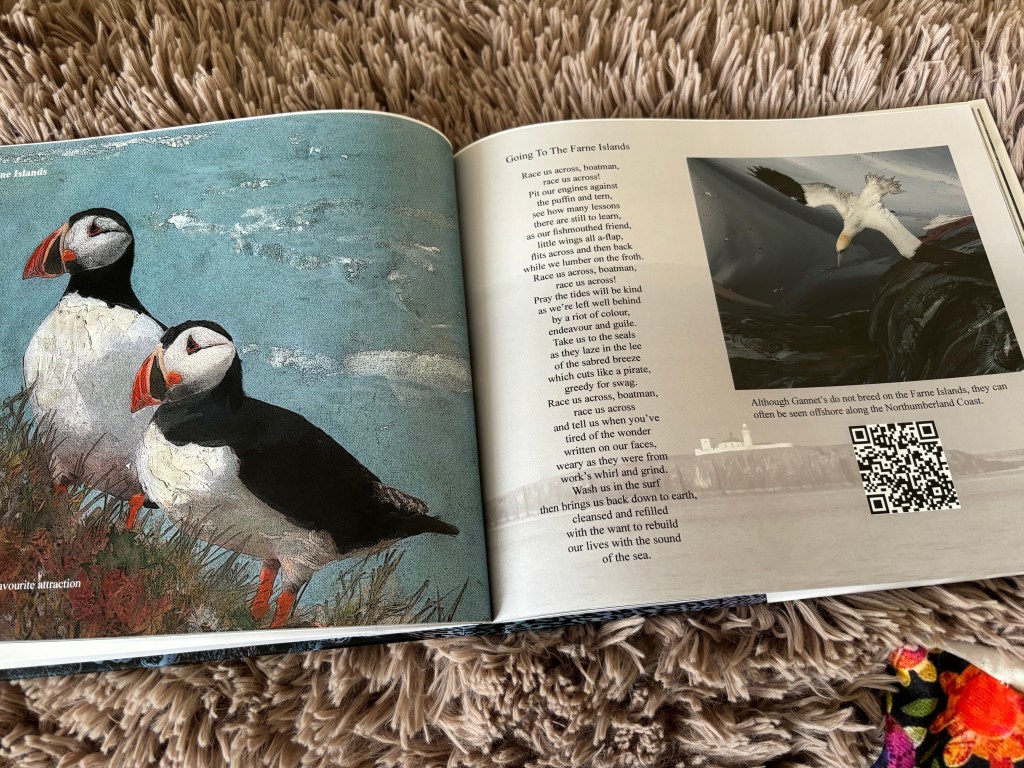
Ears, eyes, everything. The Sound of a Landscape by MiE Fielding with poetry by Harry Gallagher.
Fielding and Gallagher’s book immerses us in soundscapes, artwork, and unfussy poetry that speak directly to us, bypassing the nonsense of floridity.
Ultimately though, every critique is a subjective analysis that may not be replicated for anyone else except by suggestion and expectation. Tell people there is a voice in a burst of white noise and many will hear one (e.g. Nees and Phillips, 2014). Tell them from a position of authority or in the context of group investment and even more will hear it. Social influence + subjective target material + power and influence is likely to lead to opinion expressed as fact that offers no foothold for objective challenge. But as a personal exercise, it may access depths of observation that are beyond even attentive reading/looking and this could be a pivotal moment in a person’s own approach to their work.
I have to say I am less interested in how people write about art than the capacity of anyone writing anything to do so with clarity, in plain language, and with an enthusiasm that avoids fan-girl subjectivity, heights of floridity, and the kind of obfuscation designed to impress. To me, Street Smart (Steiner, 2007, recommended text for this unit) embodies the faults that compromise readability and starts as it means to go on, “Untranslatability is the lesson to be thought.” So after a quick skim of the rest, that is where I stopped.
SCH 2024
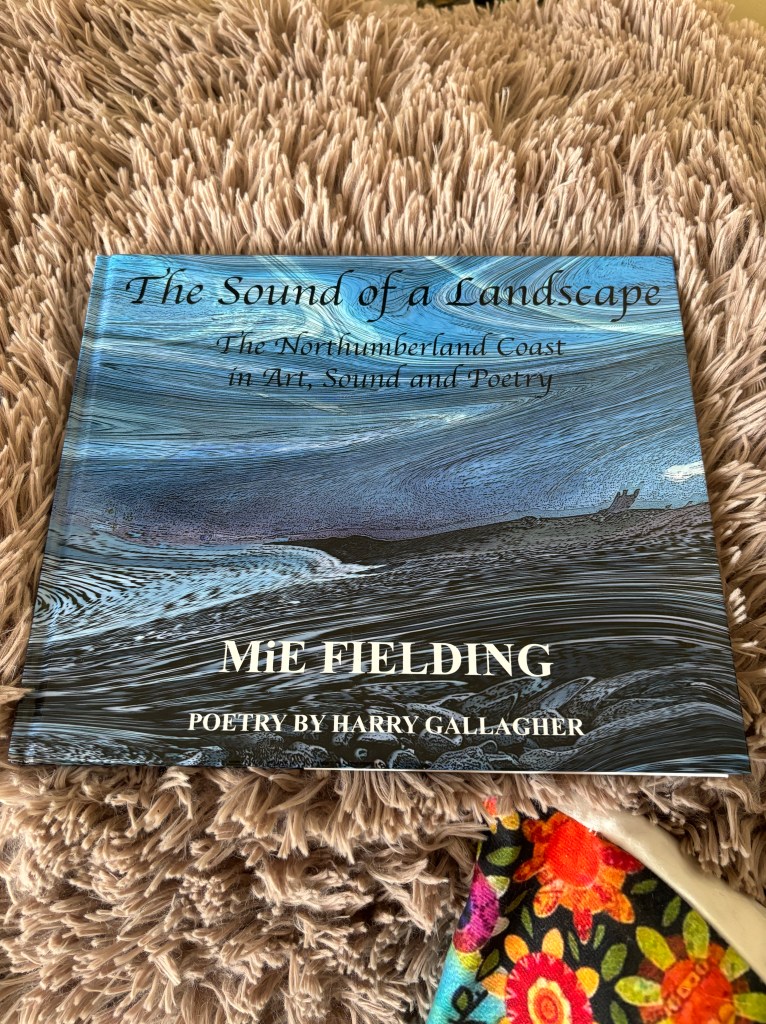
Fielding, M. and Gallagher, H. (2023). The Sound of a Landscape. Voert Digital. This is a thing of raw beauty.
Nees, M. and Phillips, C. (2014). Auditory Pareidolia: Effects of Contextual Priming on Perceptions of Purportedly Paranormal and Ambiguous Auditory Stimuli. Applied Cognitive Psychology. https://onlinelibrary.wiley.com/doi/10.1002/acp.3068
Steiner, S. (2007). Street Smart: thinking pictures in the tradition of street photography. Image and Narrative, 18. https://www.imageandnarrative.be/inarchive/thinking_pictures/steiner.htm
 Conboyhill Arts - art from stART to finish