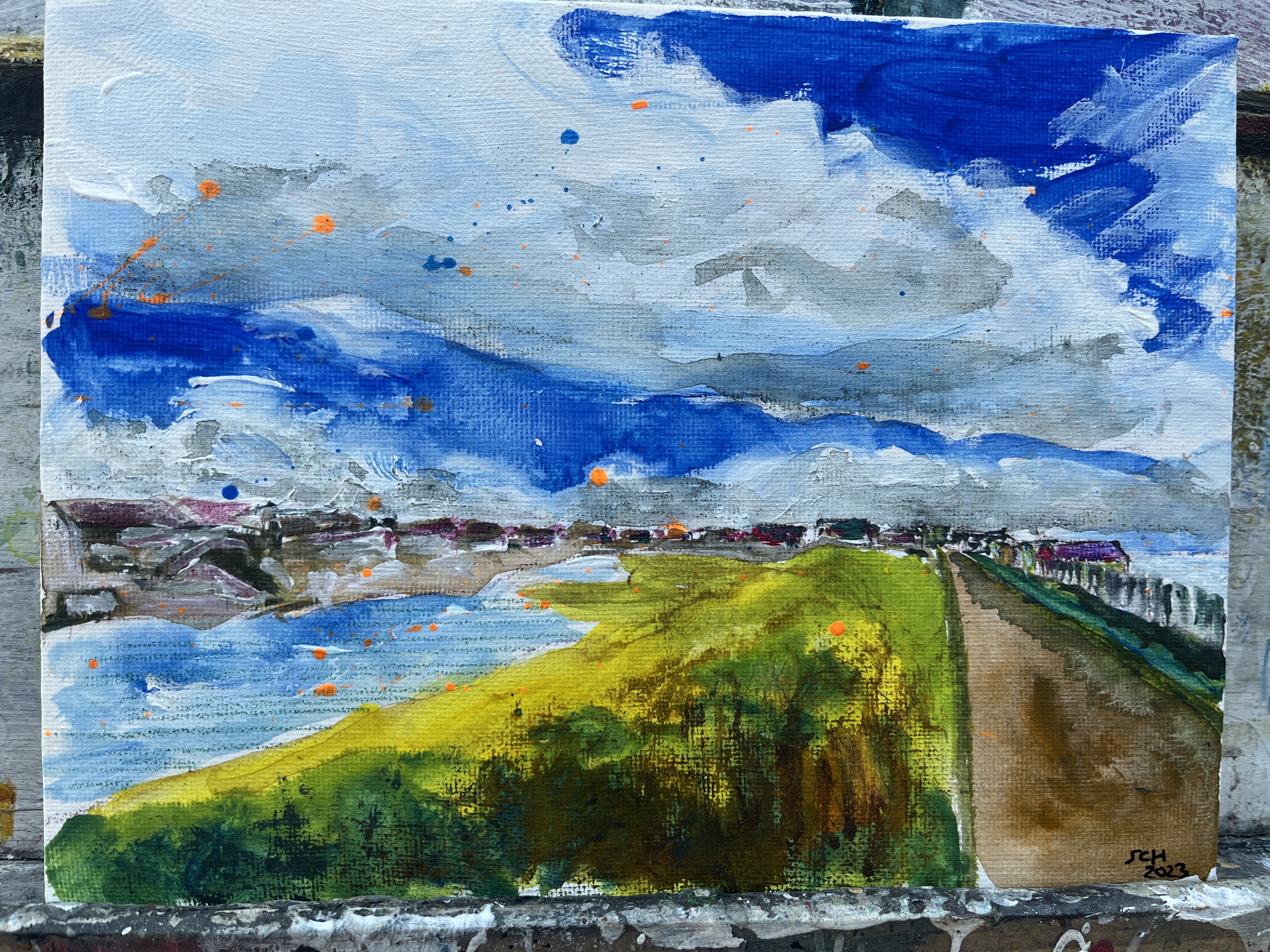
Flooded fields. Acrylics and watercolour pencil on 18x24cm canvas. These are reclaimed fields following the raising of the river’s banks, but they’re still subject to flooding. Often they look like small lakes dotted with waterfowl; and we get a bonus of two skies at once.Mullet feeding in the shallows of a tidal river. This is near a water outlet from the fields and presumably has nutrients they find attractive. The water is never clear or reflective in the way the standing water in the fields is, because it’s tidal, the river bed being stirred up four times a day as the tide rushes up and then down, back to the sea. I used a technique I haven’t tried before to render the fish. They’re fast and murky so it’s hard to make out shapes, and the water is also moving so I really just wanted suggestions of fish rather than exemplified ones. To do this, I used a background of drifted orange pouring paint which I knew would add undertones to the rest. Then I painted in the rough shapes of the fish with white acrylic. Once dry, I applied brushable wax resist to the shapes then applied layers of dilute acrylics in green and sludgy brown to make the water around and over them. As with other paintings in these series, I used paper towel roll to draw off excess fluid and to tease out the shapes where I wanted them.Beck. Acrylics on 18x13cm canvas. Lancing seafront. Acrylics and watercolour pencil on 18x24cm canvas.
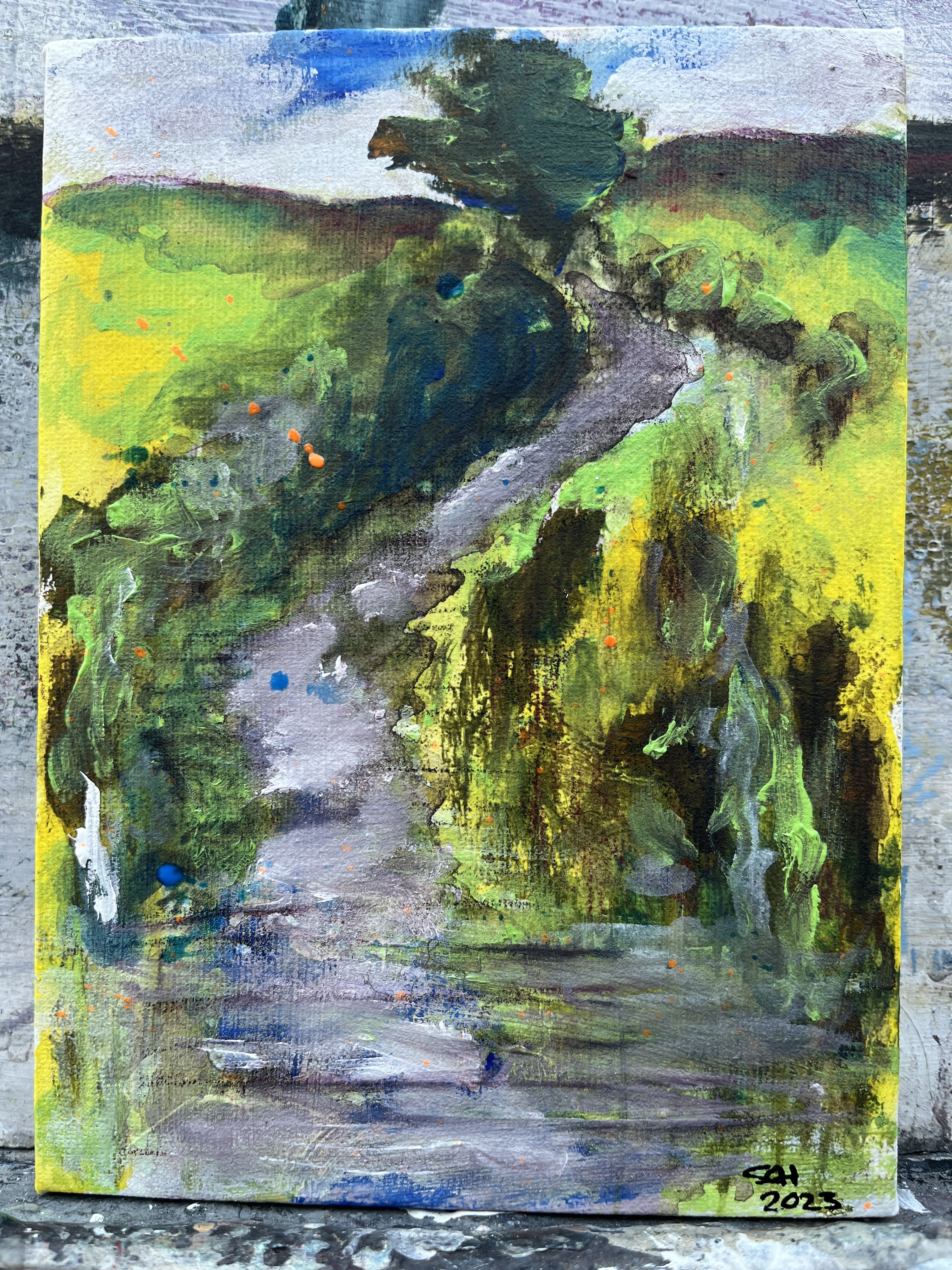
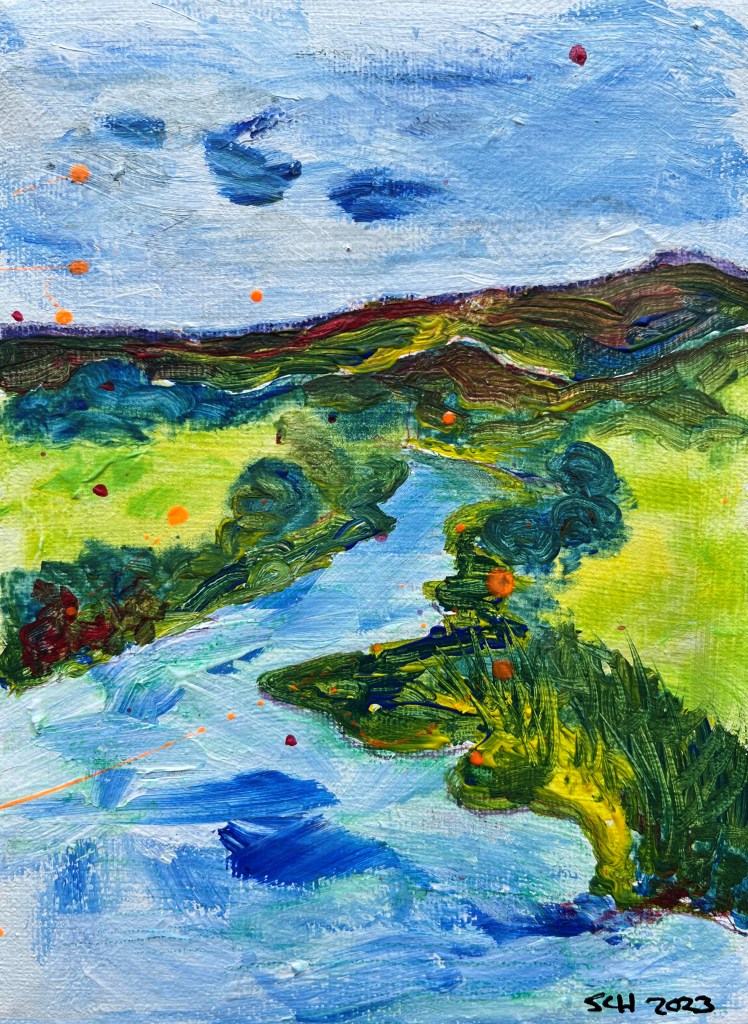
24th August. I looked at the Beck painting and all I could see was twee whimsy, so it’s had a slap of primer and a reboot.
Beck. Acrylics and watercolour pencil on 18x13cm canvas.
This has been an interesting exercise and much of it came out better than I’d imagined it would. There’s no doubt, though, that I feel better about having more elbow room on a canvas than these tiny titches permit, but also that being forced into a small space makes me think differently about how I use media. In these, I’m using acrylics more like watercolours, and also bringing watercolour pencil into the space to make tiny marks I find difficult to achieve with a brush. This medium has the advantage of drifting when wet while leaving a granular edge at its margins.
In terms of personal preference, I will always go with the bright, stained glass colours – blues and yellows rather than muddy oranges and greens – so some paintings are on my yes list just for that reason while others are more ‘well if you must’.
I have more of these canvas sets due to an error of ordering, mine or Amazon’s isn’t clear, but I need a re-set before I take another run at making work in these sizes. Luckily, I have course admin to occupy me prior to my final tutorial of this unit!
SCH 2023
For a list of workshops, groups, conversations, and other activities see my dedicated page


 Conboyhill Arts - art from stART to finish