I can’t recall when the term ‘going large’ became popular, or what it referred to, but this time I’m going small. It isn’t something I do lightly because I like the big gestural work, and my close vision struggles with a magazine never mind the scales of the two sets of canvases I bought. Challenges though, are jolts out of ruts.
I’m staying with the landscape theme and using photos I’ve taken over the last few years on walks near the river. There are no ‘in progress’ shots of the work because they were all made flat and wet, which doesn’t lend itself to photographic documentation.
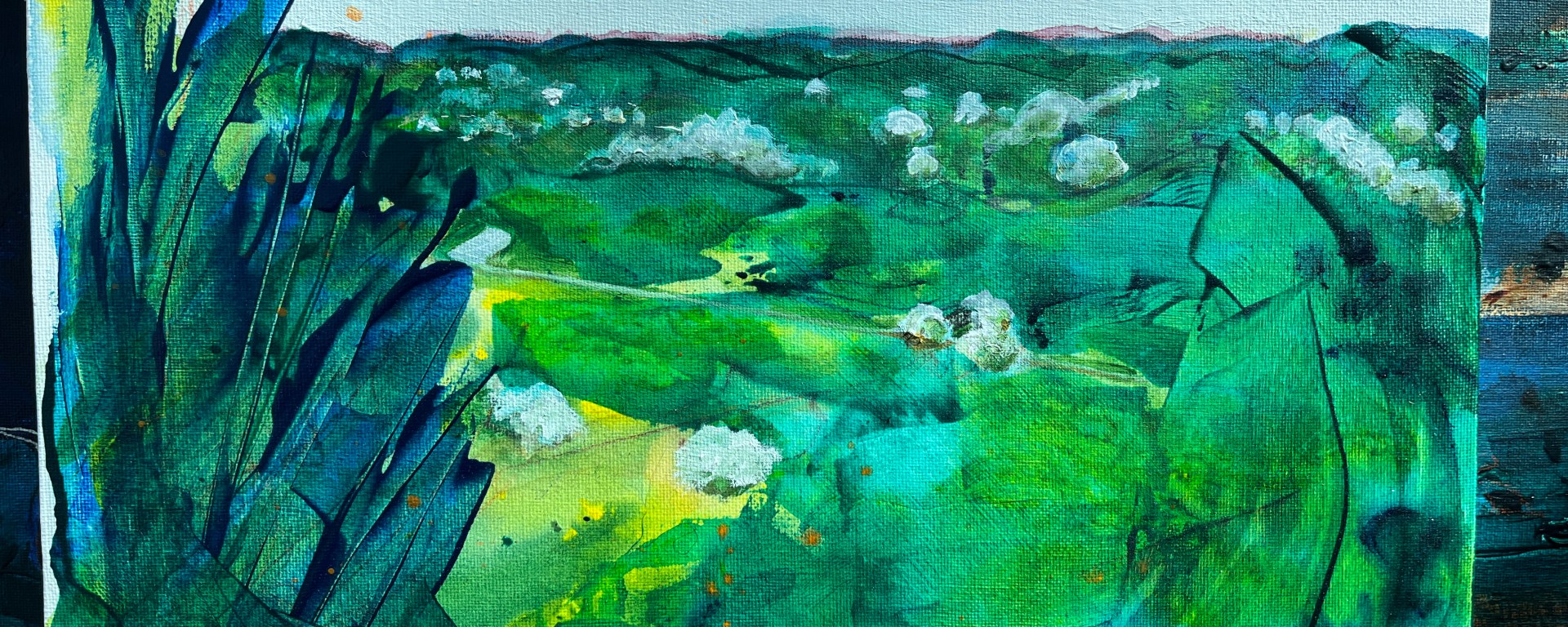
This is the first; a scene I probably took from Bramber castle but I can’t be sure. It was clearly Spring because all the bushes were full of white blossom, so I’m guessing I took it during lockdown as the castle was within the limits of the time and distance rules. As a bonus, the walk up there is very steep and would suit anyone’s need for a cardio workout.
Acrylics on 30x40cm canvas, drawn with Derwent watercolour pencil and painted with fine and flat brushes, and swiped with a silicon palette knife. The bridge is slightly off to the right of the painting’s centre. There are three more of these canvases in this first set – 24x30cm, 18x24cm, and 13x18cm and at least one of them will feature sheep. Whether I take a shot at the second set or not will depend on how cross-eyed I am at the end of this series! The plan, though, is to supplement the landscape element of my body of work, and to incorporate magical realism* in some form or another into each of them.
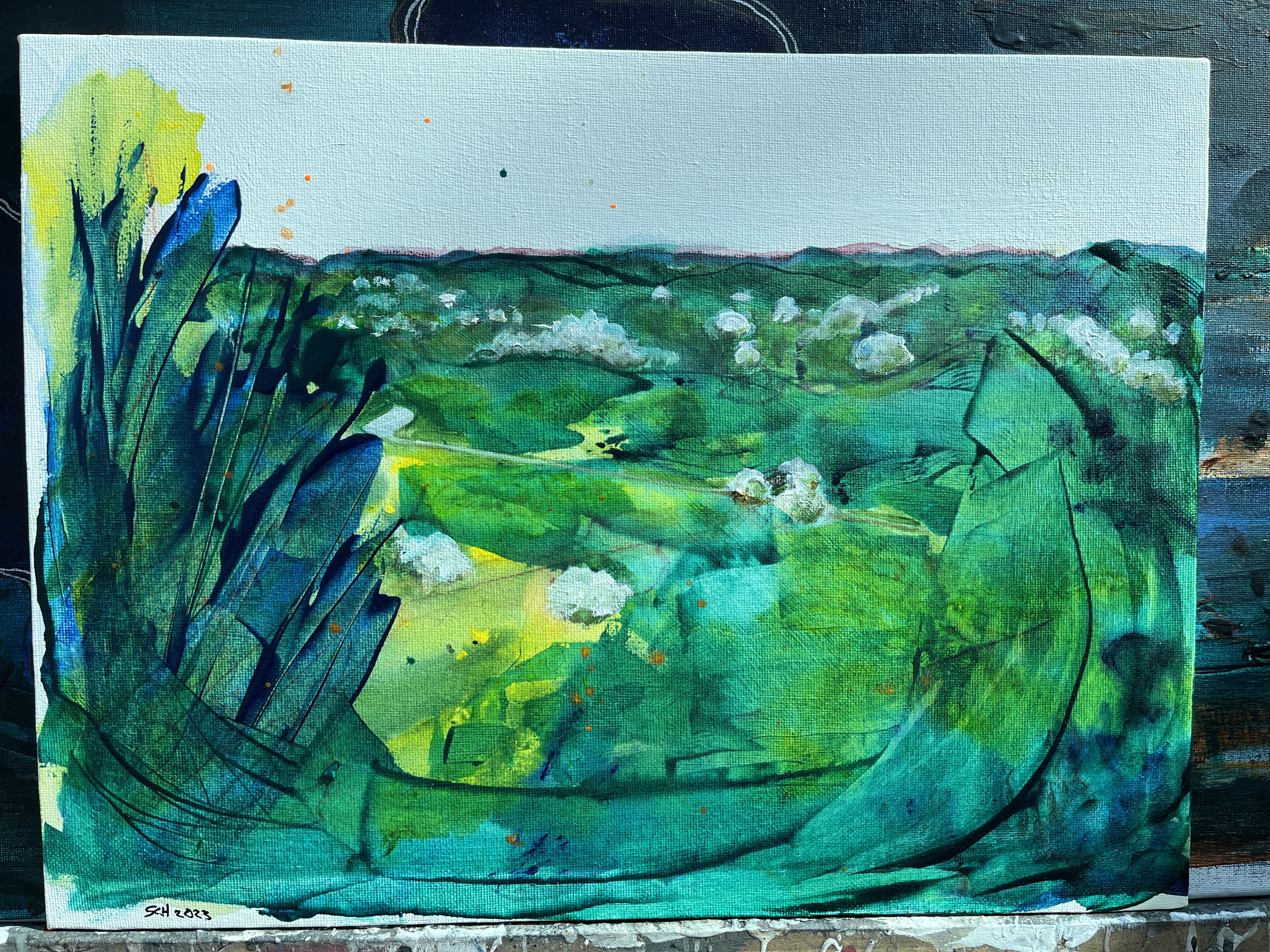
This is a scene I often come across walking the east bank of the river where the pathway drops down below the level of the fields rising up into low hills. At various times of year, there are sheep grazing behind the small copse and also mooching about within the trunks and tangled branches. And there’s always that one ready to stare me down from the advantage of height, with its hoof on the emergency flight formation button to the rest of the flock just in case.

Probably another springtime Covid lockdown photo. This one from the river bank and across the fields to the west.

I think this is another from Bramber castle which looks over the Adur valley.
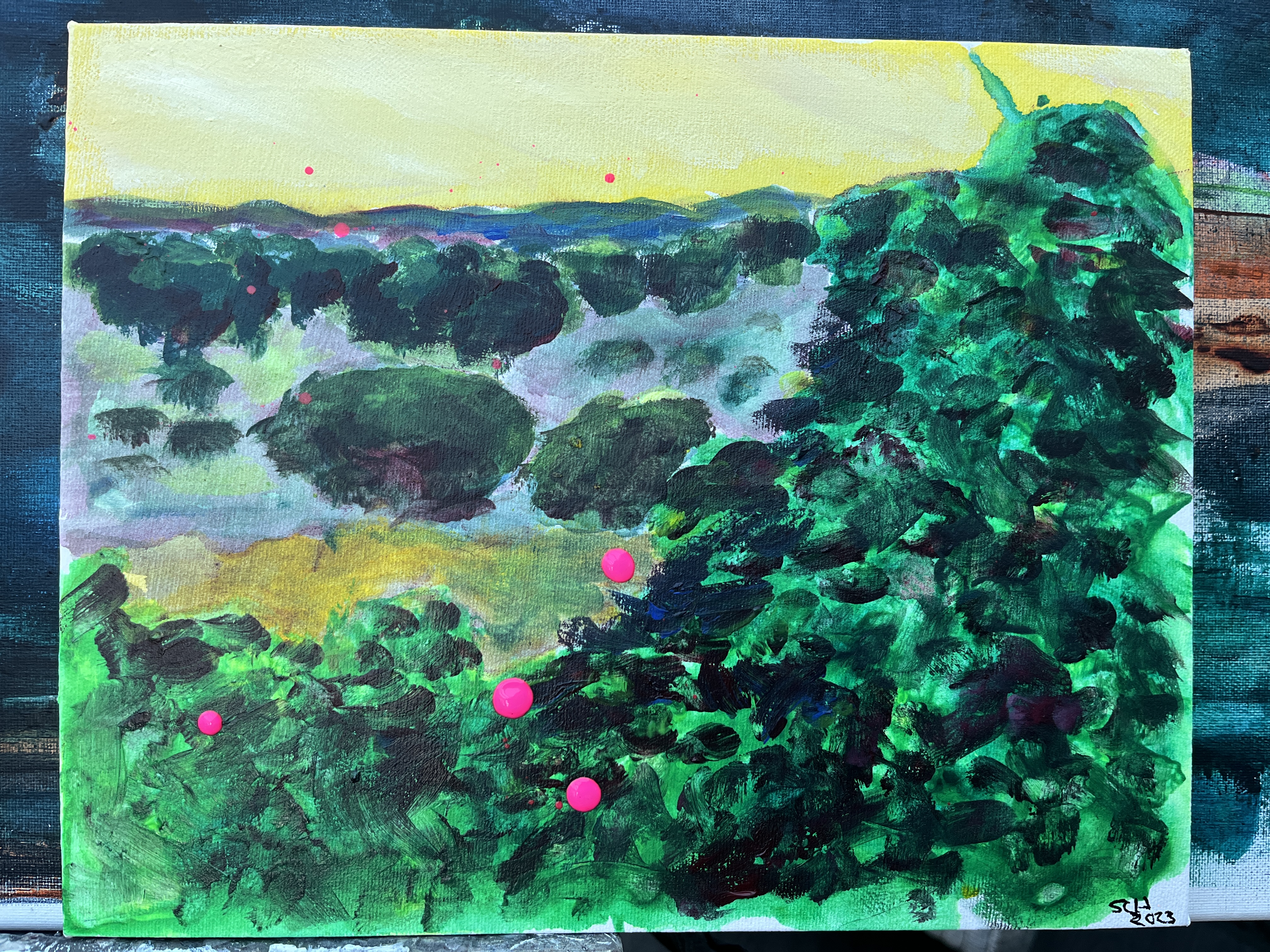
It’s been an interesting exercise tackling the novelties of scale and support in the same space, and I can see how I’ve moved from the stained glass appearance of the first painting to progressively more ‘painted’ images. I’m not sure why that is although I suspect the largest canvas of the set of four, which was the one I chose first, may have lent itself to the more gestural movements required for that than did the smaller canvases.
Luckily, not only did the pack contain two more sets of four but I seem to have a second pack of three sets of four which arrived at the same time and may or may not have been paid for. Amazon is not clear about this.

Also, what are these things? There’s one for each canvas.
SCH 2023
For a list of workshops, groups, conversations, and other activities see my dedicated page
*Magical realism in literature is where the setting/world-building is recognisably real but includes an unexpected element or perspective that has no business being there. In literature, it often makes a point about the real world – Phillip Pullman’s daemons, for instance, are arguably externalised souls, and the relationship allows us to observe the ways in which the two parties influence each other. The end of one is the end of the other; they die simultaneously.
The position regarding magical realism in art is less clear (or at least Wikipedia is so unsure it invited me to write a page on it) even though the term is searchable. Personally, I have no trouble applying the same principles; an unreal element in an otherwise regular scene. In this series of paintings, going right back to the six on cartridge/card and canvas, the element has grown to become the splash of bright dots of colour across each surface which [Art-Speak alert] challenges the viewer to question its reason for being there. But as it doesn’t ask this question itself any more than would a tree, there is no answer.
 Conboyhill Arts - art from stART to finish