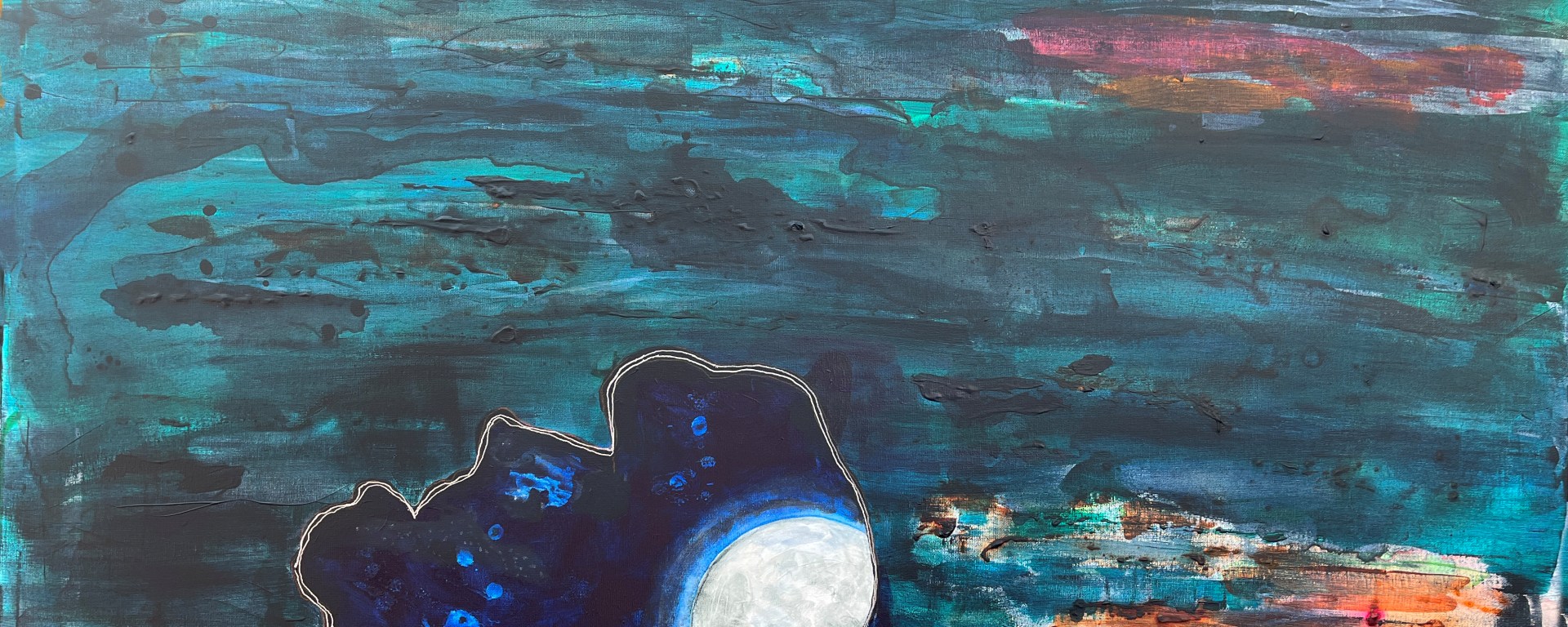
One of my strategies for kick-starting a creative episode is to prepare a surface, preferably of a type or size I don’t normally use, then leave it staring blankly at me from the easel. So after a run of A1 card or cartridge, my eye fell on the last three 101 x 76cm stretched canvases. I’ve only used one of these before (Toy Town) and it was a challenge, but the result was very satisfying. Change jolts me out of habits which are easily formed when there has been a prevailing sense of uncertainty, and there has been a lot of that since the beginning of 2023 (see https://conboyhillarts.com/2023/08/03/unit-evaluation-practice-evaluation-and-eyes-on-the-future/). It sat there for a few days, visible out of the corner of my eye from where I’m sitting now at my computer, until I had the idea of making night versions of the landscapes I’d made not long ago. This would capitalise on the muscle memory of painting that series but also demand a different approach due to the larger physical size and the different way paint responds to canvas v card.
There are no photos of the early part of the process because it was flat on its back having very wet medium leaked across its surface. I’m not sure my tutor* will be flattered but I had seen a few of her very fluid abstracts of landscapes
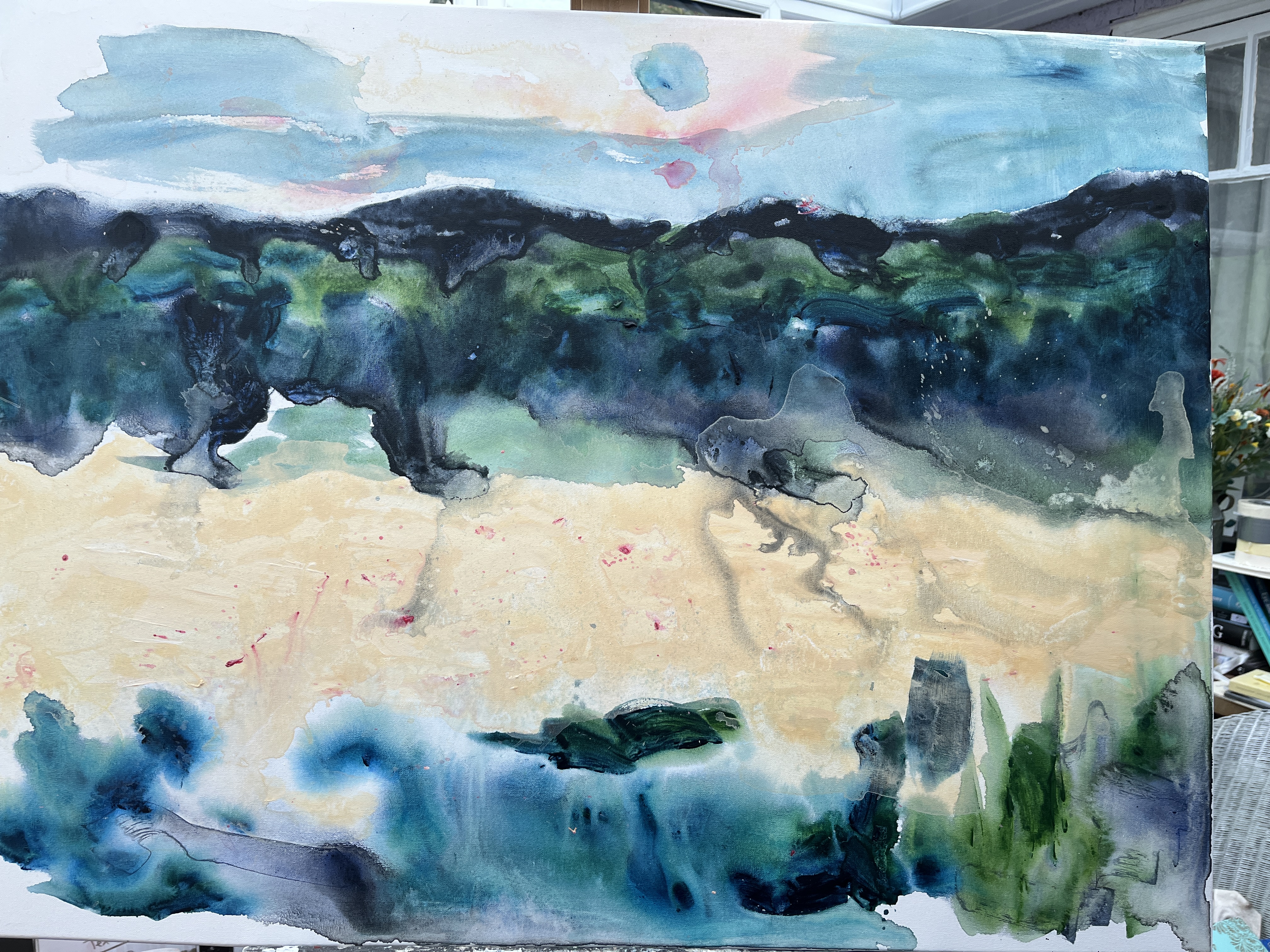
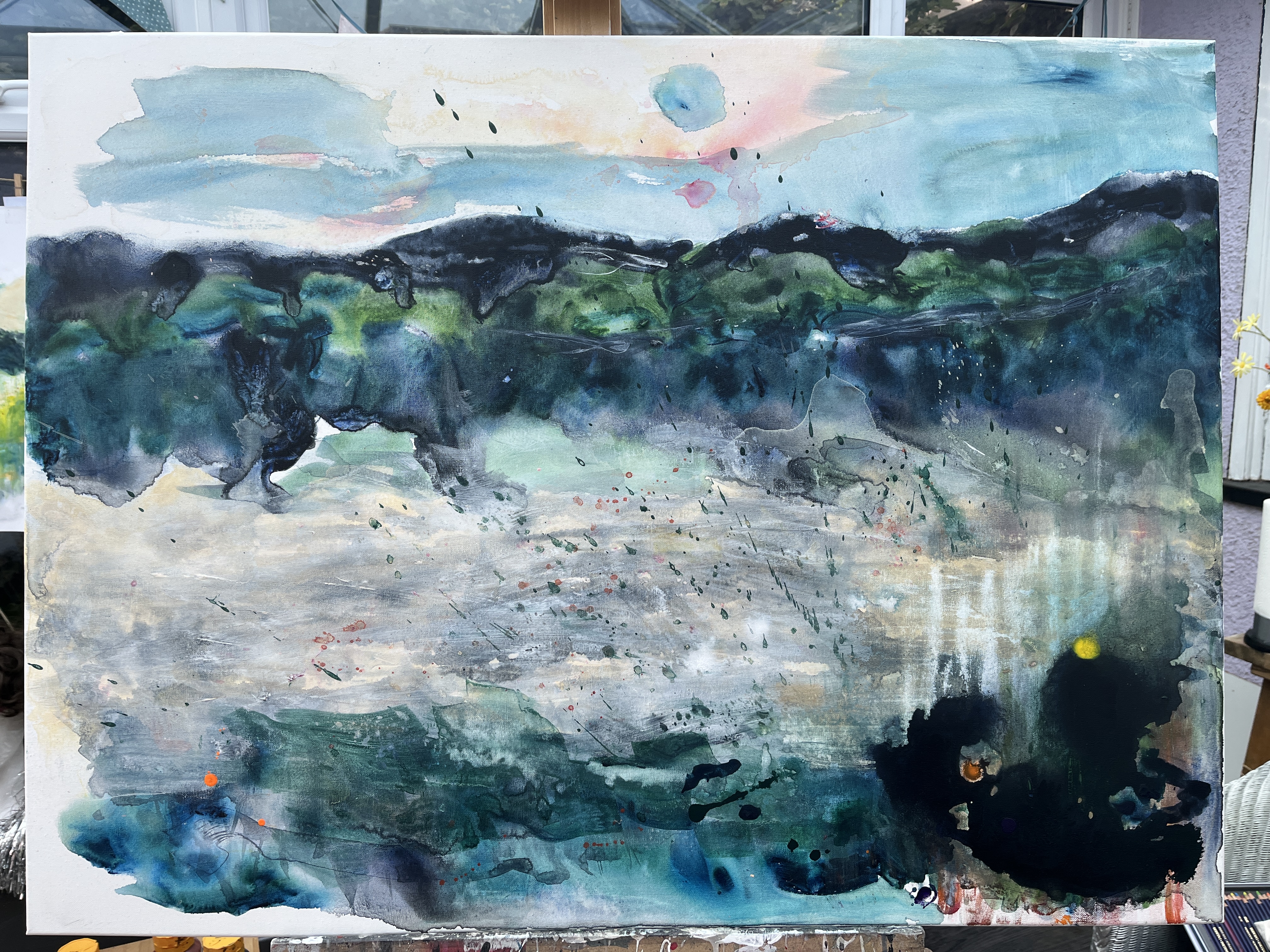
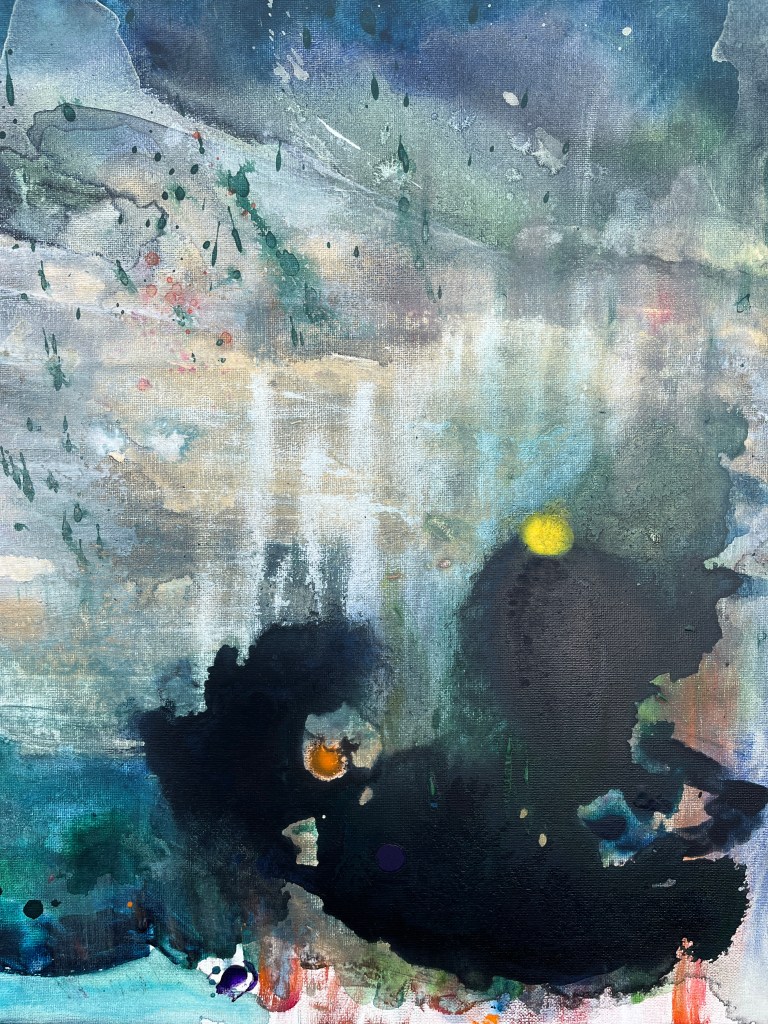
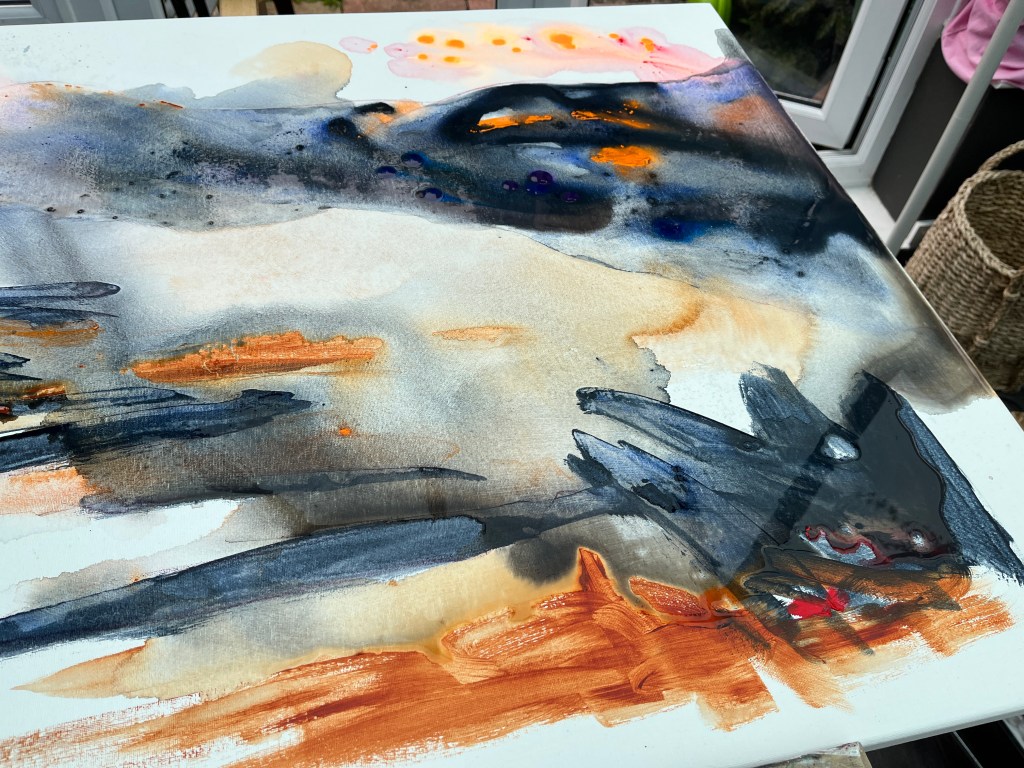
I’ve made a start now on the second in this series. Same size canvas. This is the best I can manage for the flat-on-its-back stage. I like the graded granulation effect and the opportunistic drifts of colour and colour mixes. At this stage, I do a lot of guided spread; tilting and reorienting the canvas to manipulate the direction and speed of the fluid. The medium here is primarily acrylic paint from regular tubes with a few spots of pouring paint which has different properties in that it feels more like applying a molten element that has its own integrity.
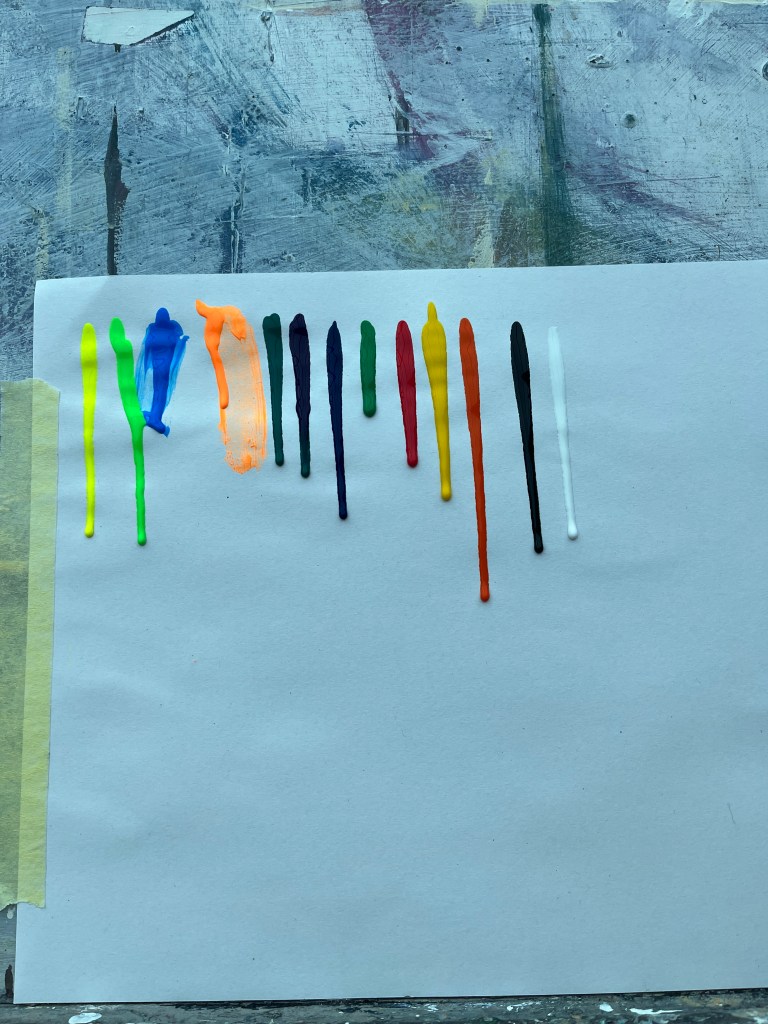
Waiting for the next phase of dilute/solid paint to find its level, I had a quick experiment with a new set of pouring paints. Most of them regular rather than neon, which are the four on the left.
And aren’t these interesting? One drag across the streams with a silicon pebble? paddle? and not only is there a kind of photographic glitch in the horizontal bar but at the end, a very interesting atmospheric skyline appears. And that’s before we get to the grainy second drag. This is a long way from how I see pouring paint being used in Youtube videos although many of those people know how to maximise the edges this paint is able to make because it doesn’t merge unless you force it to do so by adding water or just mixing it with an implement I can see now how this will help make the top layer of the painting which, in its first iteration, uses pouring paint.
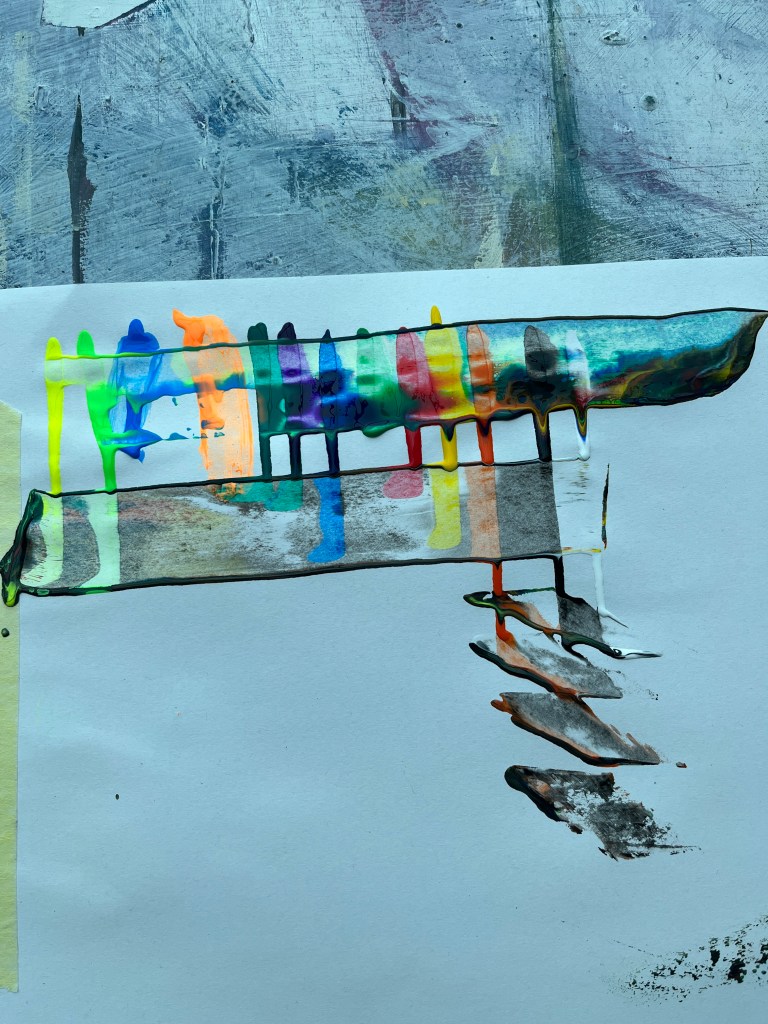
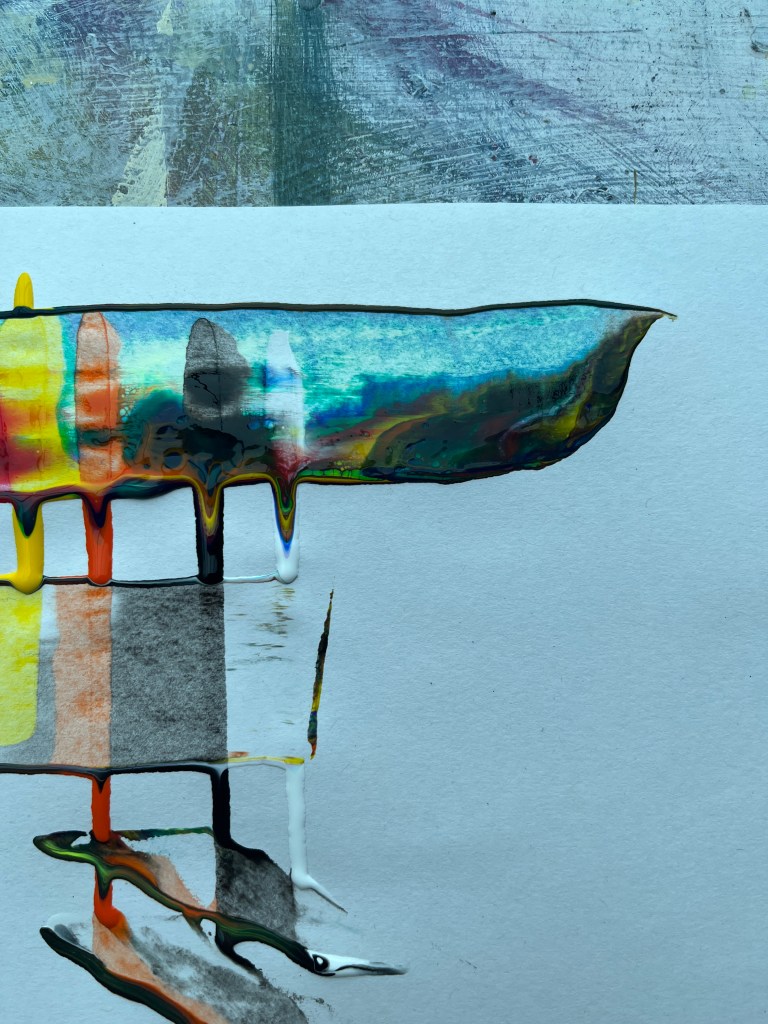

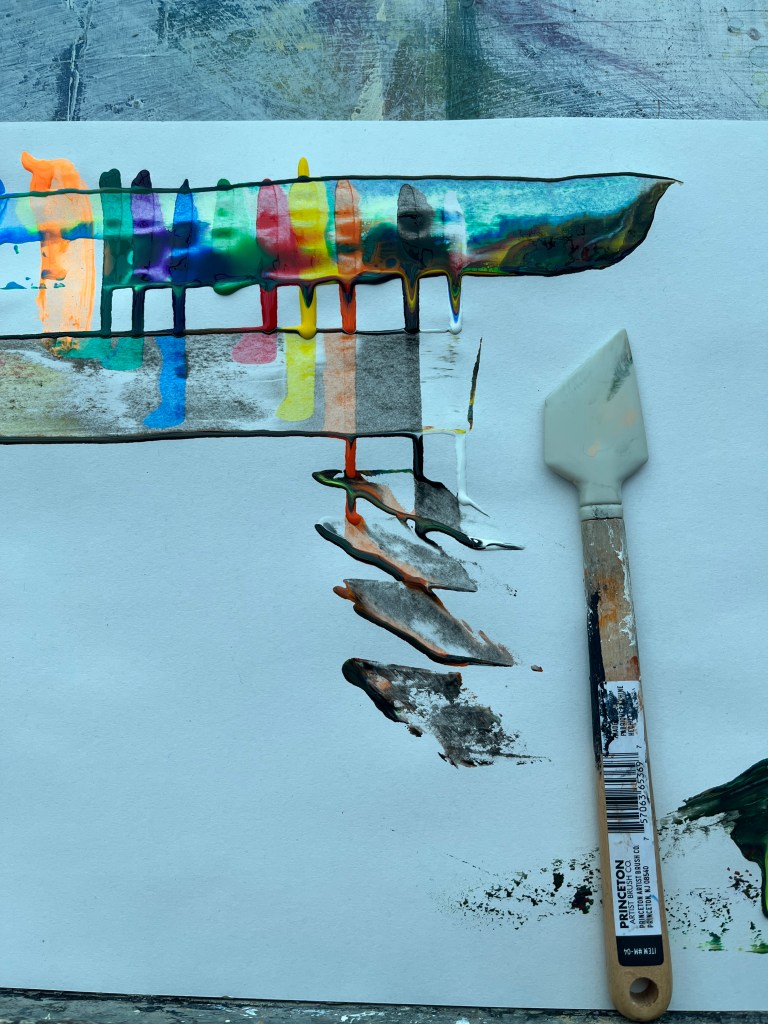
15th August.
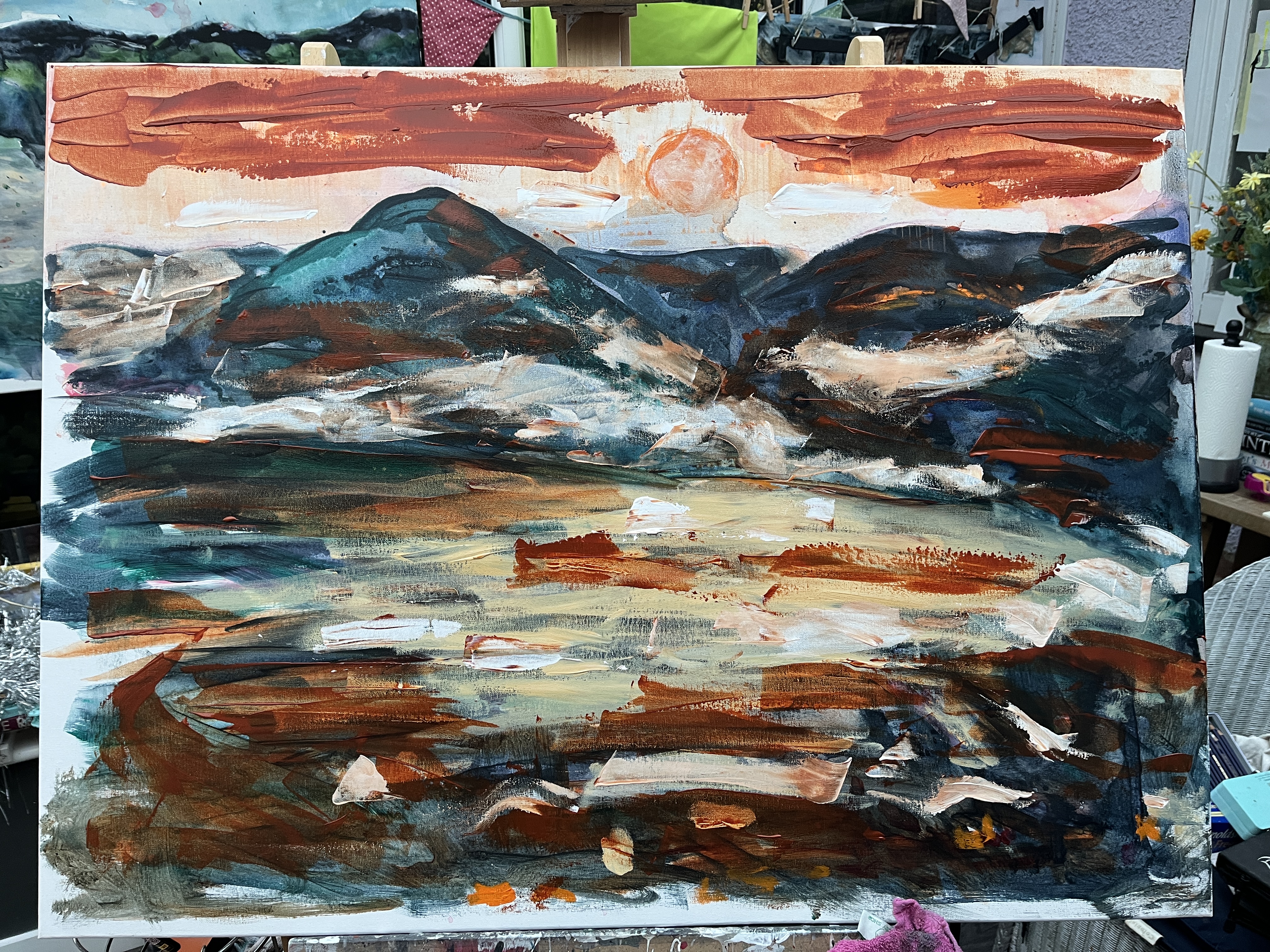
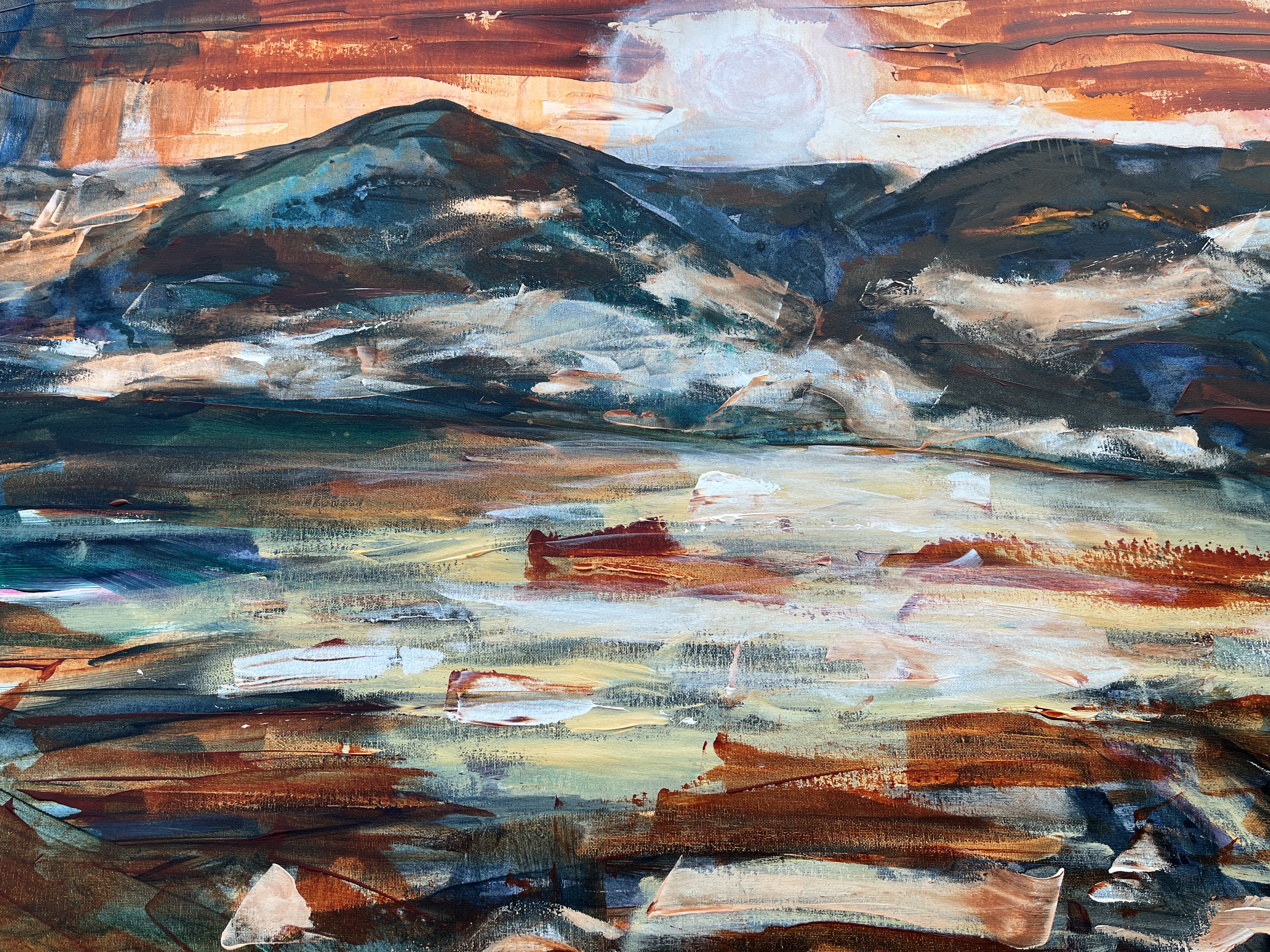
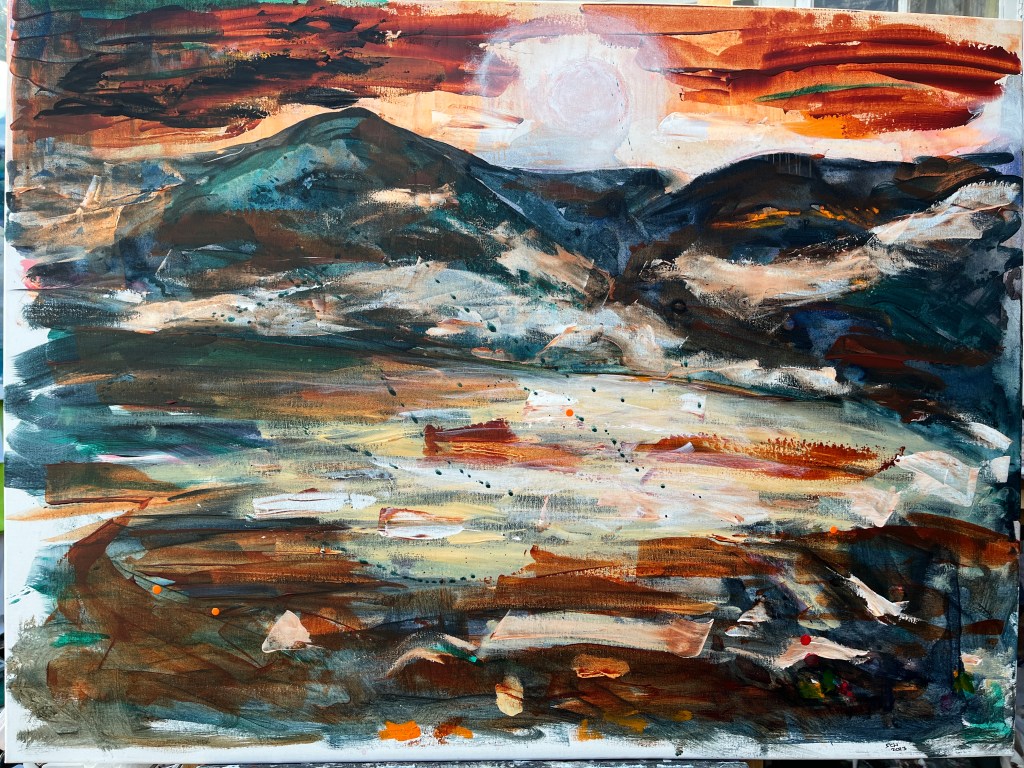
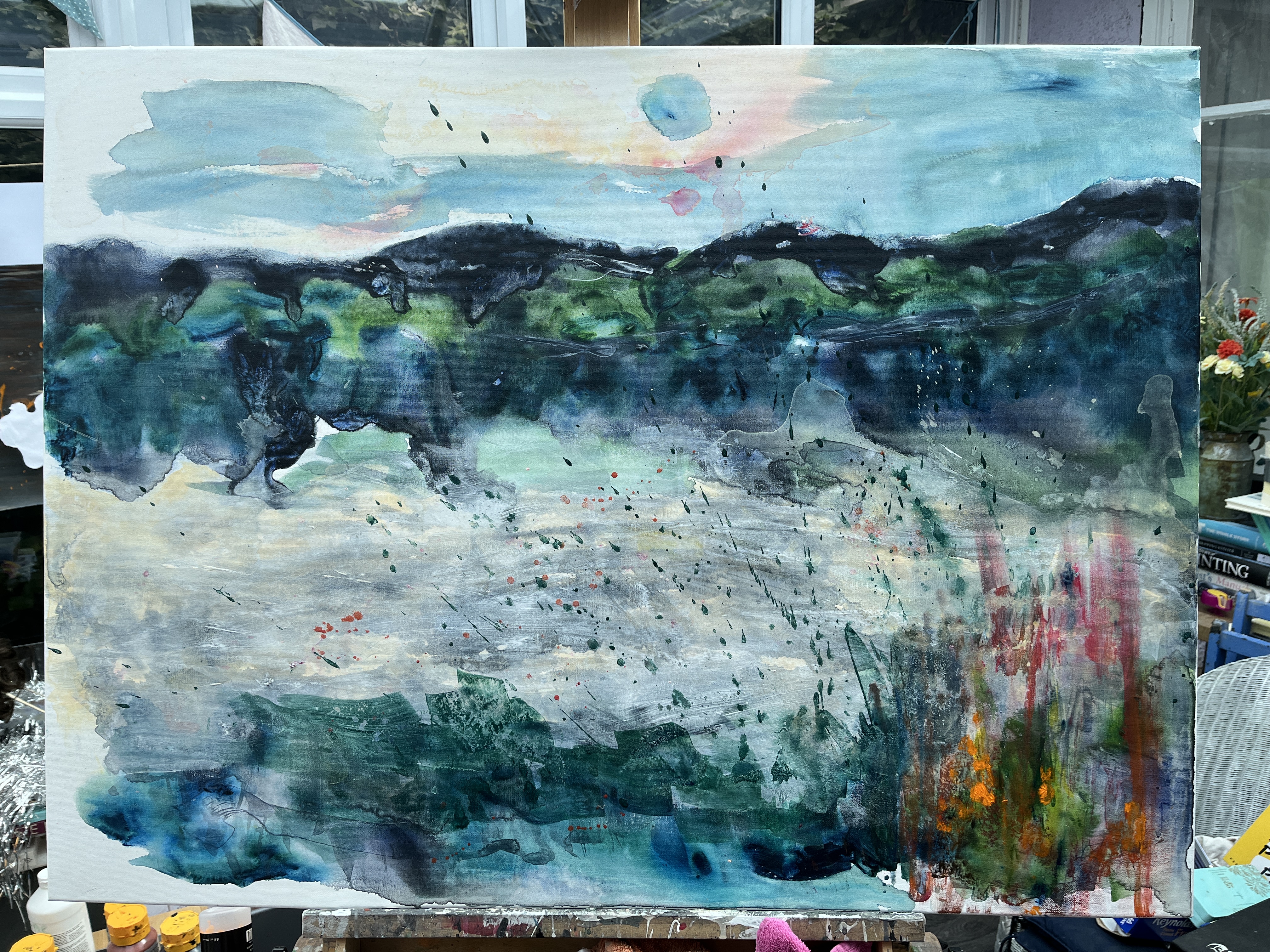
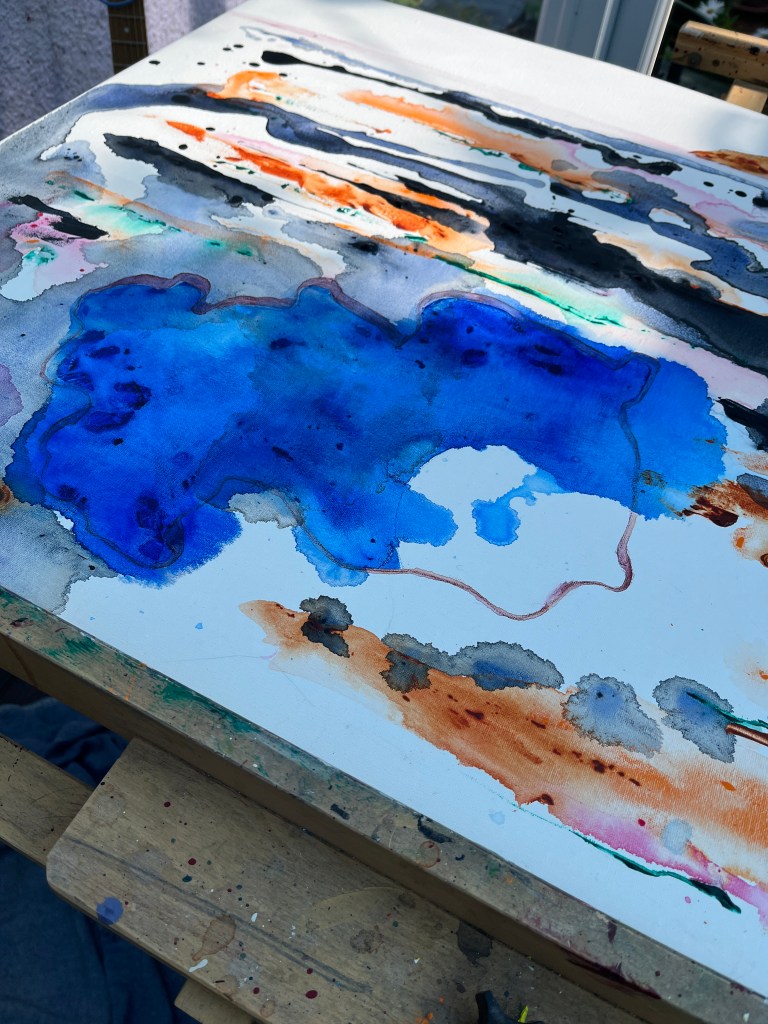
15th August and this is the start of the third large canvas painting.
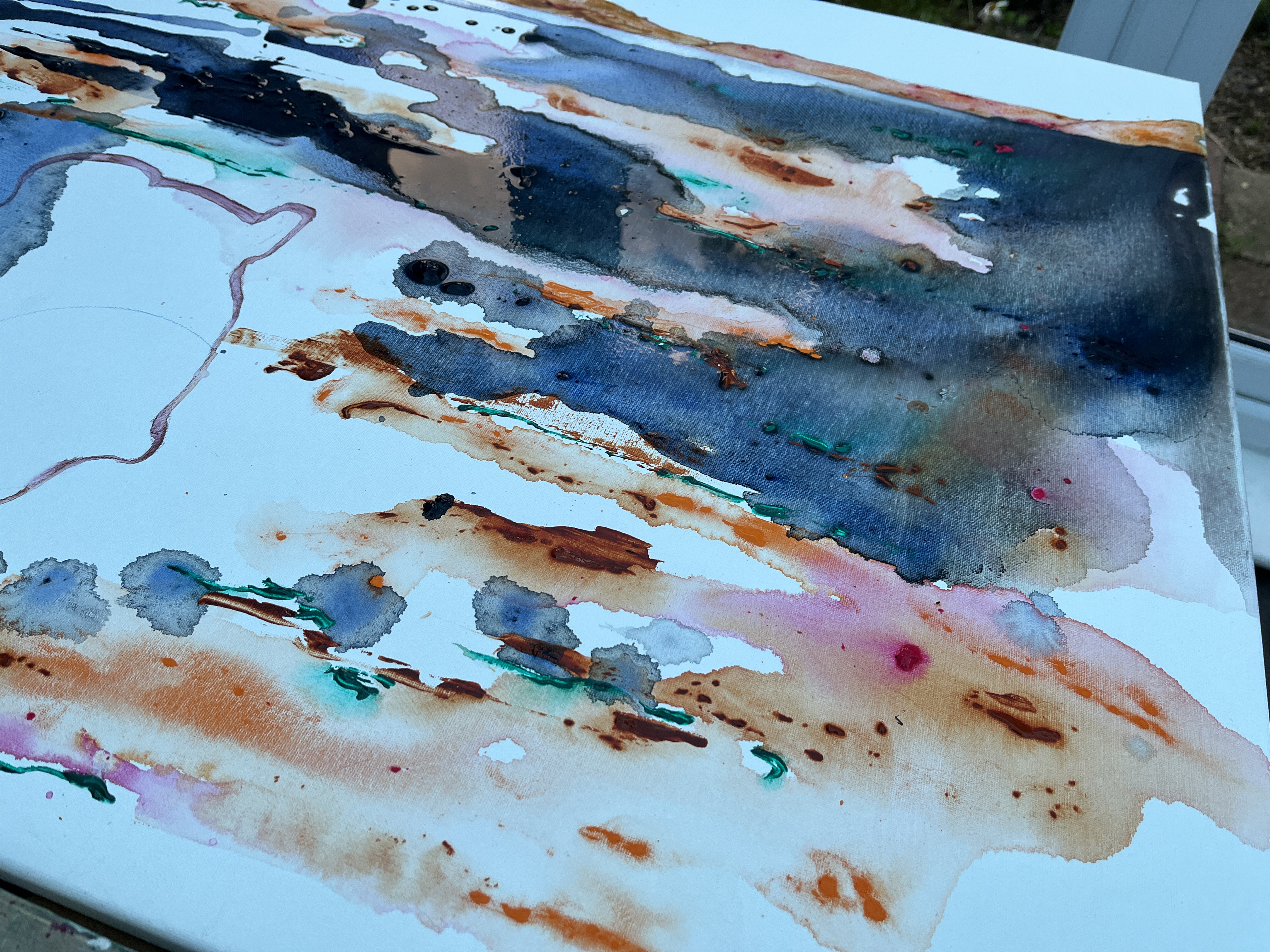
Dilute acrylics with lines made in watercolour pencil. As with the previous paintings, I’ve used a spray bottle to shoot water across the surface and make droplets, and a pipette for fine-tuning and pulling more solid pigment along the canvas.
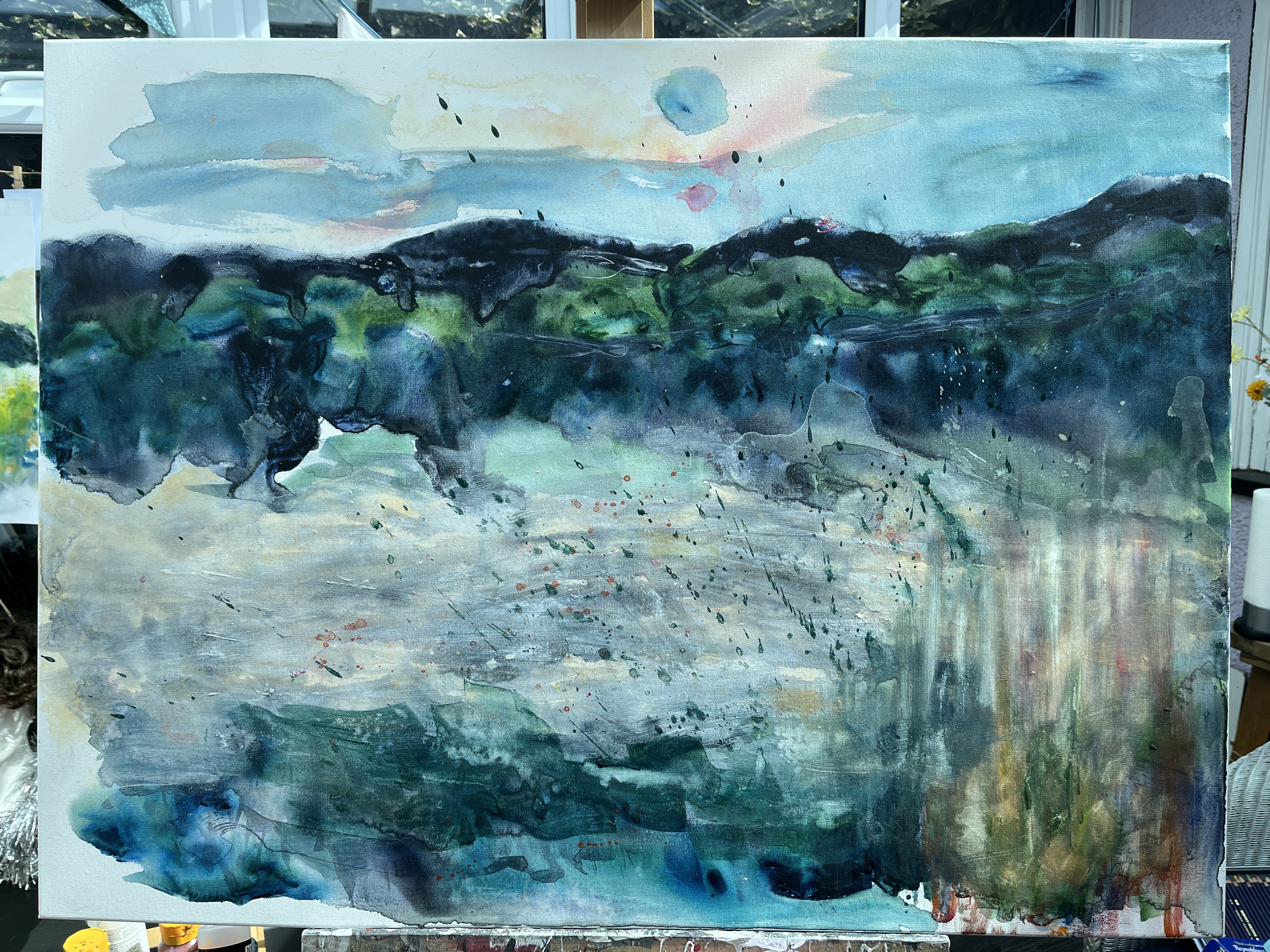
17th August. This is a chronological burst documenting events between the 15th and someone on Instagram asking for twinkly stars.
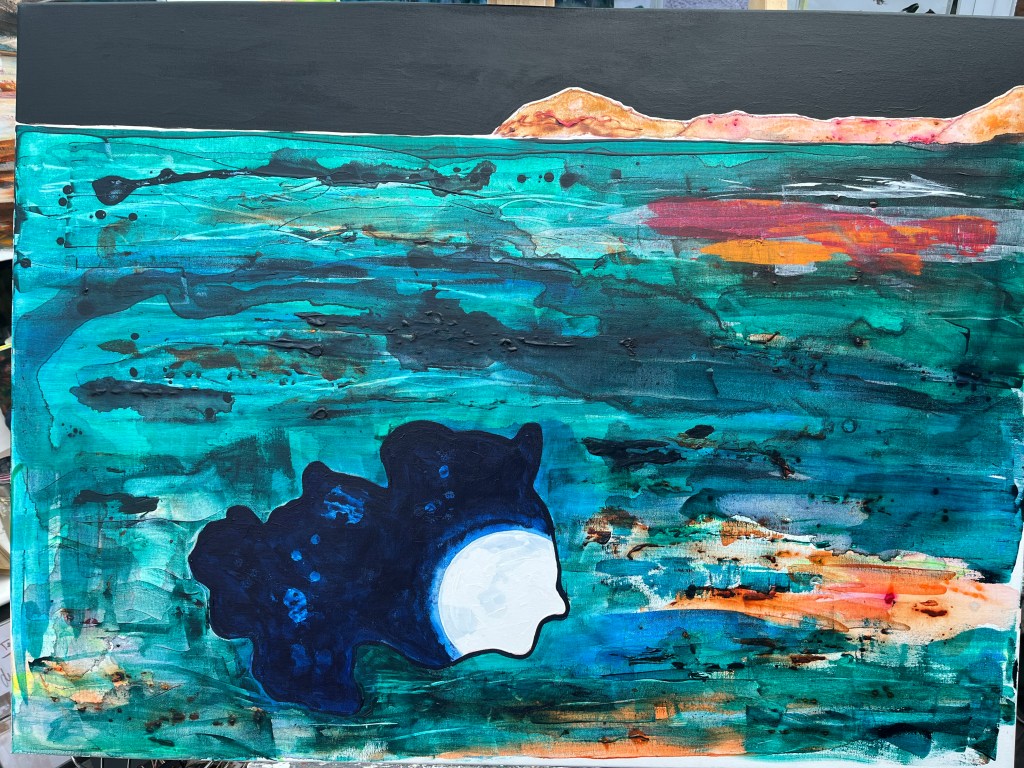
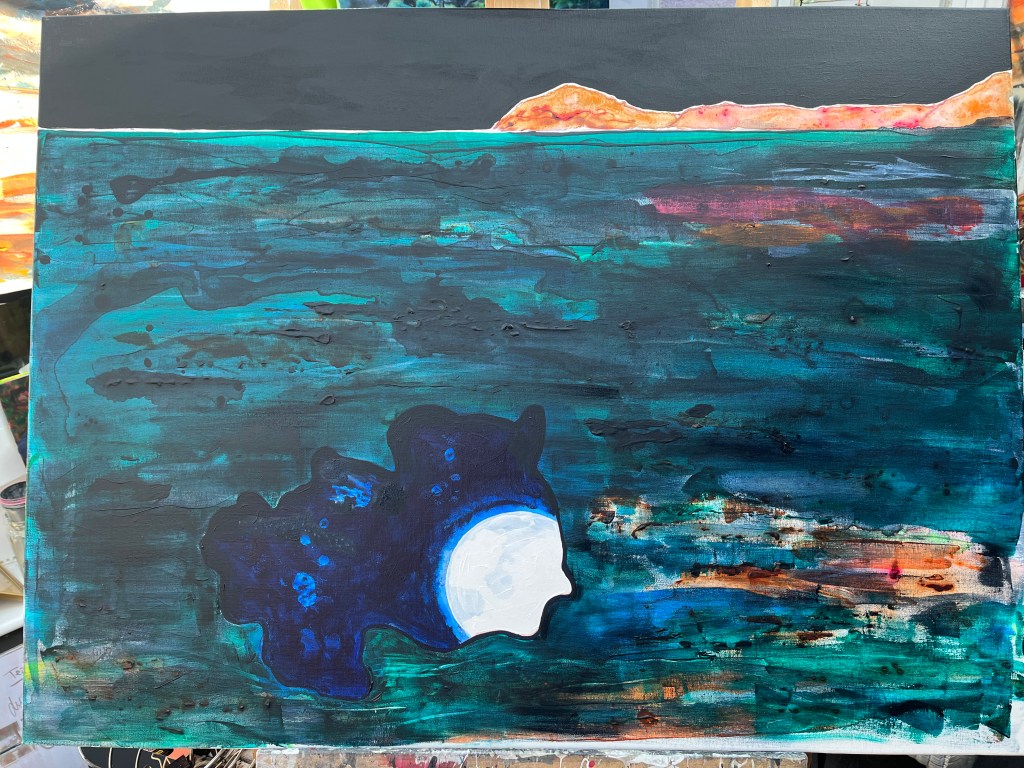

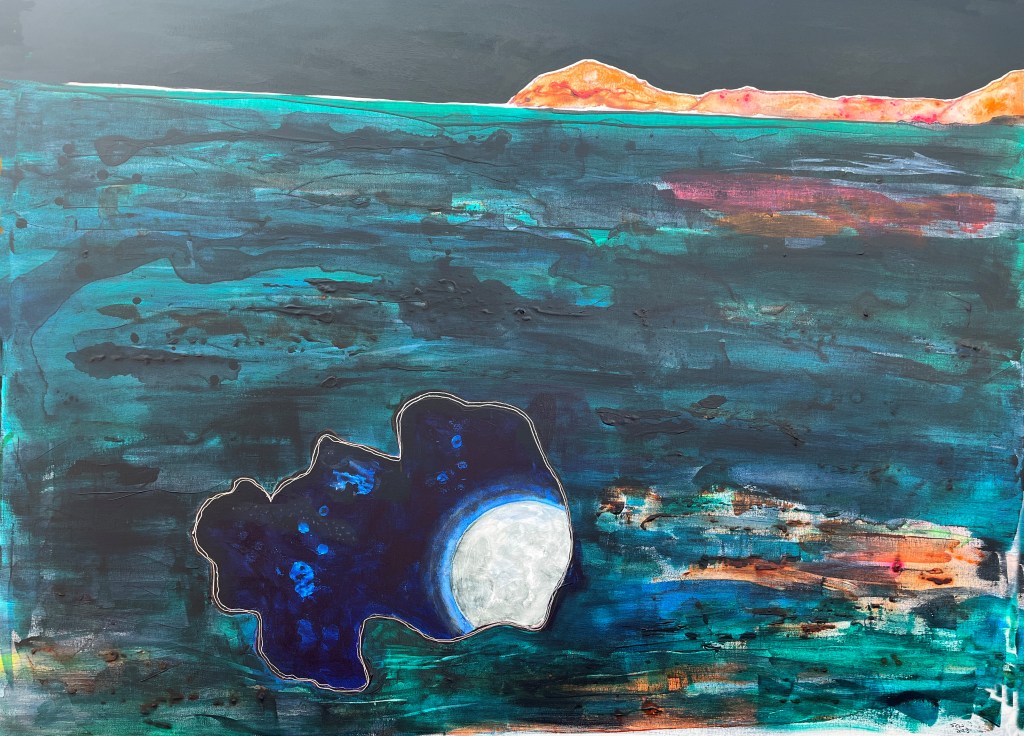
The person who wanted the stars is a Creative Arts student with OCA who saw this as the moon trapped in the tide and felt it resonated with the poem they will be submitting to another upcoming showcase. I dropped in the stars and said they were welcome to use it if it was permitted. The title comes from the observation that the moon is moving away from Earth at around 3.5 (almost 4) cm a year (NASA: Five things to know about the moon) which is slightly faster than the information I found earlier but how does Nearly 4cm a Year sound as a title?
This is Tricia Burton’s website with the embedded video and her lovely comments – thank you Tricia and good luck with the Showcase!
An unexpected effect of this exchange is that I suddenly saw the large green area, not as an expanse of surface water from the viewer to the remote horizon, but as if the viewer were positioned as if under water or in front of a huge tank containing intimations of living creatures which, like the cats before them, were not put there by my conscious mind. The hole in the matrix definitely was though, and today I have ideas involving the original orange blot upon which it is based.
18th August. New life for the toxic orange blob that formed the dead white space in the first iteration (on card) of this painting. To me, this adds any number of narratives to the painting and also adds counterweight and tonal resonance to the landscape structures at the top. If this painting ever goes anywhere, the blob will need fixing firmly to the canvas with something other than double-sided tape.
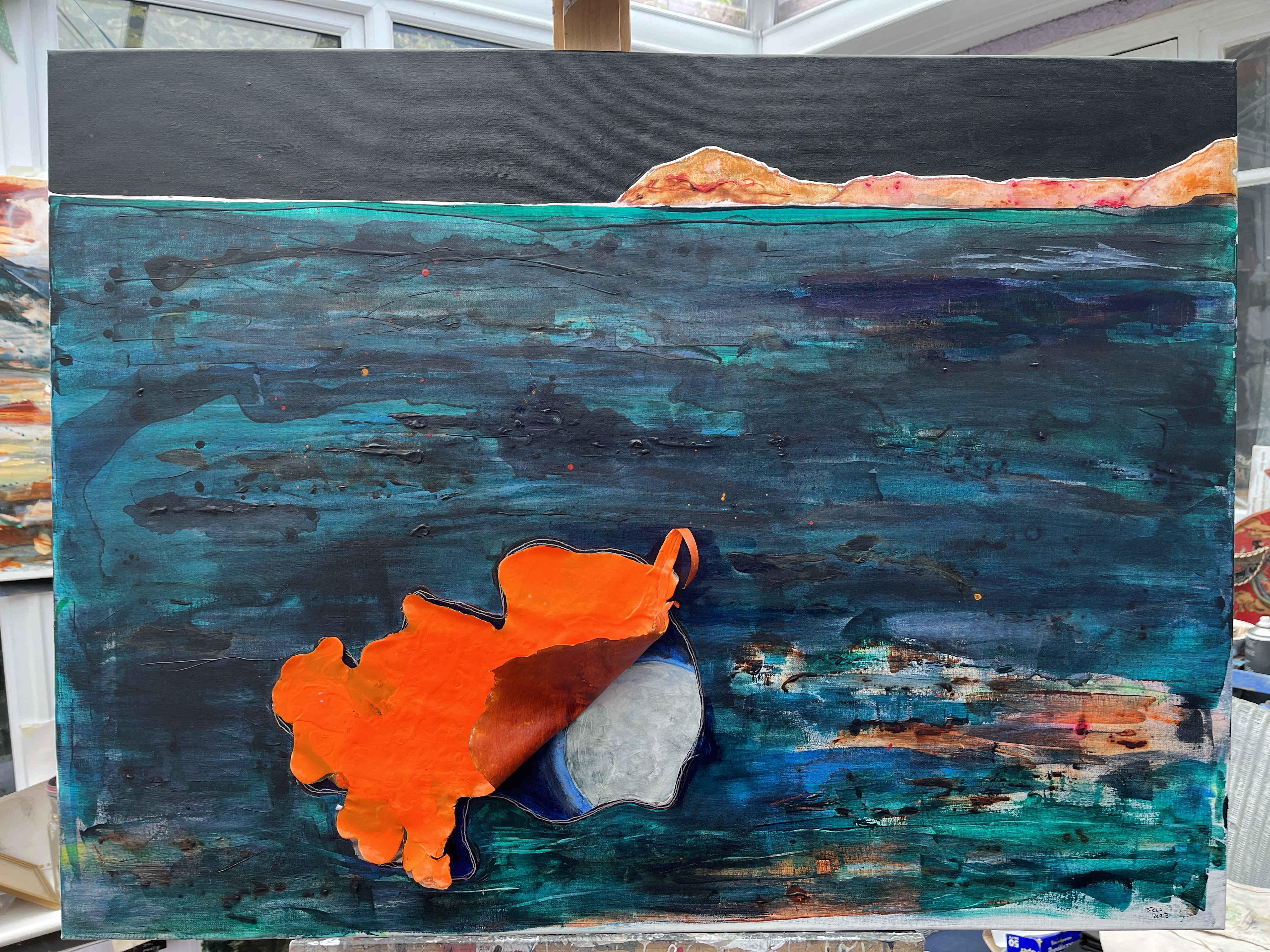
I may add to this depending on whether or not the video makes its way into the CA student’s showcase. Is post hoc collaboration a valid thing?
SCH 2023For a list of workshops, groups, conversations, and other activities see my dedicated page
*Clare Wilson, MA – artist and OCA tutor.
 Conboyhill Arts - art from stART to finish