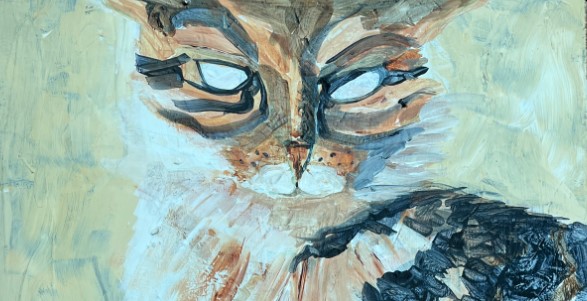
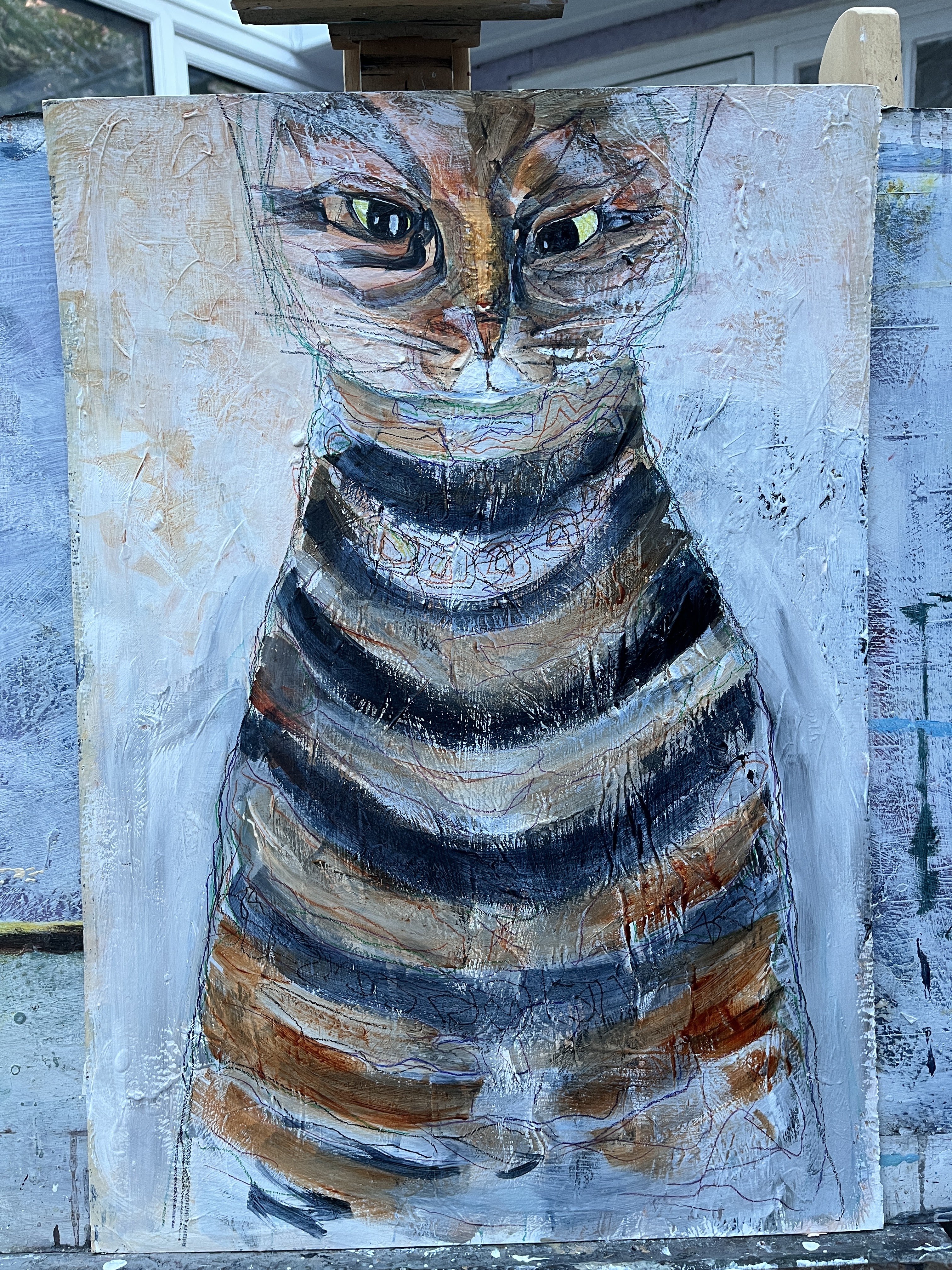
When I made the Cats series, I had five paintings which I reduced to four because, not only was Cat 5 not black and so difficult to paint as a silhouette, she was also a very detailed tabby whose complexity utterly defeated me as I became tangled in the accuracy of the markings and completely lost the spontaneity of the others. As a result, there was no life in these representations and nos sense of there being a cat presence in them. I have since painted over that initial piece of work more than once and still, I ended up with a lumpen image that said nothing to me.
I began to realise that this was perhaps due to more than the complexity, it was due to loss of distance and the fact that this cat rarely caricatures herself. In short, she is too darned pretty.
At this point, I’m rewriting what WordPress lost from the last three hours. Yes, that is breaking furniture you hear.
The day after the day before. This is unavoidably retrospective and so also unavoidably purged of lumps and bumps. I recall writing that I’d been sure I had taken photos of the much earlier stages in this painting but Google says no. Briefly, this is the white primed card on which I’d painted Green Tallulah and hated at all stages. Turning it 90 degrees to portrait orientation was another way of losing its influence. While painting, I was keeping in mind the technicalities of layering the AR which would require a greenscreen silhouette. The coat patterns were still distracting and made it hard to focus on the goal.
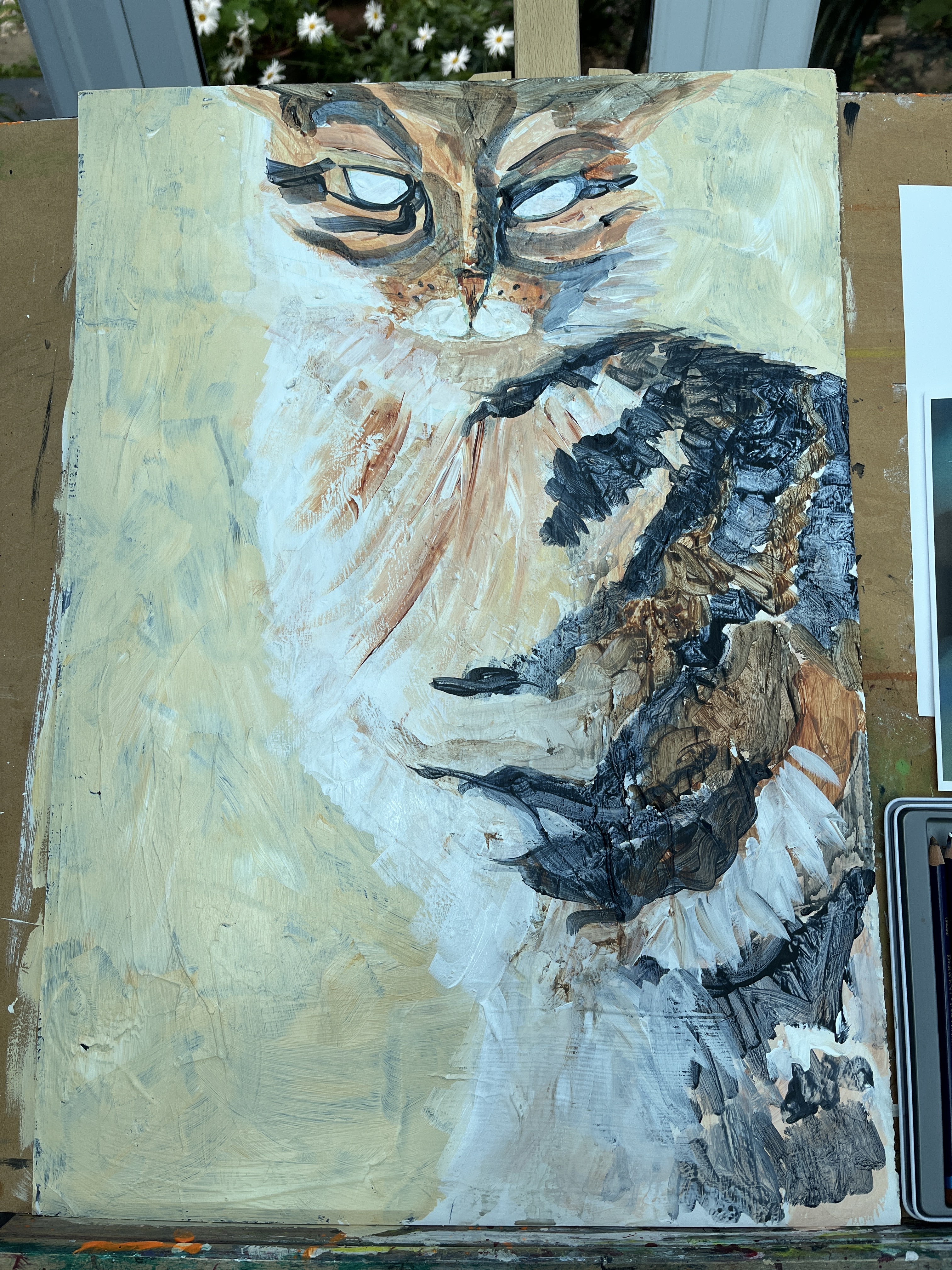
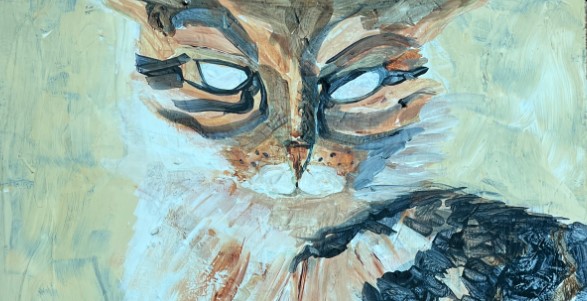
Each stage adds to or reduces a previous stage; sometimes it’s the drawing (and now I recall writing that I’d used watercolour pencils for that) as proportions seem difficult to transfer over from the source – and here’s another memory of the previous account – which comprised an image made by DALL-EE of Tallulah and one of the Egyptian Cat goddess, Bastet. These two images were designed to distance my relationship with my subject so that I could be more objective.
At this point, I’m reminded that cats and owls seem to have a lot in common and that, in ceramics class at school (got an ‘O’ level in that!) I made an indeterminate piece that became known as The Owl and the Pussycat.
As always, the eyes are critical and now, with white around almost squared-off pupils, these are coming to life. Even lying almost flat on a low easel, this cat is looking down at me!
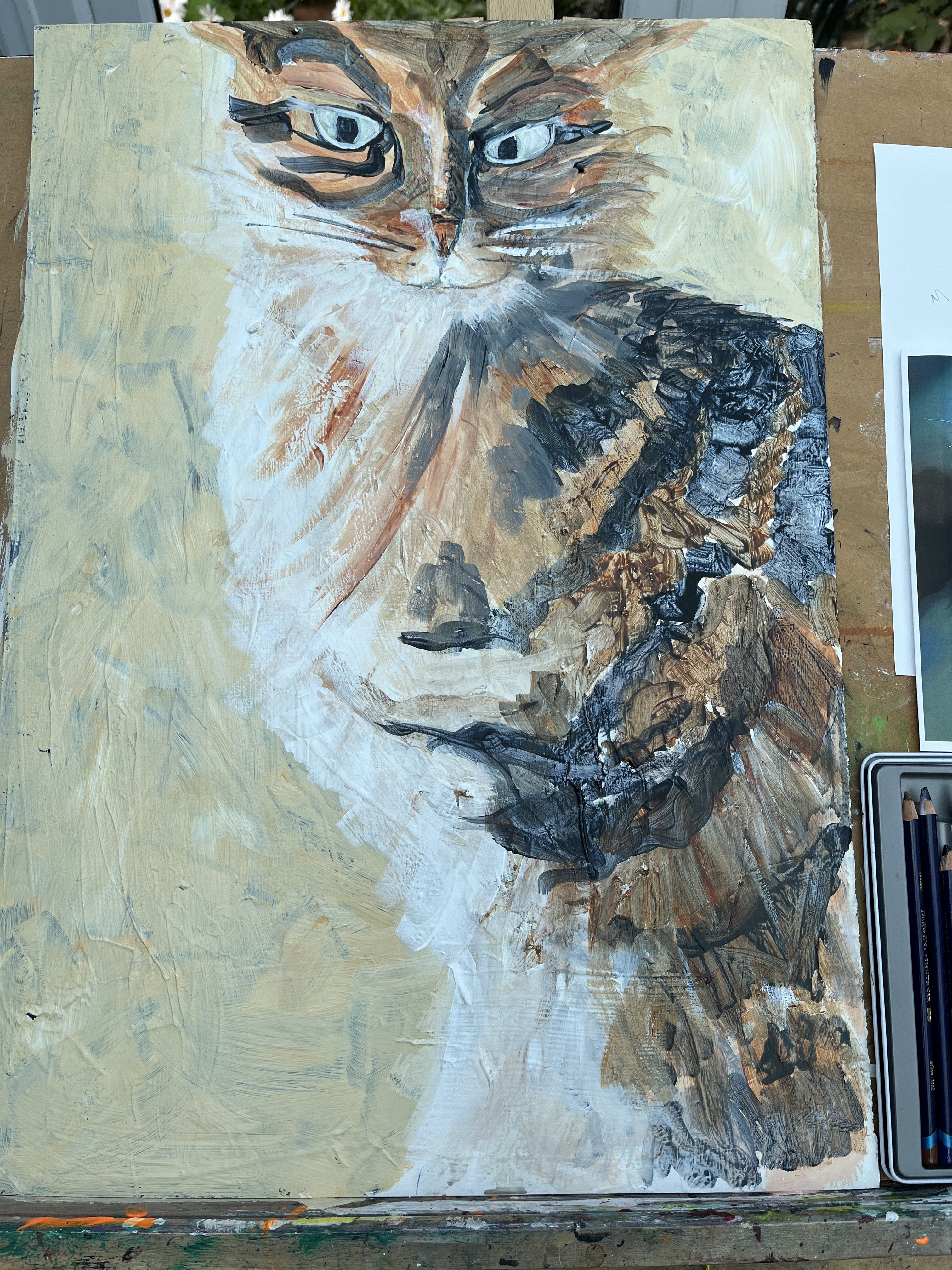
I’m less convinced by the eye colour here, but the shape and coat are coming on.
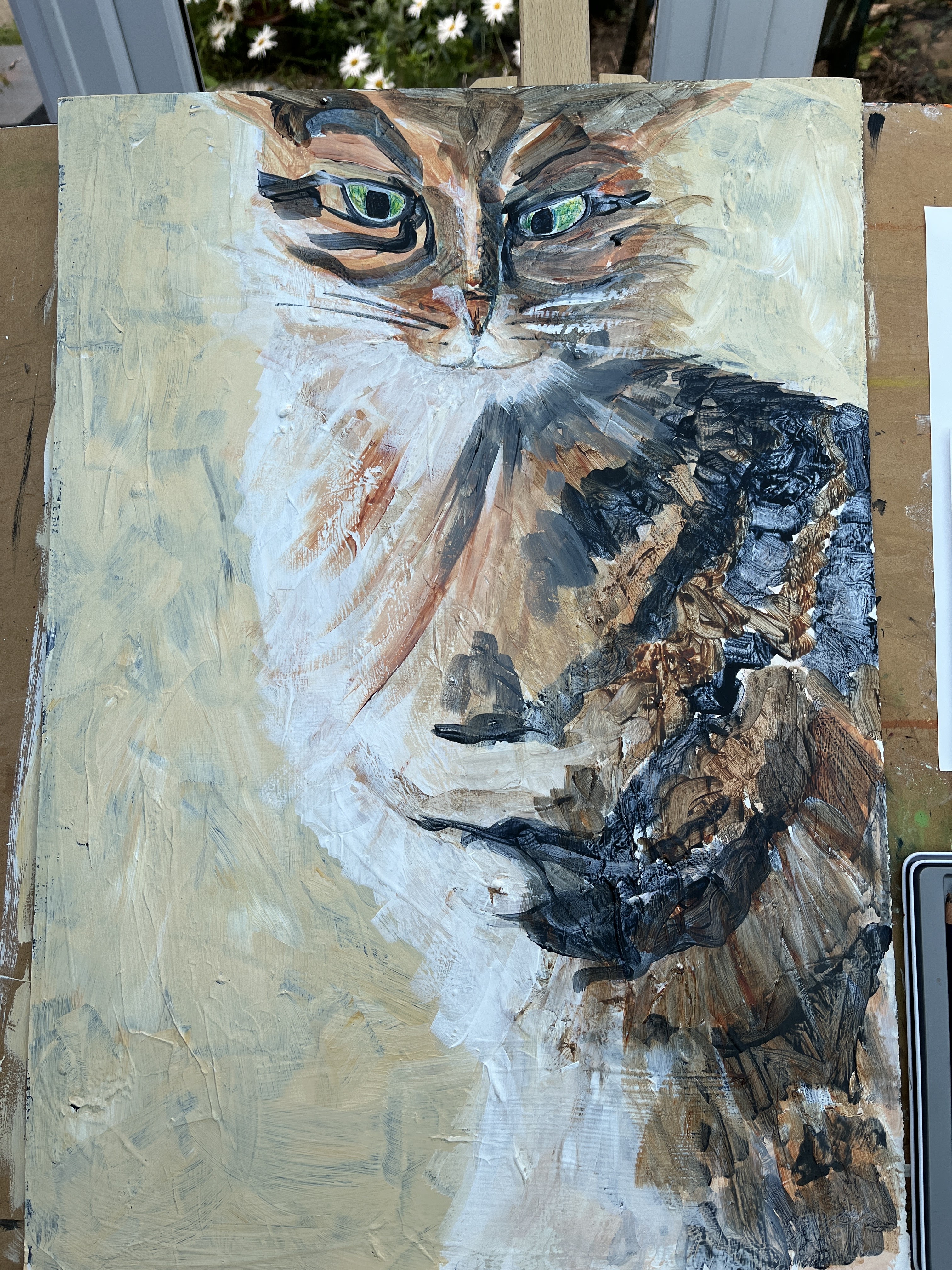
Looking back at the first iteration, I’m thinking white sclera might be the most effective choice.
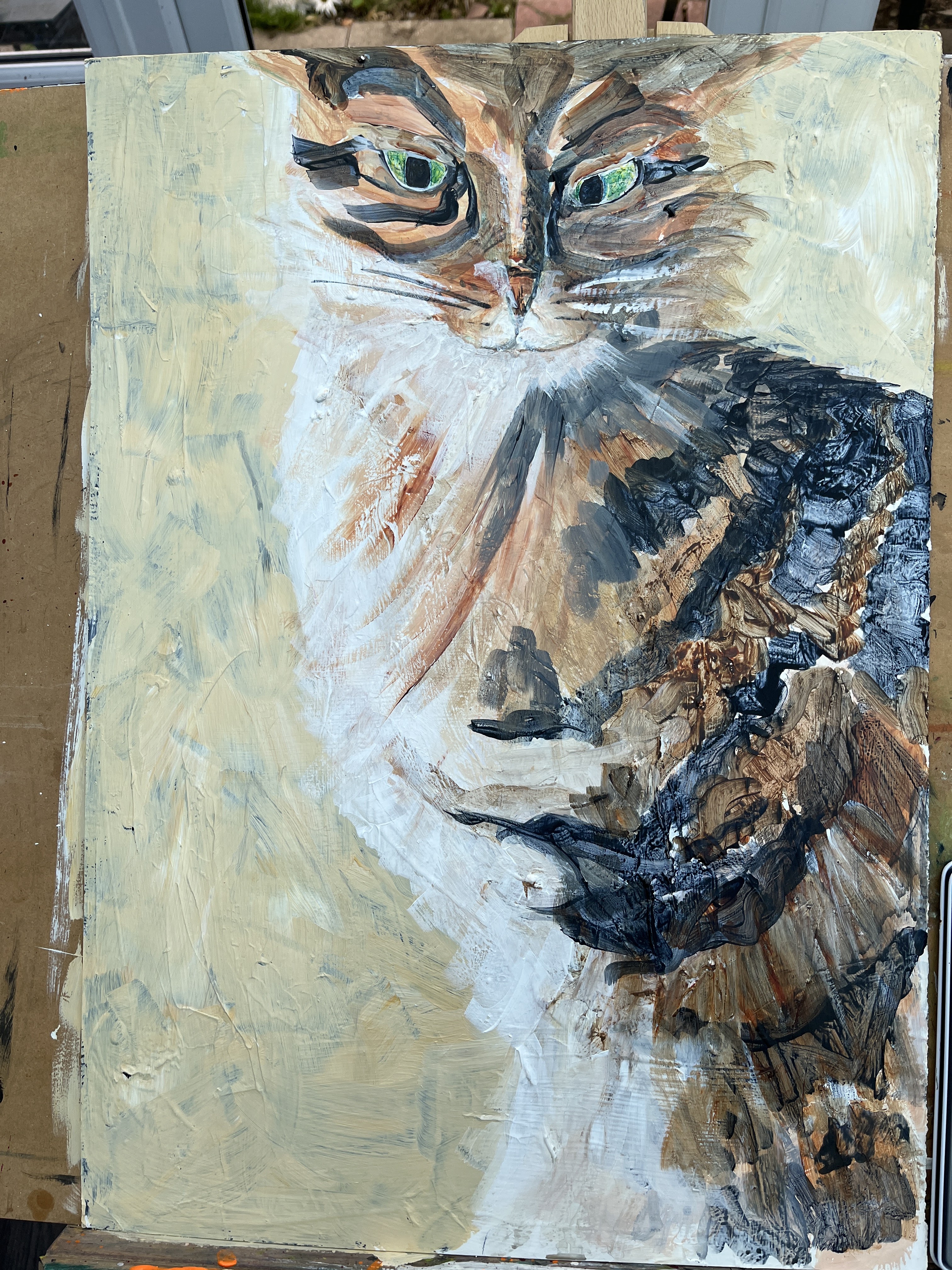
The plan now is to almost white-out the surround so there is barely any distinction between cat and background which would make the AR all the more effective while also demonstrating the knack cats have of becoming invisible. This one is ideally adapted to the rippling shadows of shrubbery and regularly watches me walking up and down the garden, calling her. The others, 21st-century cats all of them, are more suited to furniture, ideally hiding in plain sight in front of the TV.
Here we are again, another profound cat-fail. I think what I need to do is straighten up the outline as I did with the others, and reimagine this head on a Bastet body. The texture underneath might be handy.
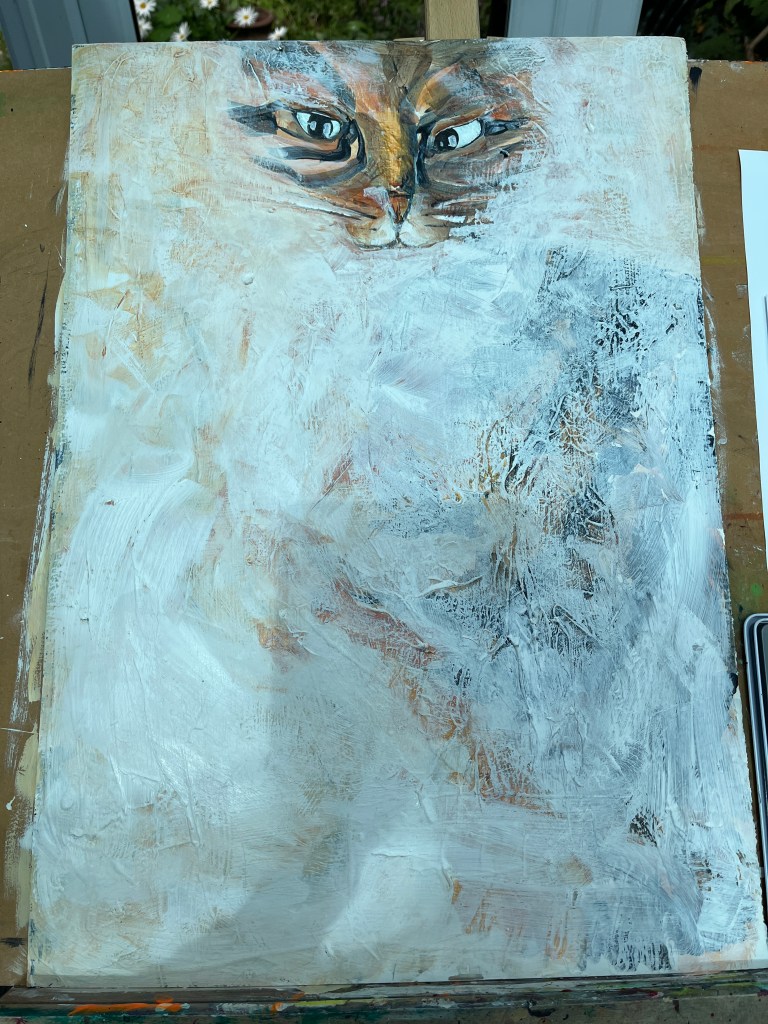

6th August. I am nothing if not persistent. Reminded, finally, that she’s actually quite dark brown with dashes of other colours, and that this is supposed to be as near as possible to a silhouette, I began making the necessary changes.
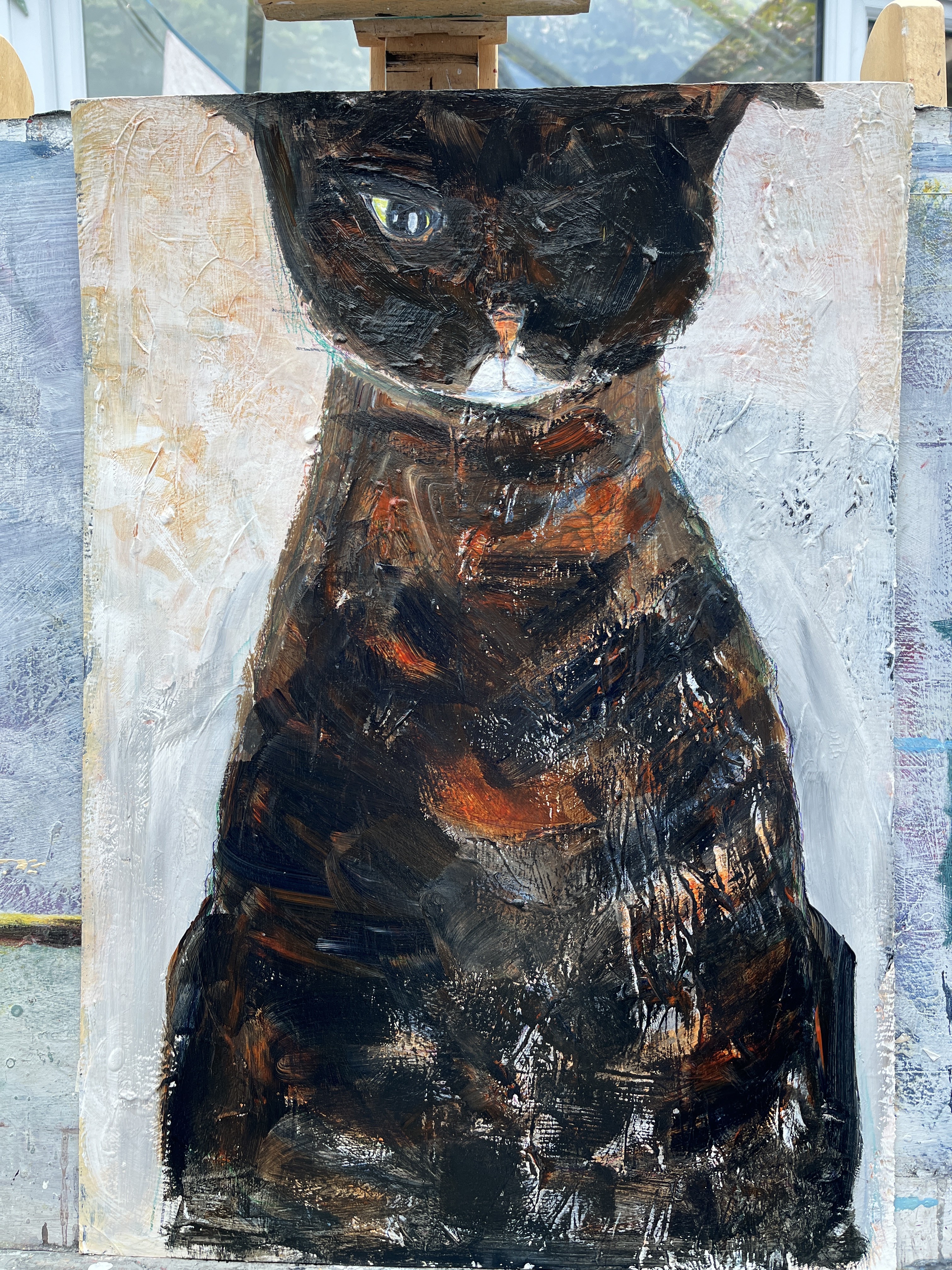
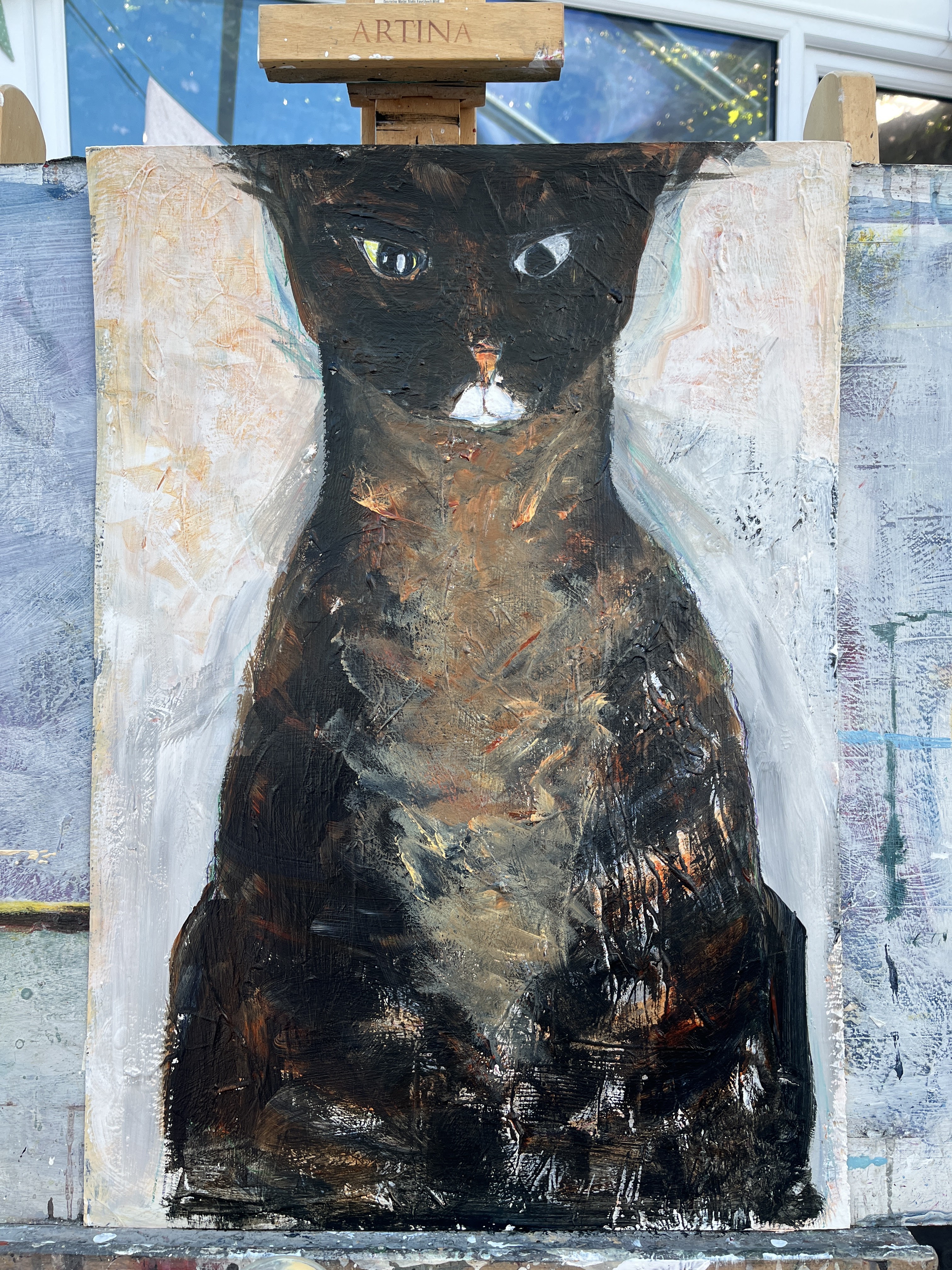
Interestingly, she has a DALLEE-esque collar that I’m sure I can play on with pencils. The background needs tackling to obscure the lines associated with the very many iterations of this animal on this surface, then it will be ready for some digital processing.
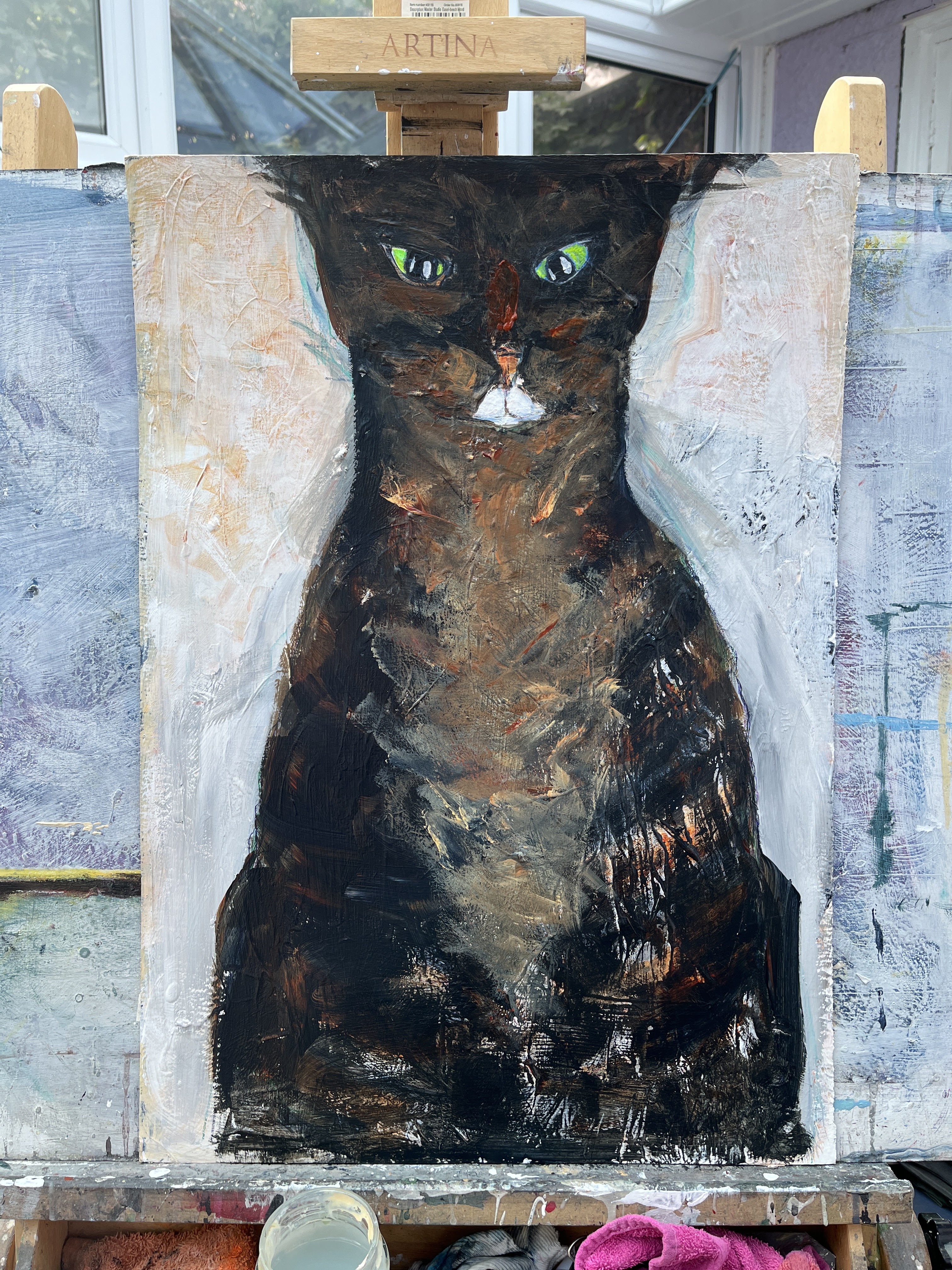
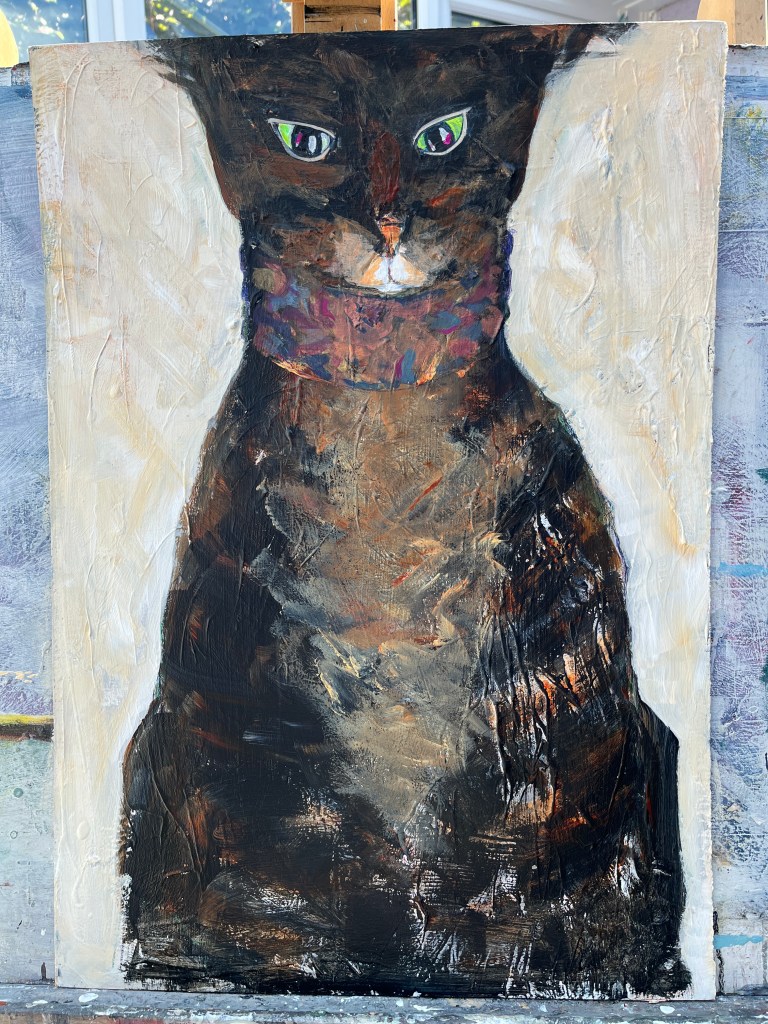
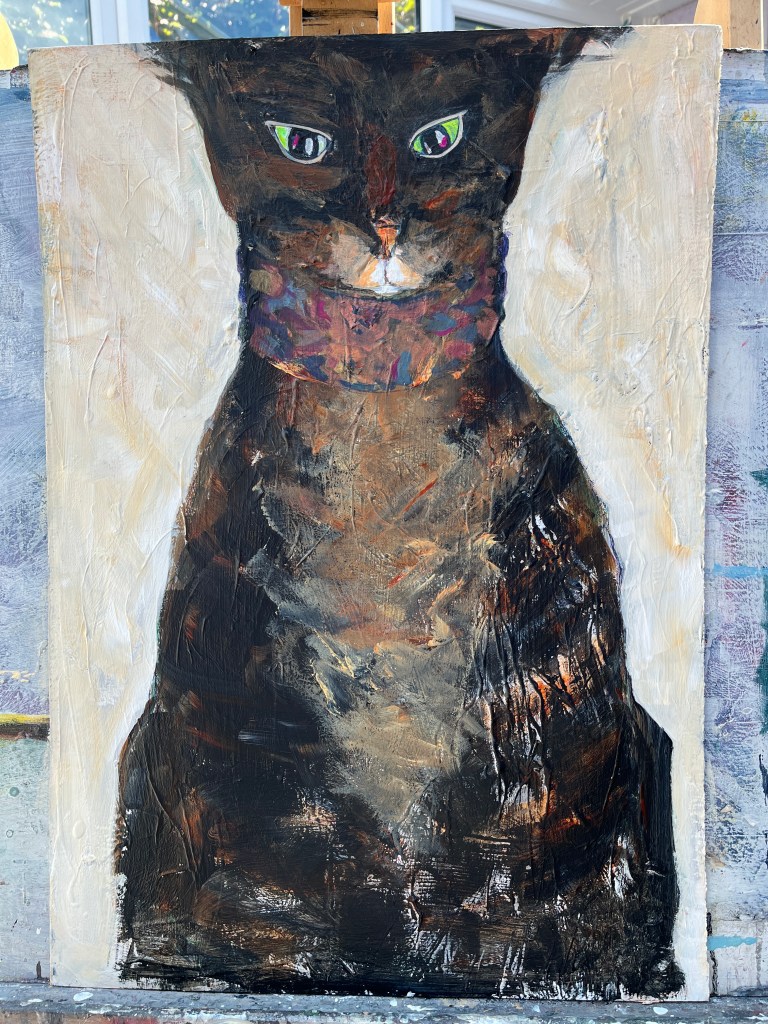
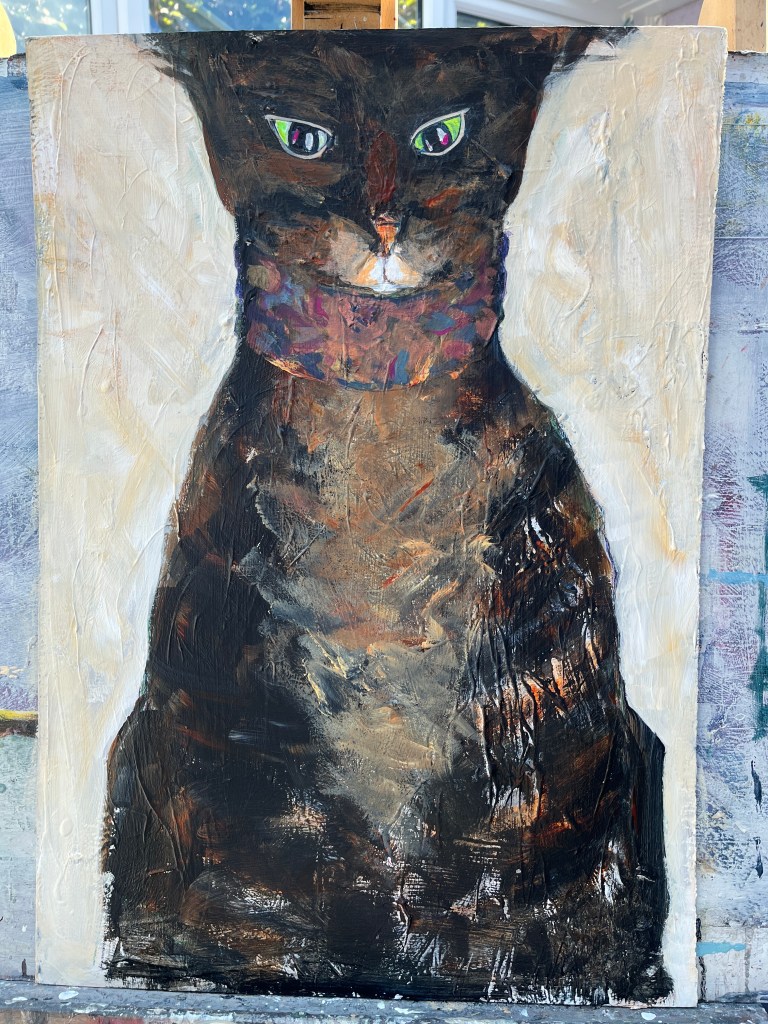


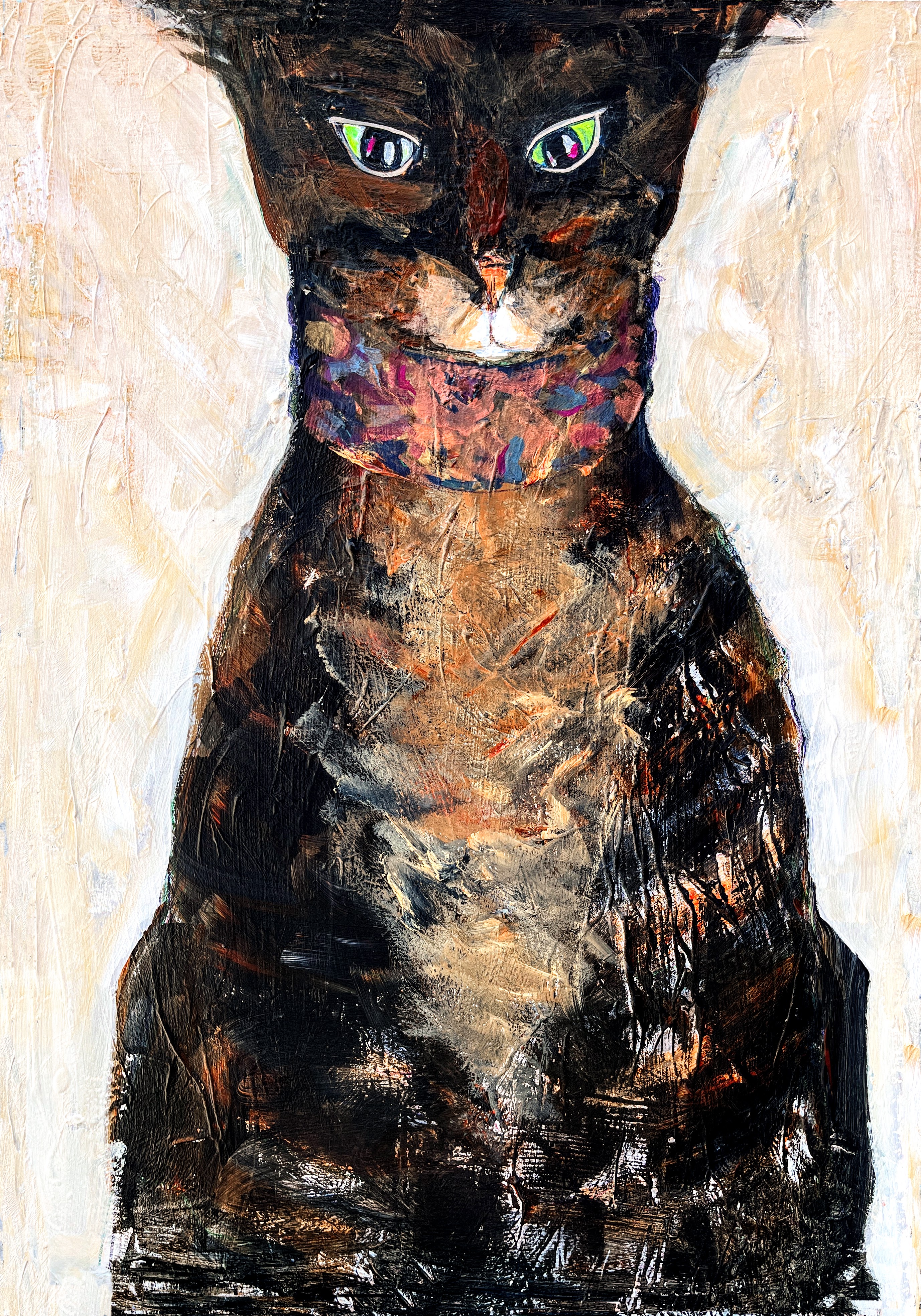
9th August. I spent a good part of yesterday and today working out how to make AR in Aobe’s Aero, and the surprise is that I succeeded. This is the link https://adobeaero.app.link/LFibu8HK7Bb to the AR layer which will overlay this image:
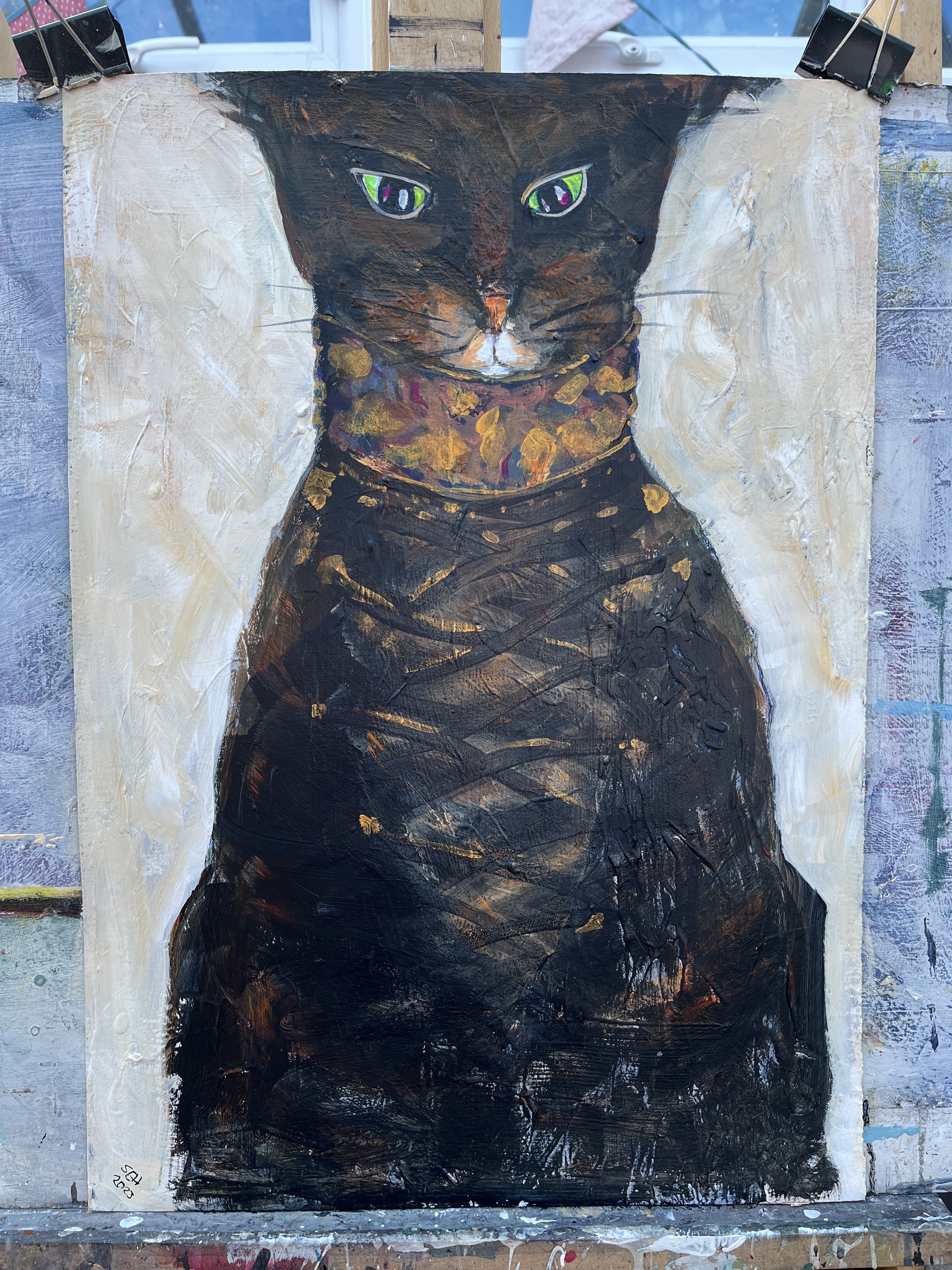
You point your phone’s camera at it, the link appears in a box of text, you click that, it searches for a vertical surface, then (I may have missed a click or two here) the 3D AR comes up. To me, this places an unacceptable burden on the viewer and at a guess, many would give up quite quickly OR they would have very high expectations of the pay-off. The positive is that I have experience now of placing elements into a 3D platform and I know this is much the same in other apps such as Artivive. In Aero, there were free 3D assets included with the software and so I would need to make those myself or buy them for Artivive Aero also doesn’t seem to support audio. For now, then, I’m focusing on Artivive while looking harder at how to be less reliant on apps such as MotionLeap for the effects. In the video below, the sky and the outward motion of the cat’s image boundaries are by MotionLeap, but the lights and stars are effects sourced from Filmora. The audio is also from Filmora and offered as part of its stock of resources. The video is an experiment; a try-out of new combinations of elements which show promise, and which I can continue to explore as I also look into making my own 3D elements. Blender is the app and pretty much describes the state of my head after an hour of chasing a blob of digital putty around a gridded 3D space. And yes, I should have stopped at that very first painting!
10th September. Tally White Eyes.
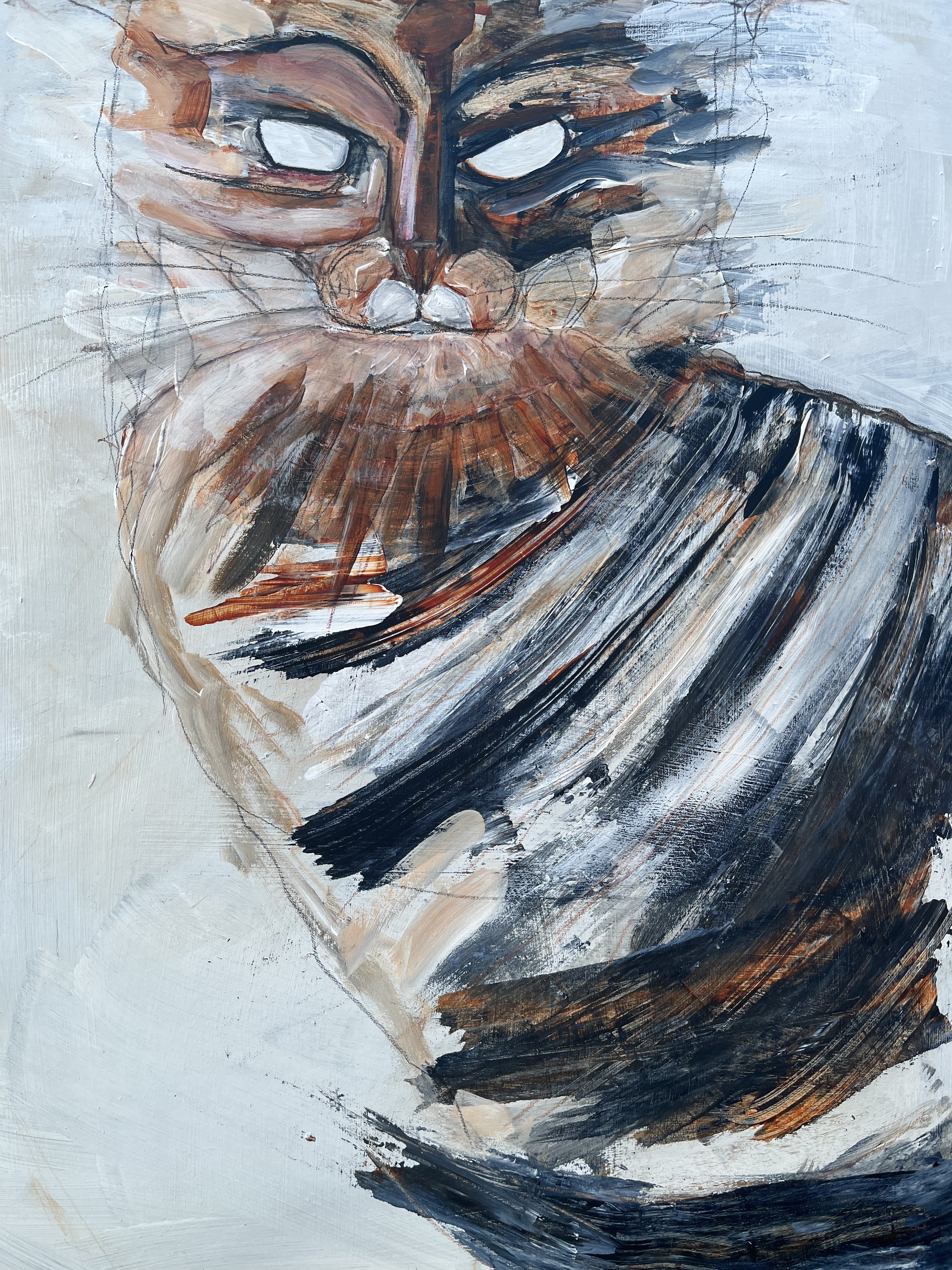
SCH 2023
For a list of workshops, groups, conversations, and other activities see my dedicated page
 Conboyhill Arts - art from stART to finish